" /> storytelling: April 2006 Archives

take me to the front page of the tttt weblog | back to the current weblog

« March 2006 | Main | May 2006 »

April 27, 2006

fanfic, copyright, plagarism, cha cha cha

All the hoopla about Opal Mehta has resulted in some really good discussions about the nature of storytelling. Over at Making Light, Teresa Nielson Hayden's comment (transmuted into a post) on fanfic gets to the heart of the matter:**

[...] In a purely literary sense, fanfic doesn’t exist. There is only fiction. Fanfic is a legal category created by the modern system of trademarks and copyrights. Putting that label on a work of fiction says nothing about its quality, its creativity, or the intent of the writer who created it.

The Pulitzer Prize for Fiction this year went to March, a novel by Geraldine Brooks, published by Viking. It’s a re-imagining of the life of the father of the four March girls in Louisa May Alcott’s Little Women. Can you see a particle of difference between that and a work of declared fanfiction? I can’t. I can only see two differences: first, Louisa May Alcott is out of copyright; and second, Louisa May Alcott, Geraldine Brooks, and Viking are dreadfully respectable.

I’m just a tad cynical about authors who rage against fanfic. Their own work may be original to them, but even if their writing is so outre that it’s barely readable, they’ll still be using tropes and techniques and conventions they picked up from other writers. We have a system that counts some borrowings as legitimate, others as illegitimate. They stick with the legit sort, but they’re still writing out of and into the shared web of literature. They’re not so different as all that.

Fanfic means someone cares about what you wrote.

Personally, I’m convinced that the legends of the Holy Grail are fanfic about the Eucharist.

This really is a basic impulse.

Which brings me back to the discussion in the comments to my post Genre - Literature. I made some similar points regarding storytelling as a basic human impulse to de Rien, and now I'm thinking of A.S. Byatt's essays on this subject. I can't put my hands on the particular one that comes to mind, but I believe it's in Imagining Characters, which is an attempt to capture in print a discussion about literature between Byatt and Ignes Sodre, who is a psychoanalyst.

de Rien asked me if I was saying that storytelling as a cultural good was primarily a vehicle for educating children and less relevant for adults. That's a huge and really interesting question. My short answer: no, not just for children. A longer answer (or at least part of one) I'll try to put together today.
---------


Thanks to murgatroyd for the headsup.
April 26, 2006

wassup

I've been writing pretty well just recently, but I don't want to talk about that because I'm a superstitious Italian.

So here's what's new otherwise: tomorrow the first galley proof pass of Queen of Swords is supposed to land on my doorstep. With a large thump. I have until May 11 to get it back to them. This means the bound galleys (or ARCs, or advance reader copies) are just around the corner. Six weeks, maybe eight.

Today I drove two hours to get my eyes scanned. For a couple years now I've been thinking about laser surgery to correct my (deplorable) eyesight, and I was on the brink of actually doing it... but. My bottom line was this: only if I was eligible for the most advanced technology available, which right now is wavefront. And the only way to know if I was eligile was to get in the car and go all the way down to the surgical center, and then I spent ten minutes staring at lights while computers hummed, and after all that:

Nope. My corneas are too thin and my prescription too strong. And after I got my nerve up and everything.

Tomorrow I hope to have more great writing news not to tell you about. And by the way, it's FOUR MORE DAYS until the end of the pile o' books drawing. So get your rear in gear if you haven't already.

April 24, 2006

sloppy sloppy sloppy

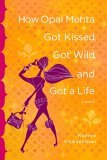
Every once in a while plagarism raises its head outside of the classroom. This time the accused is a young woman whose a Harvard undergrad, whose first novel (How Opal Mehta Got Kissed, Got Wild and Got a Life) apparently borrows pretty directly from Sloppy Firsts, a novel that came out a year or so ago.

The sad details, if you care to look, are here, along with a comparison of the contested passages.

I see the similarities, and because there are quite a few of them, my guess would be that the courts are likely to decide in McCafferty's favor. Which would mean considerable difficulties for Viswanathan, beyond legal and financial ones. Will she write another novel? Will she get it published?

What bothers me is how it all came to happen. This is obviously a bright kid, but then she was seventeen when she signed her first book contract. Seventeen. Seventeen is Mars. Seventeen is a universe all its own, no matter how smart you might be. And how does a seventeen year old working to get into Harvard even think about selling a novel? Where is the motivation? WHO is the motivation?

What I find really interesting about this is not so much the plagarism, but Viswanathan's backstory.

April 23, 2006

At Amazon

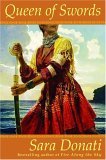
The Queen of Swords cover is up. I still love the art work, but on the whole it looks rather odd, I think, because the bands at the top and bottom will be in gold foil, but here they come across as kinda offensively tan/brown.

April 22, 2006

brains! we need brains! = odd little meme

I was reading and I fell asleep and had the strangest dream. A kid came to the door selling subscriptions. I said: sorry, we don't need any more magazines and he said, but what about brains?

Sidenote: In one or another of the dead/zombie movies, an older woman undead is trapped in a basement and they called down to her: what do you want from us? And she whines in a high pitch: brains! we need brains!*

This line is a family standard.

So now back to the dream: the kid hands me a brochure, divided into categories: musicians, artists, writers, scientists, politicians. I can subscribe to any of the brains that are listed. I don't remember many names beyond Madonna and Clinton. The kid tells me I can get all the back issues if I'm really interested.

And then I woke up, but I've been thinking about this dream ever since. Would I want everything Madonna knows about music in my head? This one is easy: nope. Clinton about politics? Hmmmmm. So I've come up with a short list. If I could magically have the specialized knowledge (and understanding, I guess) from three different people's brains, who would I want?

1. Chomsky. The NYT called him arguably one of the greatest minds of our time. What he doesn't know about history and politics and linguistics is more than I already know about that stuff. So Chomsky, my first choice.

2. Picasso. None of his personality quirks, but what he understood and saw about art? Absolutely.

3. [name to be researched] The very best female professor of psychiatry this country has to offer.

Jump on in if you are so inclined.

*anybody know which movie?

how the money works in publishing: the real skinny

Anna Louise at LiveJournal provides hard facts. The tag on this post is "demystifying publishing" and indeed, it is a very very detailed and for many probably very sobering account of how advances are calculated and where all the money goes.

My take on all this: I don wanna. I won't even read my royalty statements. I call up my agent and ask for a three sentence summary/bottom line, and then I let all that go. In my case, too much exposure to Numbers results in a shut down in the writing process.

April 20, 2006

plot + character | genre - literature

I've made the point before (and will make it again) that the distinction between literary fiction and genre fiction is artificial and has more to do with social and class issues than anything else. Literary fiction is just another genre, with its own set of expectations and history and intended audience. Some people would argue that the literary genre is inherently more worthwhile or better than the other genres, but I see those arguments as circular and self-serving.

My take on this whole thing in a nutshell: characterization is crucial, but so is story. That is, plot is not a four letter word. A really good novel will have great characterization, a compelling, well put together plot/story, and in bonus cases, beautiful prose. These three things are not mutually exclusive.

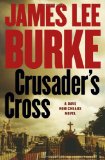
I am raising this topic because I just finished reading James Lee Burke's newest novel, Crusader's Cross. I'm not going to do an indepth review, but I will say this: the man has all three crucial points covered: plot, characterization, prose.

There are some writers out there who are unapologetically not-literary-genre-focused and who are both commercially and critically successful. Burke is one of them. Elmore Leonard is another. Both of them write crime fiction, and both are very good at what they do. They deserve general praise and love and lots of readers. But I'm busy wondering how that happens. Why are some authors who write outside the literary genre spared the sneering of the crit-literati? Is it that some genres are lifted into the realm of literature over time? Think of the first big immigration waves from Ireland and Italy, and the discrimination those people had to deal with. Within a couple generations they were running city hall and giving fancy balls. With enough time they lifted themselves into the higher society and took their turns sneering at the new immigrants.

Is the crime genre like that? Has it been around so long that it's been subsumed into literati land? Any ideas?

absolutes

This is a rerun of a post from two years ago. I'm thinking it might be a good way to launch a discussion on characterization. -----------------------------------

I've had two suggestions about characteristics that are non-negotiable in heroes (of course that term is fraught with difficulties, but for the sake of expediency I'll continue to use it for the moment). From Karen:

How about a rock-solid moral core? The hero can (and probably must) have serious flaws and weaknesses, but some fundamental part of the character, even if deeply buried, needs to recognize right from wrong. But then there's Patricia Highsmith's Ripley -- does he count as a hero?
and from Stephanie:
I think a sense of humor is pretty essential. Not that the protagonist has to be wisecracking through his dialogue, but he should at least recognize things that are absurd.
I think these are good characteristics to start with as basics (again and always, for me personally, when I'm reading or writing).

A character can have a fairly serious demeanor most of the time and still be capable of playfulness (crucial, in my view). Personally I'm also drawn to a dry sense of humor, which probably follows from the fact that my husband is a Brit. When our daughter was about ten, we rented Monty Python's Holy Grail. She asked him if she could watch it, to which he said: "Can you watch it? You must watch it. It's your cultural heritage."

The issue of a moral core is a little more complicated. I think I know what Karen means by "rock-solid moral core" -- I know what it means for me, at least. For other people it may mean (it almost certainly does mean) something else. More important, I think the main point for any writer to remember is this:

the fuel that drives any story is conflict, which has to exist both external to the main characters (to move the plot along), and within them (to move the characterization along).

Let me see if I can say that any more clearly. You can have a main character/protagonist/hero who is rock-solid morally, but you have to poke him a little, or there's no drama. In my own story, Nathaniel has not one set of morals to live by, but two that are very different -- one European in its nature, the other Native American. Elizabeth's strong moral convictions are a source of conflict for her because she is torn between a rational world view and the religious beliefs that permeated every aspect of the culture in which she was raised.

As far as Ripley is concerned, he's an interesting character specifically because he is amoral, but in a thoughtful and quite dramatic way. For me personally he can't be a true hero, but no doubt other people see him as such. Then there's somebody like McMurphy in One Flew Over the Cuckoo's Nest, who is quite scary in a number of ways, whose interpretation of personal property is pretty lax, but who is driven by instincts that are (at least in part) admirable: he likes people, and prefers to see them happy; he dislikes authority, and prefers to challenge it.

I'm still thinking about other characteristics for my list of absolutes. I may take a break to write a little about the difference between story and plot, which somebody asked me about just recently.

April 19, 2006

masterworks up for grabs

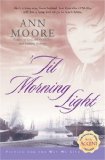
Ann Moore and I live in the same town, and once in a while (not often enough) we run into each other at book events. Her trilogy of historicals set in Ireland and the U.S. do a compelling job of bringing the 19th century immigration experience to life. The first one in the series is Gracelin O'Malley, then Leaving Ireland, and the third and final 'Til Morning Light.

We had a good discussion about cover art at one point and so she just sent me a link to a page about the use (and reuse) of older portraits on covers for historical fiction. You'll see, if you wander over there, that the year Ann's Leaving Ireland came out, the same woman's face was used on two other historical novels.

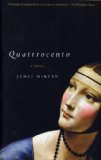
The thing is, these older portraits are gorgeous, and I'm guessing they cost the publisher little or nothing to use. Certainly I prefer Leonardo's Lady with an Ermine (as seen here on Quattrocentoby James McKean) to the more lurid cover art for historicals (this example, from Under the Wild Moon by Diana Carey, I snurched from Smart Bitches). \/
Underthewildmoonbydianacarey

I'm always keeping my eyes open for portraits that would make good cover art. Not that any publisher would necessarily do anything about a suggestion like that -- most of them have very specific ideas about what belongs on a cover, and seldom do publisher and author agree. But I keep track anyway.

what the hell does this character *WANT* from me?

I ask you.

April 18, 2006

pile o' books

I was a little behind on the giveaway thing, but now everybody who has thus far signed up for the free LibraryThing membership and the pile o' books should be in the list in the right hand column. If your LibraryThing username is not there, maybe you forgot to include it when you posted to the gimme gimme thread. Which you can still do, just click *here* to go to the right place, and enter a new comment with your name, LibraryThing username, and email.

Right now there are 84 of you. You have until the last day of April to sign up. If I get 150 people on board by that date, I will add an ARC of Queen of Swords to the gimme gimme pile. That ARC will have to mailed separately, as I don't have them yet.

April 17, 2006

book mania

When I'm having trouble writing (which, yes, I am having today. And yesterday, and for about five days now) my mind skitters around like a rat in a maze.

Usually one little thing will lodge in my head to distract me from working on what's wrong and fixing it. I am very aware when this happens. It takes huge effort to stop the avoidance cycle and get back to work. Often the thing that I obsess about instead of writing has to do with books.

LibraryThing, which is wonderful in so many ways, enables my book mania. Or maybe I should say it launches my book mania into the stratosphere. There's something about wandering around a thousand libraries that puts me in a hypnotic state, until I focus on one book.

This weekend that book was War and Peace, which I saw on one list or an other. (Longest novels? Novel with the longest names? Novel everybody owns but nobody reads?)

Well, I read it. A long time ago, but I did read it. And, here's where the mania comes in: it wasn't in my LibraryThing library. Which means I had to trot off and try to find it and figure out why it wasn't in the LibraryThing library. Except I couldn't find it. Somehow I lost Leo Tolstoy, and I never even noticed. He may have been missing for years, and I went on blithely.

Obviously he must be replaced.

Now the real problem: which edition?

You can't just order any edition of Tolstoy. Asking Amazon for War and Peace, you never know what piece of poorly translated dreck they'll send you. What you need is, a recommendation from somebody who knows Tolstoy really well. And I happen to know a scholar of Russian literature who fits that bill... except where is her email address?

You see? The chase is on.

Even after I settle on an edition (in this case the 1942 Simon & Schuster Inner Sanctum edition) I still have to find one. And I have to find one that is in fairly good, but not collectible shape. However, I do want the original bookmark that came with this edition, because it has all the names of the characters on it in order of appearance.

It's off to abebooks to see if I can track a copy down for a reasonable price.

All of this takes time, you must realize. Lots of time. Time in which I could be delving into the stuckedness of the chapter I'm trying to write.

So I found Leo (with the helpful bookmark) and I paid the ransom so he'll be delivered here to sit on a shelf in my library. Right there, on that spot, between the Norton Critical edition of Mansfield Park. And now I have to forbid myself any more glances at anybody's library for fear I'll notice some other book I'm missing. And back to to work.

April 16, 2006

Miss Lack is Forever in the Building

I had a fourth grade teacher called Miss Lack. Imagine a young Mother Superior with a beehive instead of a wimple and habit. She had to be in her twenties, but that never occurred to us. She was scary.

She was also a good teacher. I first remember thinking about writing in her classroom, the elements that went into it, how a comma made a difference. Of course she was a product of her time, and she was a strict grammarian. One way and one way only to speak and write the language. We diagrammed sentences and labored over quotation marks.

Still today I think about Miss Lack when I hesitate over where a period goes. Even though her rules are now way out of date and new punctuation fashions are in place, I remember her rules. And when I see somebody using them, I'm torn between admiration and irritation.

Here's the rule I still see used a lot and it drives me nuts because it's so stilted:

Mary took her best friend, Louise Harrigan, out to lunch.

The old fashioned rule is: got two semantically equal noun phrases (friend=Louise), set the second one off with commas. Now I ask you, is this not awkward? Doesn't it make you pause and think about, say, beehive hairdos intead of what Mary and Louise are talking about at lunch? It's like a footnote stuck right up into the face of the story. But I see this a lot. I never, ever do it myself. I try to find a way to achieve the information without evoking Punctuation Parameters.

Mary took her best friend out to lunch. Louise was always in the mood for sushi, and she had no compunctions about gossip.

You can get the Harrigan part in there someplace in the scene, it doesn't need to be right up front. At least not for fiction. I would make this same argument with a slightly different approach for creative non-fiction. It's just awkward and silly and fourth-grade to stick to this better-introduce-the-character-to-the-reader approach.

Miss Lack taught me some very useful things, as well. For example, I credit her with the beginnings of my extreme dislike of excessive exclamation marks.

April 15, 2006

Auntie Beff's Chicago: what's the matter with these kids?

Beth is all complaining about geographical references in The Time Traveler's Wife (an excellent excellent novel, which I have said before and will say again). But as Beth doesn't allow comments I have to challenge her on my own turf. Here goes.

Opening remarks: Cut the author some slack, will ya? You admit up front that she knows the city well. Maybe she used those verbal short cuts you mention in her original, but the editor was worried about confusing readers. Maybe she was trying for a different tone. And depending on the character you're talking about -- Claire isn't a native.

1. Beth says: Nobody refers to it as "Lake Michigan". It's the lake.

I say: Nit nit nit pick pick pick. So yes, mostly people just call it the lake. Would somebody in Fairbanks Alaska be tuned into that? So they erred on the side of the non natives.

2. Beth says: The elevated trains throughout the city are rarely referred to as "the el".

I say: Not true. This may be a generational thing, but I still call it the el, and so do my friends. In fact, I just called a friend and in a round about way brought up the subject, and she called it the el. Okay, so she's my age, but she's always lived in the city. And that Brown Line stuff? That's relatively new. Old timers don't use that. The Ravenswood line, the Evanston line. Sheesh. You kids with your innovations.

My versions: "Get off the el at Damen, and Sweet Occassions is right there and they have the best ice cream in the city."

"I used to take the el to work everyday."

Somebody who takes the train to work every day is somebody who is coming in from the suburbs.

The one point I'll give Beth on this is that when they expanded the el service out to the airport, there was some confusion. Was it still the el, or was it now a train? My vote: outside the city, it's a train. Inside, it's the el.

3. Beth says: It's the Aragon. And the Vic. Not the Aragon Ballroom and the Vic Theatre - unless you're a news announcer or a poster for a concert or something. I mean sure, call it by its full name in the narrative the first time to let your reader know what it is - but never in dialogue. Especially dialogue among native Chicagoan music-lovers.

Okay, I'll give her this point about dialogue.

4. Beth says: Quit frikken giving me directions constantly. It's very true that all people in this city are downright obsessed with giving directions -

Yes, we are. We are obsessed, and that's why I loved this about the novel. Maybe it's something they inject into kids born in the city limits, but I wanna know where I am and how I'm getting there. Don't rain on my parade, okay?

One other point Beth raises, not in connection with the novel: Lake Shore Drive. Auntie Beff claims everybody drops the "drive" part. As in "I took Lake Shore up to Sheridan." or "I had to get off Lake Shore at Irving Park because of some accident." Mostly, Auntie Beff is right about this, but at one time people called it "the drive" as in "I took the drive up to Sheridan." But even when I was a kid you heard that less.

One last thing, where Beth gets no argument from me: if you're ever in Chicago and the weather is nice, the drive south on Lake Shore toward the Loop is pricelessly gorgeous.

April 14, 2006

doom and gloom from the WSJ, and just the opposite from fuse#8

Every now and then the media decides that the novel is on the decline and they might as well hold a funeral right now. The Wall Street Journal is doing that today with an article on how memoirs are in, and novels are out.

Of course there's no hard data. It's all spicy little anecdotes. I am amazed, really, at the degree to which some journalists buy into their own sense of power. The WSJ declares the novel dead, and so it must be. Put down that copy of Pride and Prejudice (not you, Beth. you keep reading) and pick up a memoir. Forget that Byatt has a new novel out, you want to read James Frey's memoirs... oh. Those memoirs turned out to be fiction, didn't they.

I'm never following a link to the WSJ again. I'd much rather read weblogs written by librarians. For example, fuse#8, who has the best job of any librarian I've ever come across. She works in the Donnell Central Children's Room in Manhattan. And who is there working with her? Winnie the Pooh. The original. The real. She has a lot of interesting news about children's books, and she writes wonderful, thoughtful reviews.

April 12, 2006

names

About a year ago I started trying to keep better track of names in my novels. A little late, sure. But I've finally got a system in place that mostly works. If you know my work you'll be familiar with my penchant for lots of minor characters. They pop in, establish themselves, pop out again, sometimes for good, sometimes not. They are very real to me, these minor characters. There may be fifty of them in any given book, and if that book is set in one place, that means that the minor characters will be interacting in various ways, related by blood or marriage, etc etc.

Which means family trees. Now, that would really draw me in and I'd get no work done, so I came up with a compromise. I set up a list of about fifty surnames. These names come out of various sources -- phonebooks, older census and tax records, news stories, personal experience. Here's the list for Greenbriar, South Carolina, the setting for Pajama Jones:

Alewine | Ambrose | Aragon | Archer | Argo | Ballad | Barr | Basclark | Beales | Bevil | Blalock | Boggs | Broyles | Burden | Carson | Cedillo | Chambers | Chamlee | Clamp | Clinkscaler | Coffen | Crenshaw | Crooks | Cullin | Dobbins | Dodge | Dover | Drenon | Elrod | Epperson | Espinoza | Felices | Felton | Floyd | Ford | Gambrel | Garmen | Geer | Golden | Goodwin | Gordon | Grift | Guttery | Guzman | Hackett | Harris | Holt | Howard | Hughes | Hunt | James | Kay | Kersey | King | Lambert | Latham | Loveless | Maroney | Marshall | Martin | Martinez | Massey | May | McCollum | Milwee | Newton | Norris | Ogelsby | Pearson | Pegg | Pepper | Prator | Pruett | Ragsdale | Rains | Reed | Rogers | Rosamond | Ruth | Sanders | Shirley | Short | Sinn | Slaterfield | Stabley | Swagger | Swilling | Telford | Trussel | Varner | Vickery | Wade | Walker | Washington | Whitaker | Wossom

I won't use all these names. When I do use one, I put a tick next to it so I know somebody in Greenbriar is walking around calling themselves Crenshaw or Dodge or Shirley. If I've got a whole family full of Shirley-types, I'll make a notation of how many there are.

So if Julia and John are having an argument in the middle of Julia's shop, and a customer comes in wanting a pair of pajamas for his wife, that customer has to have a name. Sorry, that's just the way my storytelling mind works. Until he has a name I can't see him. The minute he does have a name, he can start talking, he'll have opinions, he'll prefer the purple silk babydoll pajamas to the elegant cream silk pegnoir set. He'll be able to tell me his wife's name and why it is he thinks she'll want to wear purple babydolls.

A look at the list and I realize the guy's last name is King. Sometimes he'll tell me his first name, and sometimes I have to go look. I have a huge list of first names of all types, from the standard Roberts and Thomases to the regionally and ethnically distinct Bubbas and Gunther. Because Greenbriar is in rural South Carolina, a lot of the characters have very distinctive names. I've got a Big Dove and her best friend, Hattie. I've got LRoy Swagger, who is married to a lovely woman who is simply Jennie. There's Exa Stabley and Leo Guzman, Link Kay and Bob Lee Cowper, Marnie Lambert and Josie Beales. There's a Lazarus Burden but there's also a Dan Harris. There's Bassingame Sinn and Lorna Emerson.

The names provide me with some kind of structure on which I build the characters and the characters build their relationships to one another. It's a process I don't understand completely, but it's crucial.

April 11, 2006

who knew? PW wisdom strikes again

So over at Amazon the cover for TTTT is up, and so is the first official review, by Publishers Weekly.

I've talked about the review process before, at length and I won't go into that song and dance again. The PW review isn't bad in any direct way; it's more of a short plot summary with a couple of observations attached to the end. Snark, my agent and editor said when they called to warn me.

Now I've had some pretty nasty reviews in the past. Who can forget color by number cartoon caricatures? Obviously I can't. It always strikes me as funny, when I think of that review. Somebody was trying so hard to be clever, I still get an immediate vision of a graduate seminar.

This newest review declares that while TTTT has some charm, "the novel makes no real emotional demands."

So I've been thinking about that all day. Where do I get my emotional demands? That's easy: I have an almost seventeen year old daughter. I have a husband and in-laws and good friends. The government is imploding, I find that emotionally demanding, even draining. But books?

If I think about novels I really like (here's three, at random: Lonesome Dove, Possession, Pride and Prejudice) do I re-read them because they make emotional demands? Why do I re-read them? What about the story and the characters draws me back to the book? They make me think. They make me feel -- well sure. What story doesn't make me feel something? If I feel nothing, then the story doesn't work for me. The range of feelings I get from novels is large, though. Is a novel that makes me sad better than one that makes me laugh?

Aha. Here we are, back at the culture of ugly argument. The no-pain-no-gain approach to writing and storytelling.

So the bottom line: Tied to the Tracks will not make you weep, or huddle into a conflicted ball of emotions, challenge your view of eternity. It hopefully will make you think about some things and make you laugh. I'm satisfied if I get that far. I'll leave emotional demands to your loved ones, and the news of the day.

April 10, 2006

odd memories

Something Joshua wrote (about his bad mood and its relationship to his self imposed exile in Wales) jogged this odd memory of my father.

At seventy Arturo's heart disease got the upper hand and he had his first bypass surgery. Over the next two years he was in and out of the hospital, but that first surgery is the one that burns brightest in my memory. When I went in to see him in post op intensive care the doctor warned me that he would be cold to the touch -- they chill down the body for bypass -- and not to be alarmed. But still, I was alarmed, because my father was one of those human furnaces, he generated such heat. And so it was a difficult week. I spent a lot of time at the hospital, got to know the nurses, tried to insulate them where I could from my Father in a Bad Mood.

One morning I came onto the ward and I heard my father shouting from down the hall. You just want a look at my ass, you fairy! Send me a real nurse. I want the blond!

The nurse -- his name was Michael -- comes out of the room and I'm standing there blushing and in agony. Many apologies follow, but Michael just laughs. We love it when he gets all cranky like that, says Michael. It means he's feeling better today. And look. Then he fishes a wristwatch out of a pocket and holds it up.

My father had a million wristwatches. He could not pass a guy on a corner selling watches from a trenchcoat. It wasn't so much the watch as the bickering that he liked. So he had this large collection of knock off watches, and he had brought a box of them to the hospital with him to give away like candy.

To Michael he had given a fake Lady Bulova watch. I cringed, but Michael was pleased with its campiness, and so everybody was happy.

April 8, 2006

off to the emerald city

The Girlchld and two of her friends are going to a concert tonight at the Tacoma Dome. Which means somebody has to drive them there and back (two hours each way), because while they all have licenses -- no way. We'll let her drive to Tacoma in the middle of the night when she's thirty. maybe.

Then the kid talks me into getting a motel for the night so I don't have to be exhausted and drive us all into a ditch.

So we're headed for Seattle. I'm taking the laptop do I can work while the younger generation abuse their eardrums. But this all reminds me of one of the early Girlchild scams.

When she was four, she would come to me and say, mama, can I have these pennies on the counter to save up? And I'd say, sure.

Every couple of days or so the Girlchild would go to the Mathematician and say, daddy, I've got all these pennies and nicklees and dimes and one quarter and they add up to a hundred. Could I have a dollar? And he'd say, sure.

He'd give her the dollar, she'd give him the change.... which he then prompty put down somewhere.

It took us about a month to figure out what was going on.

April 7, 2006

no more lawyer jokes.

Remember back when I posted how confused I was about domain names? Somebody named Manila Industries had possession of SaraDonati.com and I had no idea why, or what to do about it.

You more savvy types told me about cybersquatting, and then it turned out that I wasn't the only one at odds with Manila Industries. Lots of you emailed and commented asking what I was doing, and what they could do, to get back a domain name. And Dennis McCooe commented too, saying he was an intellectual property rights attorney, and he had some experience dealing with Manila Industries.

So guess what. Dennis McCooe got me back the SaraDonati.com domain name, and with next to no fuss or work on my part. He called me today to say so, and now I'm thanking him publically. Please don't email me to ask how to deal with Manila Industries, okay? Because I'm clueless. But if you need somebody to handle this kind of thing for you, Dennis is your guy.

McCooe AT BlankRome DOT com

PS Blank Rome is a very well established, very large law firm.

chatty

Once in a while a character gets chatty. You have to let them talk, of course. It would be rude to interrupt.

For two days now a nine year old girl called Bean has been talking about Greenbrair, South Carolina. She's been telling me about everybody she knows (and she knows everybody), their habits (good and bad), their extended families, the church they go to and why they go there.

So last night I was thinking about Bean and I realized that she's something like Scout from to Kill a Mockingbird. This morning I went back over all the things Bean has been telling John Dodge and listening close to her voice. I was worried that I had dressed scout up in new clothes, which would never do. Scout has an excellent book to call home, and I can't haul her out of there and into mine.

Bean assures me that she isn't Scout. She doesn't have a brother or a friend called Dell or a wise father called Atticus. Her mother is divorced and bitter, and her father works on an oil rig and never calls. No need to get all grumpy about grownups, she tells me. There's nothing a kid can do to change them. Might as well focus on the good stuff.

April 5, 2006

the value of a good essay

Still in crisis mode, here, but I made an effort this morning to get my head out of things I can't fix (at least not immediately; she hedged), and I went to read Garrison Keillor's column on Salon.

Are you familiar with the way little kids were soothed and comforted by Mr. Rogers? I watched it happen more than once with the hoppity rabbit that was the Girlchild at age three. Often when she3 was siitting on my lap I had a mental image of a tornado waiting to let loose. Desperate for a few quiet minutes, I sometimes turned on Mr. Rogers. Her whole body would immediately begin to relax, but her attention stayed focused.

Garrison Keillor is my Mr. Rogers. His voice on the radio is better than any chemical devised for the quieting of an overbusy mind. His essays often move me to tears for reasons I can't quite explain. His tone is never harsh, though what he has to say is often thorny and unrelentingly honest. On Bush:

It's a hard fall for George W. Bush. His career was based on creating low expectations and then meeting them, but Katrina was a blast of reality. The famous headline said, "Bush: One of the Worst Disasters to Hit the U.S." and many people took that literally.

Today he had an especially good essay on spring and politics called Love will Outlast Bush. I cringed a little at the title, which sounds like an entry in a bad lyric contest, but the essay itself? It keeps going through my mind. Here's part of it:

Politics is a slough, and maybe we should let the weasels have it for now. Even if two more Republicans follow the Current Occupant into office, this country will still be around in some form or other. Cities may crumble and we may be forced to reside in walled compounds and hire security men to escort us to Wal-Mart and back, but much will remain, such as love, for example, and the quickening one feels in the spring. Flowers will bloom in whatever wreckage we make. Somewhere, someone will sing the old songs about love walking in and driving the shadows away.

People have been falling in love through every dismal era of history and through every war ever fought. Enormous black headlines in the newspapers and agitated talk in the cafes and yet she waited for him on the corner by the hotel where they had agreed to meet, and as traffic streamed past she watched the buses pulling up to the curb, looking for his familiar shape, his beautiful face, his slight smile. Under her arm, a newspaper, and inside it a columnist shaking his tiny fist at corruption, but it isn't worth two cents compared to what's in her heart. When her lover steps down, the air will be filled with bright purple blossoms and they will embrace and turn and go into the hotel, and on this, the future of the world depends.

Keillor can be melancholy, but it never lasts for long. Sooner or later he has to give into the urge to tell the better story. The hopeful story. Especially on those days when it's hard to keep my own melancholy at bay, it's nice to have him around.

April 4, 2006

Stephanie calls 'em like she sees 'em

Re LibraryThing:

Oh, you evil evil woman. You convinced me to sign up, and now I'm obsessed! Looking at my books. Looking at other people's books. Thinking about what books to add to the collection. Thinking about books I know I own but can't recall where they are. Linking to Amazon and inadvertently BUYING more books!

Evil, I say.

You know what I say to this? Guilty as charged. Obsession loves company, and all that.

culinary footnote to my last post


I'm certain I'm mentioned this before, but our birthday tradition is this: three families get together, and the birthday person picks the menu but does no cooking or cleanup.

Most people vary what they want from year to year. Once I made Penny crabcakes from scratch (she'll never live that request down). Once somebody wanted a breakfast party, so we had waffles and omlettes at seven in the evening. Bruce the Man of Pain usually wants collard greens and hush puppies and all kinds of exotic Georgian fare. Last time I believe he also wanted smothered fried chicken.

I always want the same thing. I want Thor's smoked salmon (not lachs/lox -- fresh salmon that has been grilled over a smoky fire) with Penny's hollaindaise sauce, or as we call it, Eggs ThornPenny.

We have tried many times to get Thor to explain how he gets the salmon to taste the way it does. It's not a recipe any normal human could follow, because he starts it like this: I go down to a beach I won't tell you the name of to a special tree and I take one or two small branches and I strip them and then I take them home...

He's got a grill he's modified to handle his three or four or ten step process for smoking and grilling the fresh salmon. This salmon, it melts in your mouth with its smoky wonderfulness. So you put a nice hunk of Thor's smoked salmon on a perfectly poached egg and you cover it with Penny's perfect hollandaise -- I have no idea what she does to the stuff, mine never tastes that good, just the right amount of lemony goodness -- and that's my perfect birthday meal. With a pear and blue cheese salad on the side. And a double dose of Lipitor for dessert.

So there you go: the non-recipe for Eggs ThornPenny, which I felt compelled to record. Because today? Is not so good, and I'm trying to distract myself.

the girlchild's question

This morning my daughter asked me what I was working on.

Now, the girlchild is a normal kid in that at almost seventeen, the world is very narrow. It's mostly about surviving high school. Parents figure in only peripherally. Do you think about the cornerstone holding up your house? Only in case of earthquake. Almost seventeen = lotsa earthquakes. Otherwise, we're invisible.

But once in a while she wakes up and notices me scribbling, as she did this morning. So I told her, and there followed a brief conversation on which books were finished and coming out this year, and what I was writing now and next. She got a thoughtful look on her face and asked me a big question. She wanted to know if I would be done writing when I finish the two books I've got contracts for.

My first reaction was to point out that I'm too young to retire, and anyway, we couldn't afford for me to retire, not with college around the corner. But the question stuck in my head and I have been thinking ever since about the rest of my career. I have a grandmother and five aunts who all lived into their nineties. I could be around for a good while, after all. Will I just... keep on writing? Will I ever be able to retire, need to retire, want to retire?

I remember as a twenty-something working in an office. There were ten or so women who worked in the secretarial pool who were fifty or older, and who had been there for their whole working careers. You have to think about that. They started working out of high school and forty years later they were still there in the same cave-like office with no windows. I was fascinated and horrified. They seemed to be normal, most of them -- they had families and grandkids and they bowled or sang in the church choir or collected teddy bears. I would guess that most of them had started in that typing pool with the understanding that if all went well, they'd be right there until retirement. My parents' generation -- raised in the depression and during the war -- lectured about the importance of steady work. You had a decent job with benefits, you stayed with it.

Six years ago I left academia, where I had an established career, a good salary, excellent benefits. I left academia and I started writing full time, self employed -- no benefits unless you count being able to go to work in a ratty bathrobe as a benefit. If I had stayed in academia there would have come a day to retire, and somebody would have organized a party, and I would have signed papers. An official end to a career, and a ticket to go out in the world and do something else.

The self employed have to provide such things for themselves. I could someday buy a baloon and a cake and a gold watch and wish myself well in my retirement.

But here's the weird thing. I can't imagine retiring. That is, I can't imagine not needing to earn money. On the other hand, I can't imagine not retiring. That is, I can't see myself as a eighty year old agonizing over book twenty three or thirty three or whatever. I don't want to be agonizing at age eighty. At this moment, if we magically won a huge lottery jackpot (and I say magically not so much because of the odds, but because I rarely buy a ticket) and I really didn't have to work anymore, would I stop writing?

Sure. Sure I would. It would feel great, no deadlines, no pressures, no sales figures to worry about. I can imagine waking up in the morning and having the day to fiddle in the workshop and take drawing classes and go for walks. No need to open the computer or check email. The question is, how long I'd last before I felt compelled to start writing again, or if the urge would simply go away. The same way I wonder what it would be like to look at a bar of really expensive chocolate and think, really, chocolate is overrated. Or to be served eggs benedict and look at the hollandaise, all buttery and lemony and say, oh no, thanks. Not my thing. The same way I could never be anything but pleased and happy when my daughter notices me and sits down to talk.

Some things just can't be imagined away.

April 2, 2006

an excellent letter

I get a lot of satisfaction out of a well written letter, especially when I have to approach some official body about what I see as a mistake on their part.

Writing a complaint letter is an art. Just the right combination of clean cold fact, logical argument, and subtle snark. The only problem with writing such a letter is that you don't get to see the reaction when the person on the other end reads it. The blanching, in severe cases, when somebody realizes that they've been screwing with a person who (1) knows how to defend themselves; (2) is willing to do so; and (3) has jumped right to the punch line.

Not that I write a lot of these letters, you understand. Maybe five in my life, total.

Almost as good is writing a funny complaint letter. A letter where there's no quite so much at stake, where negotiation is still open and personality might actually get you somewhere.

Which brings me to RivkaT's letter to a law journal.

I don't know RivkaT, and I only meant to take a brief look at her LivfeJournal because she and I share some books on LibraryThing that nobody else has. And my reward for clicking through? The letter she wrote and (unfortunately) never sent.

Clearly RivkaT is a lawyer of some kind, and writes for professional journals. Someday maybe I will record some of my own experiences with academic journals during the seventeen years I was first a graduate student and then a professor. But for the moment, RivkaT's letter gives you a vague idea of what it's like to be able to write -- really write -- and not be allowed to do that. She wrote (in part):

[...] the reason you liked this article so much was that it didn't read like all the others you get. Thus, your attempt to flatten the language so that it reads more like a law review article is a mistake. I'll give you the elimination of all the contractions; I'll even give you most of the extra "that"s and "which"s. But understand that, while I am not a beautiful and unique snowflake, I can be a more engaging writer than you're allowing me to be.

And in conclusion: You are preventing me from writing fanfiction. Well, you and the three other deadlines for actual work, but I blame you anyway.

Woot, RivkaT.

April 1, 2006

gods in Alabama


gods in Alabama is Joshilyn Jackson's first novel. The whole package, as you can see, is meant to give you the sense of a fun southern girl out for a good time.

That's what I expected, at any rate. I picked it up because I knew the author is a southerner, and I'm making a short and sweet study of modern southern authors' narrative voices. To be truthful, I didn't have high expectations.

gods in Alabama isn't without flaw -- one serious flaw in particular that I'll mention briefly. But it was also complex in interesting ways. The main character -- Arlene to her family, Lena to her boyfriend -- tells her story with passion that stays clear of the pathetic. Arlene has been living and going to school in Chicaago for ten years -- she left Alabama immediately after high school and made a promise to God that she'd never return. God seemed satisfied with that, but Arlene's Aunt Florence was not. Pressured on one side by her aunt and on the otherside by her boyfriend (it's time for her to make a commitment, and introduce him to her family), and shocked by the sudden appearance of a old nemesis at her door, Arlene and Burr head south.

The story of how she came to make such sweeping promises to God comes out in bits, of course, sometimes funny, sometimes moving. Arlene's secrets take a couple of turns in the telling, some of them unexpected. The story is on one level about Arlene's relationship with Burr, but the lion's share of the conflict is her relationship to the women in her family. There's a good dose of moral ambiguity to deal with here, which brings me to the flaw I mentioned.

There's a strong urge, when you're writing a complicated story, to tie up all the loose ends. Answer all the questions about what happened to who when and how. Jackson gives into that temptation (in my opinion) a little too much. There are a series of plot twists toward the end of the novel, and the last one just went too far, and strained my credibility to the breaking point. I have the sense that Jackson felt this last twist was necessary in order to cement the bond between Arlene and one of her female relatives.

And really, it was just a little too much. Or a lot too much. The book is certainly worth reading, so if you do, come back here and talk to me about that final twist. I'd be interested in other people's opinions.