" /> storytelling: March 2006 Archives

« February 2006 | Main | April 2006 »

March 29, 2006

something useful, something useful and funny, and general moaning

First, I know I have nothing to complain about, but I hope you'll forgive me a little whine. I cannot imagine how the people who were displaced by Katrina -- many of whom still can't go home -- have coped. I sit here in a nice motel room, I'll be going back to my own house tomorrow, and I'm completely discombobulated. Which brings me to a website that Charlotte brought to my attention:

The Little Rock Friends Meeting (Quakers, in other words) is busy building bunkbeds for those who are trying to get reestablished after the hurricane. You can contribute by sponsoring a whole bunkbed with bedding, or some smaller part of a whole. Or you can send linens, blankets, pillows. Any way you do it, this is the kind of practical help that people really need.

edited to add this note from Charlotte:


Thanks for mentioning the project! Here's a little more info from the Friends' mailing list...

Why bunk beds? They provide a semi-private space for a kid (even one who is sharing a room with several other people). Remember from your childhood the reassuring feeling of retreating to your own little "fort"? That's what we want the kids to have. Beds are also designed to be easily taken apart and reassembled if the family has to relocate again.

If you feel moved to donate, any amount is welcome, and receipts for taxes are available from the Meeting. A complete bed with bedding costs $200. Volunteers are also needed, singly or in groups, to come help build beds. For info about volunteering, contact Marianne Lockard: MariQuaker AT Arkansas.net

Another way to participate: have your kids send drawings, messages, or books to put in each child's pillowcase.


Onto something else that has nothing to do with writing fiction or my books. I saw a television commercial last night that made me laugh out loud with glee. The American Council on Education has launched an ad compaign (print and television) to remind people that higher education has a practical and highly necessary output. There's an article about the ad agency who has donated the time to put the campaign together.


Also, here's the website of Solutions for our Future, a consortium of institutions who got together to launch this whole project.

The dialogue for the screen cap (you can find videos of all the commercials to download here):

"Still broken. Take six more pints."

And the voice over: "Less support for higher education means fewer medical breakthroughs. Open-heart surgery and other advancements came from colleges and universities."

The next time somebody tells me they won't support taxes for education because they have no kids or their kids are out of school, I'll have something to show them.

March 27, 2006

Just checking in to say

things are chaotic. Or should I say, more chaotic than usual. So forgive me, I'll try to post something more substantive later today or tomorrow.

In the meantime, a question that maybe you can answer for me. Why does everybody want to write a novel? So, okay, maybe it's not everybody. But it seems that way sometimes. Taxi drivers, surgeons, carpenters, post office clerks, teachers, fourteen year old cheerleaders.

I'm not saying that it will never happen. It's certainly possible that the next wonderful book I come across will have been written by a plumber. The question is, what is the drive here? We are disposed by our social natures toward storytelling, but why novels? What's the attraction? I can see why some people want to act in movies -- if it goes well, fame and fortune. But that can't be it for those who dream about writing novels. So what is it that is so appealing?

UPDATE/NOTE/CLARIFICATION: I will say again that to any of you working on your first novel, I wish the very best of luck. Sincerely, and with all good will. I'm not questioning that you write, but I am curious what drives people to write a novel. I know why I started writing fiction, but what about you?

March 24, 2006

Bookcrossing?

When BookCrossing first launched, I remember looking at it and wondering if it would take off. And it has. BookCrossing is huge. International. Many, many people are actively involved; they even go to BookCrossing conventions.

There have been the usual discussions of whether this kind of bookswapping helps or hurts authors. It's an important question, but one with no clear answer. There are some obvious benefits -- a book released into the wild may well be picked up by somebody who has never heard of the author. BCers believe that that they buy more books rather than fewer books because of BookCrossing.

Some readers resent this question even being asked. For them, authors who are uncomfortable with the idea of BookCrossing come across as greedy or self serving. In fact, authors are just people trying to make a living in a tough business. Of course the author has no legal right to any kind of compensation after the first sale of a given book. On the other hand, if readers don't make an effort to support the author, that body of work will be short lived. A person who reads voraciously and never, ever buys a new book is a person who is not looking at the bigger picture. Are there many people like this? I don't know. I wonder, though.

I don't think I'll ever get into BookCrossing in a big way, though it is interesting to watch the way books move around and how people respond. Today there are 131 copies of the Wilderness books listed on BookCrossing as 'traveling' or 'to be read' or 'permanent collection'.

Anybody here involved in the BC thing? Anybody ever 'caught' a wild book? I haven't, myself. I'm curious about people who have.

March 23, 2006

A bright light at the end of a rotten day

I'm not going to give you rotten day details. Instead I'm going to annouce that Judith Ivory has a new book coming out in October. Yes. Judith Ivory. New Book. It's called Angel in a Red Dress.

No cover up yet on Amazon, but it is listed: "Angel in a Red Dress" (Judith Ivory)

I think the world of Judith Ivory, who can write a beautiful sentence and tell a fantastic story and get the historical details right. The three goddesses of historical romance: Loretta Chase, Judith Ivory, Laura Kinsale. And Auntie Beff, don't fuss at me about the order, cause it's alphabetical.

1,000 posts

Crickey, I'm long winded.

Things to note on this 1000 post day: I finished the frelling freaking first pass proofreading of Queen of Swords. Today I hand it over to the Fed Ex guy and he lugs it off to New York.

I'm having a postal day. I have six packages to send off: this manuscript, the endpaper maps, and a registered letter. Now, this is an easy going town, but for some reason at our post office it's the customers who always look on the verge of mayhem. They'll see me get in line with my packages and envelopes and they will scowl. They will mutter. They will make untoward guesses about my family tree.

But you know what? I finished with the frelling freaking first pass proofreading. I faced down that monster of a manuscript, and I can face down a few grumpy postal patrons.

Wish me luck.

March 22, 2006

NUMBAHS


quick! quick! Native French speakers -- name that tavern


Still proofreading Queen of Swords, here. By tomorrow I have to come up with the names for three taverns (in the early 19th century sense) in New Orleans. One real tavern was called "The Suckling Pig" but the other two I'm having fits about.

So this is what I need: (1) How to say "The Suckling Pig" in French. (2) Two pub/tavern names in the same vein. Examples: The Three-Legged Dog, the Swan, Bucket of Blood, etc etc.

Those of you with lots of French instruction and a dictionary? Please don't suggest anything unless it's the name of a place you absolutely know exists.

Now, the truth is that I can fake this if I have to (in fact, I did fake it, but now in proofreading I find I'm not comfortable with that), but I'd appreciate help getting closer to realistic. If you come up with a name I use, I'll put you in the acknowledgements.

Ready - set - go.

March 21, 2006

confusion gimme gimme

A few people seem to be having trouble finding the link to the Gimme Gimme Giveaway.
Gimmeclickhere

Look for
<< this hint
in the right hand column.

March 19, 2006

what's on the agenda today

I am in the middle of the first-pass proofreading of Queen of Swords. This is not a small job. Imagine two reams of paper, and every page has to be carefully read. The proofreader has done this once, saving me the most embarrassing errors (apparently I can't keep the spelling of Cabildo in my head. I spell it three different ways). But there are queries on most pages. A good proofreader checks in with changes. For example: Jennet isn't in the room in this scene, do you mean Hannah here?

Dopey me.

Also this is my last chance for any real changes, addition or subtraction of paragraphs, etc etc. And at the same time I'm making additions and suggestions to the endpaper maps. Once again for the record: I love my endpaper maps. Laura Maestro, the artist who does them for all the novels, is incredible.

However, this is also my last chance to add things to the map.

If that's not enough, I have to (cough) finish the taxes (cough). Okay, I know I said I'd finish them three weeks ago -- and I DID finish the corporate tax stuff. It's the personal returns I have to get organized and off to the accountant. And that has to happen today, because...

Sometime before tomorrow morning, I have to empty out my entire study. Furniture, stuff on the walls, everything. Ditto for every other room on this floor of the house that is carpeted, because tomorrow the workers come to take up the carpet (in four rooms, count em, four) as the first step in putting down hardwood. This was my Big Birthday Present, and I'm thrilled -- except I have to empty out my office. It will be two weeks before I can put everything back in. Two weeks of chaos. Four days of those two weeks we have to spend at a motel because of the fumes when they actually finish the new floors.

Imagine this: the three of us, with two dogs, in a hotel room. For four days. I really am looking forward to having this whole floor of the house without carpeting (aside from aesthetics, my allergies should improve this year), but I am not looking forward to the process.

Oh yeah, and I'm writing a novel, too.

So wish me luck. If you don't hear a lot from me in the next couple days, you'll know why.

March 17, 2006

The Girl in a Swing - Richard Adams


This is one of those novels I haven't thought about for a good while. It came back to mind because (of course) of LibraryThing.

The Girl in a Swing is absolutely nothing like Watership Down, no talking animals at all. Instead this is a story about love and obsession and ghosts, and it's really spectacular. The main character is a young man from a stable family who has taken over his father's fine china business in a small town in England. He has the slightest bit of extrasensory perception, which shows itself only rarely in his boyhood and young adulthood.

Traveling on business to Scandinavia, he meets a beautiful woman and falls in love. She is bright and funny and evocative, and she brings him out of his shell. She's also secretive in ways that are vaguely alluring and disturbing both. In a matter of weeks it's decided that they will marry. She will quit her secretarial job and join him in England. They marry in the spring, and the rest of the novel takes place over the summer.

This was a truly frightening and sad story, and it's also a very well written one. There are several layers of things going on at any one time. I had read the book three times before I felt I had caught most of the subtle interwoven connections.

I recommend this book very highly, unless you really can't stand to be frightened. There is no gore, you see no violence -- anything like that happens well off-stage and is only approached from an angle, after the fact.

Oh and: this is one of the few novels set in contemporary England where I felt ... I suppose the word is, at home. It felt real to me, as real as my husband's home town and his friends and the extended family, in the way people talk to each other (and don't). Also, I blame this book for a minor obsession with the history of fine china and porcelain. And if you're wondering who the girl in the swing is -- that's an excellent question. I have thought about it alot, and I'm still not sure.

The Volvo Story aka Courting Eliza


Apparently I haven't mentioned this in a long time and most people don't know what I'm talking about.

This is a novel that is about one third done. And which, I promise, I will finish.

It's about a woman who picks up and moves (drives) from New Jersey to a small island in Puget Sound after a trauma that makes it impossible for her to carry on her old life. It's about her relationship with her father, who is nearing the end of his life, about a stuffed and moth eaten bear, about friendship and trust.

Here are the opening paragraphs:

---------------------------------------------------- all rights reservd

Part I

When someone asks what it means
to die for love, point:
                        Here.

Chapter 1.

For a few months now, Kate Buongiovanni has been wooing a car
thief.

Nobody would think it of her. Kate strikes most people as a woman of more persistence than daring; subdued by good fortune,all her sharp edges worn away by contentment. Happily married,
successful in a business she loves, money enough to buy what she
likes: Mephisto walking shoes, Peruvian sweaters, Dakota pottery;
her kitchen walls, hand stenciled, are hung with antique copper
molds in the shape of roosters, half moons, leaping fish. She
pays handsomely for housecleaning and ironing. A boy from down
the street mows the lawn, stacks the firewood; they have an accountant, a broker, an attorney. She is on a first name basis with the fund raisers at Planned Parenthood, Amnesty International, CASA.

And yet Kate contemplates the larcenous heart. She puts a great
deal of thought into attracting a car thief: on a Friday afternoon
she drives into downtown Trenton and leaves the car on a side
street, gift-wrapped children's books (Where the Wild Things
Are; Curious George;
The Borrowers) piled on the driver's
seat. Unlocked. The window rolled down a few inches.

The books disappear along with the tire gauge and a half pack
of mints, but the car is waiting for her when she comes back.
On her next solo trip (The Phantom Tollbooth; Half Magic; Harriet
the Spy
) Kate ties a hank of red yarn to the key in the ignition,
but even such a bold invitation goes unanswered. It seems that
nobody is desperate enough to take on this crate of a car, this
thirty year old, mustard-colored Volvo with a temperamental clutch
and three hundred thousand miles.

Under other circumstances she would talk to Mike about this
challenge, but the fact is this: her husband loves this monument
to automotive engineering as another man might love a senile and
smelly dog, and Kate loves her husband.


---------------------------------------------------

one more thing about the cover art...

Some people have commented that the shift from one type of cover (the landscapes for the first four books in the series) to this very different approach is a little disconcerting.

Bantam is thinking -- that means, this is by no means a sure thing -- of repackaging all the books with new covers in this style. I love this idea and hope it comes to pass. I have specific ideas for the covers of each of the books.

March 15, 2006

shiny shiny: Queen of Swords


This is a late (but not final) mockup of the Queen of Swords cover artwork. Gorgeous, is it not? I loved my Homestead cover. The other Wilderness covers? Meh. But this one -- I am very pleased.

still cooking

Gestating book I forgot to add to the list:

The Volvo Story. Which I absolutely. will. finish. one day.

what's cooking

Back in September of 2004 I made a list of writing projects that were in various stages of gestation in my mind. I went to find that post because I was just over at Beth's, commenting on various things, including her posts about her relationship with her mother.

In that old post of mine I mentioned that every once in a while I think about writing something semi autobiographical, a memoir of sorts, about my childhood and my mother. I don't think about this for long, because while I recognize that it would be a good thing for me to do for my own peace of mind, I'm not really nuts about the idea. If I needed a root canal, I'd go, but would I look forward to it? Nope. So someday I may write about my mother, who was not so good at the mothering thing. And not so good as a person, either. But that's not a book I'm going to write anytime soon.

There are other books I am going to write. Here's a list of things cooking in my head:

1. Pajama Jones (okay, I'm writing this one now. I put it here to give myself some motivation.)
2. Nurse John (working title: this is a contemporary retelling -- maybe forward telling is a better word -- of how Mary Bennett makes a life for herself after all her sisters go off and leave her to take care of a widowed and cranky father.)
3. Good Genes (working title: about a woman who reinvents herself in a big way (and at significant cost to others) at age 40. Revolves around a small commuter airline, where she ends up working as a flight attendant.)
4. The story of my paternal grandfather's generation (Italy--America). this one needs no amping up, there's a huge amount of drama in it without any help from me.
5. Nuns with Guns (the screenplay): we're going to turn it into a novel.
6. a secret project I can't talk about yet, which may turn into something big, and may fizzle. And it has nothing to do with the Wilderness series, okay?
7. You remember the Bronson/library/last will and testament thing? I'm going to use that as the structural framework for another novel.


So that takes me through the next (approximately) 12-14 years.

March 14, 2006

The Swedes are Coming

watch this space

March 13, 2006

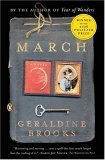
March, Geraldine Brooks

I was prepared to like this novel. I certainly like the premise, a story about the father of the March girls (aka Little Women), a character only seen briefly in Alcott's novels.

So you've got this character, a man who joins the Civil War not as a soldier, but as a chaplain. He's got an unsual background, self educated, thoughtful, radical politics for his time. A New England abolitionist, he can't stay out of the war. Once he's in the middle of it, he finds himself contemplating his life. We get most of the story through his letters to his wife and four daughters, and his first person perspective.

My problem with this novel is that Brooks went to extreme lengths to set up the conflicts she needed to draw a particular picture. Were Northerners any better than Southerners when it came to racism? Interesting question. With March as her main character, she could have approached it from multiple angles, but she set up a convoluted backstory. As a young man, March tells us, he roamed the south as a peddler. On one of his early journeys he calls at a plantation where he ends up staying much longer than intended. It is a beautiful place, the hospitality is sincere, he is treated with kindness and drawn in by the owner's generosity with his library and time. This is the same plantation he will encounter much later in his life, during the war.

It's the plantation that's problematic. March's early experiences there are chock full of cliches. Every character you've ever read or seen on screen populating a traditional plantation is here. It almost feels as though the author were ticking off a list as she wrote, a set of atrocities that had to be included before she considered the scenes finished. Did these things happen? Of course. And because they did happen, and because those stories have been told many times, it's especially hard to make the telling fresh, to make the story new. Hard, but important.

At the center of the plantation Brooks puts on the page is an intelligent, dignified slave woman March is attracted to, and who suffers greatly because of him. It's to this plantation and to this woman that he returns as a mature, middle aged army chaplain. Of course.

There is so much to admire in the way Brooks writes. Her prose is beautiful, her descriptions are evocative. But in terms of characterization, motivation, plot, there is a clumsiness here which was unfortunate, given an interesting premise and the foundation of the Little Women characters the author had to work with.

March 11, 2006

odds and ends

We're in a general state of chaos, having to do with really boring every day type things you don't want to hear about.

I hope to have something interesting to say tomorrow, or at least by Monday. In the meantime: some of you have left nice messages in the gimme gimme giveaway thread -- but neglected to share your LibraryThing username. You can't be in the drawing without one of those, so if you want a chance at the pile o' books, etc, get on over there and get yourself organized.

March 9, 2006

Italians behaving really, really badly. Again.

First, Sarah Weinman has a good summary of this whole sorry story, which you might want to read first so you don't get confused. I'll wait while you go do that.

So there you go. It's not enough that women are getting napolied by an Italian American Republican in South Dakota. Or that Antonin Scalia napolied the whole country after the 2000 election. In case there's any doubt about how bad we Italians can be, the Perugian officials involved in the (long and unsuccessful) hunt for the serial killer Il mostro di Firenze just couldn't resist the temptation. They had to arrest and interrogate Douglas Preston. An American journalist. Somebody with lots of friends in the media. So you know, not only were they behaving badly, they were being really stupid. They thought they could intimidate him. They thought they could act big and mean and shake their fingers in his face and that he'd come back to the States cowed, and keep the whole thing to himself.

Dumb. Very dumb.

At least Preston got away; Mario Spezi is still there, and in real peril.

When Italians behave really badly, nobody is safe, not even (or especially not) other Italians. Preston could come home; Spezi is already home, and he's stuck.

stumbling on new books

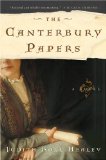
Leslie set herself up at LibraryThing (username leslief150), and in her list of five books was one I hadn't heard about. It's now on my library list (historical fiction almost always gets my attention). You'll note also that The Canterbury Papers has a wonderful cover.

This is one of the great aspects of LibraryThing, the book-networking that goes on. And I've mean meaning to say: I have no affiliation with LibraryThing, nothing beyond a membership and keen interest.

March 7, 2006

Candy's dictionary

Candy (of Smart Bitches) has put together a very important dictionary definition for billnapoli. Click, and you shall learn about the inspiration for her sudden leap into morphological territory. I personally plan on re-reading this definition about fifty times a day.

Digby has more on this napoli business, but do be sure to read the Smart Bitch defintion too. Read it early, and read it often.

EDITED TO ADD: Molly Ivins has more to say in her usual no-nonsense style. (Thanks to Barbara for the heads-up.)

...I find [Napoli's abortion stance] so profound I am considering putting Sen. Napoli in charge of all moral, ethical and medical decisions made by women. Certainly lucky for the women of South Dakota that he's there, and perhaps that's what we all need -- a man to make decisions for us in case we should decide to do something serious just for our own convenience.

Look at some of the incompetent women we have running around in this country -- Condoleezza Rice and Madeleine Albright, now there are a couple of girls in need of guidance from the South Dakota legislature. Female doctors, lawyers, airplane pilots, engineers and, for that matter, female members of the South Dakota Legislature -- who could ever trust them with an important decision?

In South Dakota, pharmacists can refuse to fill a prescription for contraceptives should it trouble their conscience, and some groups who worked on the anti-abortion bill believe contraception also needs to be outlawed. Good plan. After that, we'll reconsider women's property rights, civil right and voting rights.

For years, the women's movement has been going around asking, "Who decides?" as though that were the issue. Well, here's the answer. Bill Napoli decides, and if you're not happy with that arrangement, well, you'd better be prepared to do something about it.

how do you define napoli?

the best anxiety dream, ever

Because it was also a wonderful revenge dream.

When I was up for tenure at the University Michigan/Ann Arbor, things were tense. The tenure review process at UM is harrowing. In the humanities the turn down rate (at that time) was about 80 percent. Once I heard the dean say that they would rather err on the side of getting rid of a good person than holding on to a bad one. She said this openly, without apology. As if it were no more important than chosing between chicken and beef on a menu. Of course she was talking about whole careers, about people who (some of them, at least) have all their self worth wrapped up in the tenture decision. She also said: we give negative evidence more weight than positive evidence.

Oh, lovely.

So people tended to get really squirrley when they were up for tenure review. Me, I got defiant. My committee said, should we ask for a year's extension so your new book will be out? No, sez I. Absolutely not. They can take me or leave me as I am. I was very cranky, during the whole process. If they had turned me down, I wouldn't have been surprised. I would have gone off to do something else. Angry, yes. But not surprised, and certainly not unprepared.

A few nights before the decisions were announced I had a dream. In the dream I was in the front room at home, reading (always, always reading). There was the sound of a plane flying very low. Very, very low. I went out onto the porch and saw a small plane, the kind that seats about thirty people, circling and sputtering directly over the house. As it came lower I could make out the faces pressed against the windows, and I recognized every one of them. Adminstrative faculty types. The kind who make tenure decisions, particularly the ones who made the process as difficult and depressing as possible. Including the dean.

And the plane crashed, right into my garden, and it all went up in smoke, and all those administrative types? Literally, pushing up daisies.

Then I did get tenure, but somehow my anger never quite went away.

Beff's got questions

I read Auntie Beff's Sum of Me weblog pretty much every day but as she's got a very particular commenting policy, usually I can't tell her what I'm thinking. And I do actually think a lot about her, because she's got an interesting life and way of looking at things.

And now she's come over here to ask questions, so my dilemma is solved. Here are the answers.

What was the other anxiety dream?

I'll save that for a bedtime story. Mwahhahahaha.

How's the writing going?

It could be going better. There's something missing, something to tie the story together. I think I maybe might have an idea, which I am going to work on today. But I can't talk about this until it's solved, so later.

Should I ever speak to my mother again?

I'm actually glad you asked this.

You know you're never going to change her, right? She is who she is, and she gives you what she gives you (or doesn't). If you can take her at face value, you can probably have a cordial relationship. I imagine at this point your anger and disappointment and hurt are overwhelming, so logical decisions are hard. Here's something my therapist told me twenty years ago that I still think about: you can define yourself, your history, your needs and wants, or you can let person X do all that for you. But person X's you and your you are never going to be the same person. If you can't be comfortable with person X's version of you, you might well be better off stepping away.

I haven't spoken to my person x in those twenty years. I think about her sometimes. Not so much anger now, but a clearer set of emotions. There's a little regret mixed in, but mostly I know it was the right thing to do. Now, this is not my mother I'm talking about, but it's a blood relative who claimed responsibility for raising me, so the parallel is pretty strong.

It's a shitty situation, Auntie Beff. If I were closer I'd make you quiche (see below) and pat your head and listen while you talked. I'm sorry I'm not.

Do you have any good recipes for quiche?

You know quiche is just savory custard, right? Eggs and cream beat up and poured into a pastry shell. You can add anything that isn't so wet that it disturbs the egg/cream ratio. Cheese is the usual (and to my mind, indispensible) but you can add any kind of vegetable (precooked if it's something knotty), fruit, meat, fish. Salt, pepper, toy cars, whatever. The golden ratio is 4-5 eggs per pint of cream. You can use half and half, and your arteries will thank you.
Oh and, bake the pastry shell before you put the custard ingredients into it. Seal it with egg white, or you'll get a soggy crust.

Who invented liquid soap and why?

A little known fact: Liquid soap was invented by a Mrs. Hortense Cole of Walla Walla, Washington. When asked what the original purpose intended for her slippery concoction, Mrs. Cole blushed and shut the door in this reporter's face.

you don't write, you don't call

So. I give away a couple lousy ARCs and you all go running off into the woodwork, leaving me here to mutter to myself.

Not that you should worry. Really, I'm fine sitting here in the dark, by myself. What more could I want? It's a writer's lot.

Sniff.

You could ask a question. Maybe I would answer it. Who knows?

March 6, 2006

books out of mind

One of the bonuses of cataloging all our books is running into stories I haven't thought about in a while. Today I came around a corner and there was Rebecca. Du Maurier's Rebecca, of Manderley.

Now, there's a well done first person narrative.

Question: How can I have gone so long without re-reading this novel? It feels like going to a class reunion and running into somebody who was once a wonderful friend, somebody you haven't seen or really thought about for years. How sad, that long absence. How nice to see her again.

Of course with this lovely bonus comes a downside, and that is the height of my to be (re) read pile. Which reminds me of a panic dream I had when I was studying for my doctoral exams. A recurring panic/anxiety/holyshitexams dream.

In the basement of the main library at Princeton there are study carrels. Something like a walk-in closet, with a sliding door. Glass window in the door and next to it. Just enough room for a long desk-like slab, two chairs side by side (sometimes people actually had to share these closet-carrel thingies). Four long shelves for books, right to the ceiling.

Dead quiet in the bowels of Firestone Library. Florescent light that made everything seem slightly Brazil-like (I'm thinking of the movie, either you know it or you don't). Studying sixteen plus hours at a go, you could forget what time of day it was, if it was day at all. People stumbled around at three in the morning, mostly so other people would see how studious and unkempt they were.

In this dream I was sitting in my carrel studying. Every surface covered with books. The door open, for fresh air (or what passed for fresh air down there). Suddenly I look up and realize that the sliding door has slid shut. And, what a lovely touch: there are now bars on the windows, and a slot in the door.

Footsteps coming down the hall, and the sound of a cart being pushed. Dinner, I think. The slot is pushed open, and books start coming in. Fast. So fast I can't grab them, and they start to cascade across the floor. I'm up to my knees in books. I scream: STOP. I CAN'T KEEP UP.

The cascade stops.

From the other side of the door comes a woman's voice. Calm, authoritarian, inflexible:
READ FASTER.

Now of course I don't have to read faster, even though my pile of books is growing by leaps and bounds. Because nobody is going to sit me down in a chair and ask me to talk about the editorial history of Grimms Deutsches Woerterbuch or how to reconstruct Proto-Indo-European consonants or to outline the underpinnings of a theory of universal grammar. If I feel like it, I might tell you about Rebecca after I've re-read it. Maybe. If I feel like it. And you promise not to quiz me.

Back to work. And I just remembered an even better anxiety/panic dream. Tomorrow, maybe.

March 5, 2006

storytelling, the old fashioned way

Languagehat has a story about a plaza in Morocco where storytellers carry on the tradition of telling epic folk tales to a crowd.

This always reminds me of the villages in Austria where oral storytelling is so important, and such a rich experience. It's this kind of storytelling, a give and take between teller and audience, that can never be captured on a page or even on a screen. In this country, the communities that still tell stories in this way function mostly below general notice. You'd be most likely to come across this phenomenon in inner city neighborhoods or in very small, rural towns, especially in the south. And if you're reading this, the storytelling you'd hear would not be in the variety of English you speak.

There are people in this country who are dedicated to maintaining and nurturing the art of oral storytelling. You don't have to look very far to find them.

But really what all of this brings to mind is the tyranny of the written word.

March 3, 2006

I need a personal shopper

Or at least some advice.

The girlchild takes after the Mathematician in a variety of ways, good and not so good. She's got a facility for numbers and abstract concepts (good); she's tall and lean (good, in my short and round opinion); she's a night owl. Which is really not very good because high schools don't understand about circadian rhythms. Her natural rhythms would have her sleeping from about 2 am to 10 am; her first class starts at 7:45. This is one of those never-the-twain-shall-meet situations.

And I'm caught in the middle. Who has to get her out of bed when she's moaning pitifully that she couldn't fall asleep until two? Guess. And boy, can she get cranky when she's tired. You know that dawn-of-the-dead ferocious yellow eyed stare? That's her, in bed, looking up at me.

Of course she has to take some responsibility at age almost seventeen, but we have tried to help by providing incentives, both positive and (more recently) negative. The new one is this: if she's not pulling out of the garage at 7:20, there's no internet or television for twenty-four hours. My role in this: I wake her up, once. After that she's on her own, and if she can't make herself move in time, that's it. No wiggle room.

This is very, very unpopular.

Today I decided to look for an alarm clock that would make it easier for her to get out of bed, and provide some relief for all parties. Especially me. Do you have any idea how many alarm clocks are out there, and how badly designed most of them are?

Here's what I want, and can't find:

1. An atomic clock, one that checks with the Colorado clock by radio and sets itself to the right time. My alarm has this feature, and I never have to worry about whether it's right or not. This feature will preclude the "my clock is different than your clock my clock says I have five more minutes" debate.

2. A very, very loud alarm. This will cut off the "I slept right through it" discussion.

3. Buttons large enough to see. You think I'm joking, but some of the alarm clocks out there I swear have been miniaturized. Someplace design engineers are laughing hysterically at the idea of middle aged women trying to set an alarm by manipulating a button the size of a pin head. No "I set it wrong" excuses.

4. A clock that has BOTH batteries and an plug. Batteries for when the power fails, power for the rest of the time. The "I guess the power went out" last ditch excuse will no longer fly.

I have looked at a hundred, two hundred, a thousand alarm clocks today, thanks to the internet, and none of them combine these features. If they do, they've got some other feature than renders them completely useless. A clock that can be immediately silenced by touching it anywhere is not a clock that is going to get the kid out of bed on time. A clock that has a setting for a kinder, gentler sounding alarm? Really, not a good idea. Nor do we need a clock that tells us the temperature in New Delhi, the time in Miami, the humidity in our own garden. The clock doesn't need to talk to us, or sing us songs or make breakfast.

Loud ring, reliable time, power backup.

Apparently, this is too much to ask.

March 2, 2006

the missing novel

Maryrose asked if there was any chance of a novel that tells the story of Hannah's ten years in the west with Strikes-the-Sky.

I'm sorry, Maryrose. Nope.

But her question did make me think about WHY this isn't a possibility, and the answer is important. You have to understand that it wouldn't be just Hannah's story. it's Tecumseh's story and the story of that last desperate effort to pull the tribes together.

I've read a lot about Tecumseh and his life and times, what he tried to accomplish, how it all went wrong. It's a tragic story -- for Hannah and for Tecumseh and everyone involved -- and I simply am not equal to telling it.

crickey. catalog cards


I am easily amused, this is true. But really, this is cool. There's no other word for it.

John Blyberg is a librarian at the Ann Arbor District Library. He's clearly somebody with imagination and technical skills both, because he programmed a special feature for the AADL online catalog. With the click of a button you can generate a catalog card for the book you've looked up. Like this one, here. Of Homestead. Here's the link to this card's page -- and you'll note that you can add your own marginalia. In handwriting. I am such a geek, but I love this.

If you're a more talented geek than I am, he's made the code available for people to work with. It's a good thing I don't know how to program, because I'd never get any writing done at all if I could customize this for myself.

Along the same lines, library people in various places are trying to preserve some of the old catalog cards for their own sake. This takes me right back to the Lincoln Avenue branch of the Chicago Public Library.

March 1, 2006

new improved Strikes-the-Sky question... and an almost answer

Sara has more questions regarding Strikes-the-Sky:

So now I'm going to do the bold and unthinkable and ask you a question, which as author you aren't obligated to address (though I surely hope you will). Why -- when his character was so immediately interesting, endearing and obviously significant -- did you have Strikes-the-Sky die? I simply sensed such potential had he lived -- in whatever circumstance. I humbly admit, however, that I have secretly hoped he still did live, and I know that however the story ends up it will be right.

It's an interesting question, but not easy to answer. Why does any character die? Why does Strikes-the-Sky die? Was that a cold blooded, cold hearted decision on my part?

To be truthful, I don't even remember when I knew that Strikes-the-Sky wouldn't be around for Fire Along the Sky. What I knew, before I started writing, was very little beyond a basic fact: Hannah needed to be in the Ohio territory during the time Tecumseh was trying to unite the tribes. She had to be a part of that, and to experience first hand what was coming for all the first peoples. Strikes-the-Sky took her there, and made it possible for her to have those experiences.

The loss of her husband and son is mirrored and made more intense by a larger loss of what was widely believed to be the last real chance for the native peoples to resist European encroachment. But I never sat down and reckoned this all out for myself. It happened behind the door of my subconscious, and then appeared one day as a done deal.

I don't know if that is an answer that will help anybody understand the process, but it's as close as I can get to describing how things came to pass for Strikes-the-Sky.

Darcy in distress

I'm the first to admit that I belong to that very large club of people who adore Jane Austen. I reread all her novels every year, I own and regularly watch various film adaptations, and I have read more than a few of the sequels written to her novels. Also, every biography out there. And another confession: I love culture of her time and place. I've got dozens of histories and non fiction works about Regency England.

Some people point out that Jane Austen's world really didn't make it into her novels. Her focus is very tight: the individuals, the famlies, the neighborhood, their habits and fears and wishes. The Napoleonic wars are only very vaguely hinted at in some novels, which probably has to do with her personal connection to the navy. Class and economic issues, war, the private lives of men, none of this enters into the stories she tells.

I don't mind, personally. I love the novels for what they are. On the other hand, when Pamela Aidan set out to retell Pride and Prejudice from Darcy's point of view, I was intrigued. It seemed a promising way to explore all those issues that Austen herself didn't bother with. Politics, men's amusements (high and low), fashion, all the details that I wonder about when I'm reading. So Pamela Aidan wrote a novel in three parts, in which we get the whole story again, from Darcy's POV.

What works: there is an incredible amount of research behind this novel. Meticulous, exhaustive research. The attention to detail is astounding, from what Darcy's walking stick looked like to his relationship with his valet, from his opinion on the politics of the day to his reading habits. Everything is there. I read for the details, and I was amply rewarded.

Unfortunately, the story itself doesn't work as well. I've been wondering about why this is, and it seems to me that Aidan's dedication to the original version hemmed her in. Every scene in Austen's Pride and Prejudice has an equivalent in Aidan's version, with Darcy's reactions to everything. In addition to this, Aidan follows him when he leaves the setting of the original story and tells us exactly what he's doing while the rest of Pride and Prejudice is going on without him. A country house visit, the friends there, the sexual intrigues. Politics, family matters, his relationship to his sister. How Elizabeth Bennett keeps intruding into his thoughts.

The result of all this is a novel that feels overstuffed, bursting with detail, and a Darcy who is tied up tightly and can't really flex.

If you really love Austen's time and place, you will like this three volume work for its accuracy and careful reconstruction of Regency England. If you just want the story, you will probably be disappointed.