" /> storytelling: May 2006 Archives

take me to the front page of the tttt weblog | back to the current weblog

« April 2006 | Main | June 2006 »

May 31, 2006

voices in my head

When I was writing Homestead, there was always a significant pause between chapters. The reason for this pause was that I had to figure out which of the voices in my head would get to speak up first. Each chapter is written from another woman's perspective, and each of those women were very adamant about the role they would play.

The one exception was Bengat's Olga. It took a very long time to realize that the only way for her part of the story to be told was in the form of a letter. She didn't want to speak to me, she wanted to talk to her husband. So she did.

I have a similar situation in Pajama Jones. Julia Darrow is a woman with a story that needs to be told, and she's really particular about the who and how and when. She won't tell it all at once, and she'll only tell it to one particular character. The problem is that often I misstep in the manner of telling it.

You realize there are so many ways for characters to share information. They can talk to each other in direct dialogue; their dialogue can be indirect (which is sometimes far more powerful); they can remember something in detail in a vivid you-are-there present tense flashback (something that works for my characters quite often). Or some combination of all these. Or the author can take over and play omniscient being. This is something I very rarely do.

When Julia is ready to tell part of her story, for me it's like walking on eggshells. I start the scene and if she isn't comfortable with the way it's going, she balks. Just shuts down. Closes herself in her room. This is a traumatic story she's telling and I feel sometimes like I'm coaxing it out of her, or maybe more like I'm directing somebody who is both author and actor. I say, okay, you want to tell this in your own words and she says, NO. Not directly.

So I write and rewrite and rewrite it again, and finally she settles down and allows the story to move ahead.

I know that other writers experience this in a similar way. Not all writers, but at least some. It's very disconcerting to be negotiating such delicate matters with somebody who lives in your own head. Because they never go away, not completely. They'll pop out at the most inconvenient moment to reveal an awkward detail that can't be ignored, or to simply shut things down if they are unhappy. They care not a fig for practical matters. Deadline is not in the character's vocabulary. But it's in mine. I've got a month to finish this novel. Will I make it?

Doesn't feel like it, just at this moment. Or so Julia informs me.

And that's today's post from the land of split personalities.
writ large

Via Fuse #8 (and sometime maybe she'll explain to us what Fuse #8 means) an interesting essay on the art of the book review by Brian Doyle who is the editor of Portland Magazine. This essay itself is written in a grandiose, generous voice by somebody who can poke fun at himself:

... or meeting a writer of startling grace and power whose stories stitch and braid into your heart -- a Helen Garner, a Haruki Murakami. Or meeting again, with a shiver of warm recognition, writers who mattered to you once and who leap right back to the top of that teetering pile of books on your bedside table: Willa Cather, Robert Louis Stevenson, George Orwell, Eudora Welty. Or, another grinning low pleasure, reading a review and recognizing that brassy pub-argument voice, cocksure about writerly rankings -- a voice I drift into myself, I confess, when I insist, banging my tankard, that Twain is the greatest of all American writers, and Bellow the greatest of modern ones, and Stevenson the most broadly masterful of all.

On the best of the genre:

And it is a form with masters, like John Updike (whose book reviews are literary essays of exquisite grace and erudition, far more interesting and pithy than his novels, with far less neurotic, lusty misadventure) or Christopher Hitchens (whose reviews are energetic, opinionated, bristly, tart and often hilarious), or James Wood (who is almost always startlingly perceptive and who, bless his heart, coined the happy phrase "hysterical realism" to describe much modern fiction).

And the not-so-wonderful:

And like any form it has its charlatans and mountebanks; what is more entertaining, among the dark pleasures of reading a newspaper, than realizing that the reviewer has not actually read the book in question, and is committing fizzy sleight-of-hand? Or reading a review that is utterly self-indulgently about the reviewer, not the book? Or a review that is trying desperately to be polite about a book with as many flaws as the New York Knicks? Or reading a reviewer, like Michiko Kakutani of The New York Times, who must spend hours every day sharpening razors with which to eviscerate the books she reviews, and has liked, as far as I remember, only two books in the history of the universe, Ian McEwan's "Saturday" and Richard Flanagan's "Gould's Book of Fish"?

My one quibble here is that I do not consider it a pleasure of any kind to realize that a reviewer hasn't read the book -- especially as this has happened to me personally (and by somebody reviewing for a paper in Oregon, by coincidence). My reaction had more to do with disgust and anger.

The article will disappear at some point into the pay-for-view archives, so read it while it's hot.

May 29, 2006

be vewy vewy quiet

The writing is going. Note the lack of qualifier, because every superstitious Italian cell in my body is telling me to shut up now.

So something very different.

Once in a while when I'm procrastinating, I will go online and look at real estate in Chicago. In the neighborhood where I grew up, which is sometimes called the St. Ben's neighborhood. Because St. Benedict Parish is in the middle of it. That's where I went to school, first grade to twelfth. I do this out of perverse need to see what I can't have, and also because it's just amazing. The neighborhoods around Ben's are mostly made up of brick two flats, with an occasion full fledged stand alone house, or an apartment building. I remember when I was eighteen, a friend of my father's bought one of the two flats for 34K.

In the eighties the neighborhood teetered on the edge of real trouble for a while, and then it got sucked into the gentrification process. So now I browse real estate listings of those old two flats that have been renovated into one family homes, and go for someplace between $700K and over a million. These are nice neighborhoods, mind you. Lots of old trees and little postage stamp grass yards front and back, a real sense of community. That's what you get for your million.

So while I was looking at houses, a map of the neighborhood came up and it seemed off to me. I had to study it for a few minutes before I realized what was wrong.

A whole hospital had gone missing.

Martha Washington Hospital used to sit on about five acres at the corner of Irving Park Road and Western. It was a small hospital by any standards. My great uncle Ben was on the board of directors, and he got me a job there. I worked full time as a nursing assistant for almost a year, and then part time when I was an undergrad.

My memories of that period of my life are pretty vivid, but I almost never talk about them. Or I never used to talk about them. But ever since I read about the hospital being torn down (to make way for senior housing), images keep popping into my head and bits of stories and memories. I think this has to do with the fact that I've finally admitted to myself that the Chicago I remember, the one I grew up in and lived in until I moved away for good at 25 -- doesn't exist anymore. Pieces of it are still there. Ann Sather's, and Wrigley Field, and Lutz's Cafe. But so much is gone. Martha Washington is just one example. The Maxwell Street Market, Riverview, these are institutions that are long gone, but are still very much present in my internal picture of the city.

Now see, I went and got all maudlin. Obviously I need to go back to work.

May 27, 2006

White Ghost Girls - Alice Greenway

A gorgeous cover, is it not? Unfortunately I wasn't so taken by the story itself.

This novel has got a lot of critical acclaim, and certainly the prose is intriguing. Very vivid and evocative descriptions of Hong Kong in the 1960s, as seen through the eyes of the first person narrator, a girl of thirteen. She lives there with her fourteen year old sister and their mother while their father is off for six weeks at a time in Vietnam. He takes photographs for one of the big papers, and he loves his work. He loves Vietnam.

So you have three women who live in a state of waiting. When he comes back to Hong Kong for short periods they must compete for his attention with each other, and with his dozens of friends.

You can see the tension and the conflict, the potential in terms of story. Greenway explores the relationship between the girls, and she does that well. But this is a thin novel, almost more of a novella, and there wasn't enough meat on the bone. I was left feeling underfed, to carry that questionable metaphor just a tad too far.

However. If you are interested in the time and place, this novel will give you an interesting and unusual perspective on Vietnam.

May 26, 2006

summer time


Family History - Dani Shapiro

I finished this novel a week ago and I am still thinking about it.

This is one of those stories that can really unsettle you if you have anything in common with characters. In this case, Rachel and Ned and their teenage daughter Kate.

Disasters come in all shapes and sizes. With this novel Shapiro takes on a particular kind of disaster that few people have the courage to deal with directly. There are many novels out there about how families cope (or don't) when kids get cancer, or drive drunk and cause unending misery, or get involved with drugs. These are things things parents hear about every day. These are the things we prepare ourselves for, if only in the vaguest way. We imagine the police at the door, the phone call in the middle of the night. What we'd do. Who to call.

There's no big mystery about what will happen next if your kid is diagnosed with lymphoma. The details, sure. But you know there will be doctors and hospitals and tests and agony. A kid arrested for shoplifting or drunk driving, same thing: you have an idea of what will happen, who to turn to, that lawyers and courts will be involved. The impact it will all have on your child's future.

Shapiro tells a disaster story of another kind.

Your teenager goes off to camp one summer and comes back a different person. Somebody you don't recognize. Somebody who frightens you. And not in the usual acting-out teenager way. We all recognize that out of our own pasts. It's painful and hard to deal with, but it's familiar.

Ned and Rachel pick Kate up when she comes home from camp and they know immediately that there's something seriously wrong. It's a long time before they can put words to what they're observing. These are words to be avoided at all costs, when you're thinking about your own kid. I would venture that for most parents, psychosis is far more frightening than leukemia.

Kate's condition -- which is never spelled out clearly -- works like a sledge hammer on the family. As it must. Even the strongest bond between partners is tested by a disaster of this magnitude. Add to this already difficult situation an unexpected pregnancy and new baby, and the potential for heartbreak skyrockets.

I'm not going to say anything more about the plot. If this family survives, if they find a way to stay together, if Kate gets the help she needs -- you'll have to read the book. It's worth reading, but it's possibly more than some people could bear.

the Tuck and Bunny show


illegal drugs

Here's an embarrassing confession: I never have. Not once. Not anything. I was a law-and-order kid in (Catholic) high school. At age 17 I had more chance of finding my way to the moon than to a place to buy (pot? grass? what did we call it, anyway.) And I never started drinking because genetically, the way I metabolize alcohol makes me a prime candidate for alcoholism. Lots of family history to support that one.

So now if I need a bump, what do I do? Sugar is the obvious option, but it's not very effective. Caffeine doesn't agree with me. Exercise! That does it for a lot of people... I hate it. I can't remember which one, but some astronaut said that he only had so many heart beats in his life, and he wasn't wasting any of them on jogging. (And please don't comment to tell me about the logical fallacy in that statement.)

As an A-type personality I used to daydream about speed. Speed, I was convinced, would be good. I could get more done. I would lose weight. Who needs to sleep anyway? But I'm not so self destructive that I would actually pursue this kind of fantasy.

People tell me how great it is that I'm writing full time. But you know what? I would love to be employed by somebody besides myself. It's hard always having to motivate yourself. If I play solitaire all day long inspite of a looming deadline, there's nobody there to poke me into activity. I've got to be a grownup all the time. Thus the fantasy (and it is a fantasy, I have no illusions about that) of some perfect drug that would provide that push.

Now I have to get back to work.

May 25, 2006

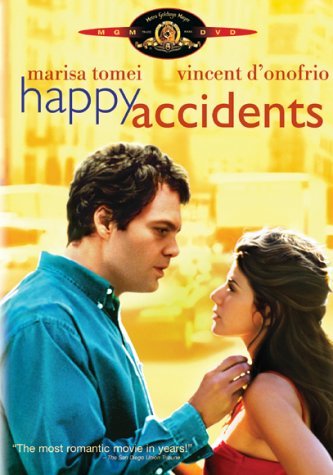
Happy Accidents, directed by Brad Anderson

So how did I miss this movie when it came out in 2002? I just watched it (thank you, Netflix) and immediately went to check it out on the web. It's got consistently good reviews, so I'm mystified. Especially as I have been keeping an eye out for Vincent D'Onofrio since I saw The Whole Wide World (one of the saddest movies ever).

This is an odd story that defies cubbyholing. Is it a straight romance? Is it a postmodern jumble of self-observation and distorting mirrors? Is it sci-fi?

There is a love story here. Ruby has a history of getting involved in codependent relationships. Along comes Sam Deed, a sweet, caring, nice guy from Dubuque who is adrift in Manhattan. So very adrift that Ruby starts wondering if there's something up with Sam; her therapist (in a gorgeous apartment overlooking Central Park) sees him as more of a bad habit.

But there's more going on. Ruby finds clues, and confronts Sam. Sam responds with a story that sends her into despair. This sweet guy, her Sam, is really nuts. Delusional, or if she takes him for what he claims to be: a time traveller.

You really don't know what to think about Sam right until the end of the movie. In fact, I'm still sorting it all out in my head. It's the kind of story where you want to go back and pay attention to the clues you missed the first time, ala The Sixth Sense. There was only one false note in the whole movie, and it had to do with the therapist. And I'll leave that as enough said.

In the meantime, Happy Accidents is that elusive beast, a good date movie, fun and thought provoking, well written, beautifully shot and edited, with good performances all around.

May 24, 2006

USA Today likes Tied to the Tracks

Today's USA Today names Tied to the Tracks as a Critic's Pick:

And don't miss:

•Tied to the Tracks by Rosina Lippi (Putnam, $23.95, June 8). When a Yankee documentary news crew comes to a small town in Georgia, all sorts of secrets pop out about lost loves.

Bruha Barbara

In case you haven't been following this story, there's a literary agent of low repute. Her name is Barbara Bauer. Because of her business practicees, she showed up on the 20 Worst Agents list. You can also read about her and others like her at Writer Beware and Preditors and Editors. Other links on this topic (as suggested by Making Light): Everything you wanted to know about literary agents and On the getting of agents.

Bruha Barbara went on the offensive after her name showed up on that list. She has tried to get people fired. She has threatened legal action. She pulled strings with an internet provider and had Absolute Write (a long standing resource for writers with a very large following) shut down. In general, she's done everything in her power to draw attention to the fact that she's on the list of 20 Worst Agents .
As a result, many people have read the carefully constructed case against her than would have, if she had sat quietly in the corner.

I don't think much of an internet provider who would boot a long standing website -- of good repute -- on the basis of a complaint from one person with questionable motives. It all smacks of censorship, and that I really don't like. So take note of the 20 Worst Agents list, and be informed when you go out looking for representation.

May 23, 2006

ARCs

I forget sometimes that people new to the weblog might be confused by abbreviations. Jody asked about the word ARC. If you know all about this, you can skip the next bit.

ARC stands for Advance Reading Copy. Basically the publisher takes the first pass proofs of the novel -- that is, the uncorrected proofs -- and binds them into large format soft covers. They don't print a lot of ARCs, and there is always fierce competition for them. The lion's share goes out to the reviewers and booksellers in the hope that they'll fall madly in love and publicize the book and/or write good things about it; authors and their agents get a couple copies. It's really pitiful to see, but I have to admit I have begged and groveled to get more ARCs than they want to send me. And I have to fight my agent for them too. She actually needs them to send out when she's making a pitch for an overseas sale, so she's got a good reason.

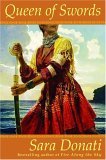
So why do I want ARCs? Because I have people chomping at the bit. People who helped with research or gave me feedback, who want to see the damn thing. And I have readers like you all. I like giving away ARCs -- as long as some ground rules can be established. Which I'll talk about next week when I give the first Queen of Swords ARC away. Probably on Monday.

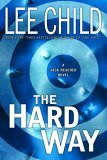
The Hard Way -- Lee Child

To be clear: I am predisposed to like any novel in this series about Jack Reacher. Reacher is the ultimate strong silent hero, an ex army MP who roams the country never carrying anything with him but a toothbrush. He works when the mood strikes him -- one novel begins with him digging pools in southern Florida simply for the physical workout -- but in the more recent novels he rarely stays anywhere more than two or three days.

Generally Reacher tries to stay off the grid. He doesn't have a driver's license, he accepts no federal money, he always pays with cash. But he's also got a strong sense of right and wrong, and he doesn't walk away from a fight.

This is the tenth Jack Reacher novel. I haven't disliked any of them, though some I wouldn't necessarily re-read. My favorite is still Die Trying, and I liked Without Fail and Tripwire almost as much.

So this new novel, Reacher is spending a couple days in Manhattan. He's sitting in an outdoor cafe and he sees a man walk up to a car, get in it, and drive away. That simple beginning launches him into a kidnapping investigation, one with many twists and turns. He teams up with a former FBI agent, a woman he's very attracted to.

Reacher likes women. They like him back.

I've been trying to figure out why I didn't like this novel as much as the last one. A couple things come to mind: for the first time, I noticed a wrinkle in a clue before Reacher did. That bothered me. And more important, I kept waiting for him to remember where he was. In Tripwire, he comes close to settling down. A young woman he knew as the daughter of his superior officer comes back into his life. She's thirty, divorced, a lawyer. They never acted on the mutual attraction when he was in the service, but now things heat up, and Reacher comes as close as he ever will to living a somewhat normal life. All that happens in Manhattan, and it ends in Manhattan too, and not easily.

At no time in this novel does Reacher ever think about Jodie. He never takes note of places he had been with her, where he lived with her, where she worked. He never wonders about her, if she's come back to Manhattan. I kept wondering, but to him it was as if she never existed. Somehow that just doesn't sit right. I wonder if Lee Child did this on purpose, and why.

It didn't ruin the novel for me, but this oversight was in the forefront while I read. Which really, was a shame because otherwise it's a good story, well put together and full of classic Reacherisms.

Queen of Swords ARCs

... are on their way to me and should be here next week.

I have three ARCs to give away, the first one sometime next week. Stay tuned.

May 22, 2006

book collecting

Kristina Lynn asked what kind of books I have been looking for. I don't think I've mentioned that before.

I collect children's books illustrated by Lisbeth Zwerger, Helen Oxenbury, Rosemary Wells, Maurice Sendak, Jan Ormerod, Shirley Hughes, Gabrielle Vincent and a number of others.


Just recently I've been looking for hardcover first editions of two of Oxenbury's books, Tom and Pippo go to the Beach, and Tom and Pippo and the Washing Machine. Once a week or so I check all the online sources for the books on my list. Over time I've had pretty good luck finding the books I'm looking for.


The big exception is Gabrielle Vincent's work. She publishes mostly in France, and it's next to impossible to find hardcover (not ex-library) US edition copies of her Ernest and Celestine books.

EDITED TO ANSWER A QUESTION:

Q: What exactly do I do with these books I collect?

A: That depends. On rare occasions I have bought a book simply because I have a hunch it might turn out to be valuable down the line. So, books as an investment. Those I definitely do not fuss with. Example: I've got a pre-Oprah debacle copy of Jonathan Franzen's The Corrections.

Most usually I go looking for a first edition/first printing of an adult book because I really loved it. If I can find a signed 1st/1st for a reasonable price, I'll get that. I tend to leave the signed 1st/1sts alone, not so much to protect their value (although that is also a factor) but because I'll usually have a reading copy. Examples: A Soldier of the Great War, The Rose Grower, The Time Traveller's Wife. Of course there are hundreds and hundreds of books that would be in this category, if I could only afford a first edition/first printing. Examples of that: Lonesome Dove (a 1st/1st runs somewhere around $800); Shipping News, all the Dorothy Dunnett Niccolo Rising series, etc etc.

I collect children's books almost exclusively because of the illustrations. I do look at these books, but I'm careful with them. In many cases we still have the Girlchild's original copy, which I have packed away. This category is where I can get into real trouble, because kid's books are expensive. But oh, the illustrations. As Rachel mentions, there are many I would love to have as prints to hang on the walls, but I never would take one of those books apart. The original illustrations are sometimes for sale, but way beyond my budget. Have a look at Lisbeth Zwerger's original illustrations for sale at Storyopolis. $14,500 for a watercolor... yikes.

Today our local library is having an annual book sale to raise money. This is not the sale where they get rid of books they no longer want in the collection; this is good stuff. Donated stuff. A first edition of Anne of Green Gables, for example. Unfortunately (or fortunately) I have a class on Tuesday afternoons, so I'm going to miss the pre-sale. The question is if I can stay away from the sale proper, which starts tomorrow at ten.

craziness

via the ever radiant and vigilant Robyn Bender, this link to a boingboing story about police shenanigans on a Florida college campus.

Imagine you're a college student. You write short stories. You experiment with style and tone. You post your stories on the internet. One of the stories you post is about somebody who murders two people and then joins the army.

The phone rings.

Voice: You the guy who wrote 'I am Ready to Serve My Country' and posted it on LiveJournal?
You: Um, yes, that's me.
Voice: We'd like you to come down and give us a hair and sputum sample, oh and, fingerprints.

It's true. The campus police wanted to compare the student's DNA and fingerprints to evidence from unsolved murders going back ten years. And why? Because he wrote a short short (three paragraphs long) about somebody who kills two people.

The student refused. Interviews were conducted, with the student, with the student's professors. A recurring theme in the questions posed by the officers: Did the faculty really think it was appropriate for students to be writing this kind of thing?

Apparently these college police think they have something to contribute to the curriculum.

Now, I've got some questions too: what are they doing reading internet stories anyway? No shoplifters to nab? No parking tickets to write? And in the spirit of the thing, I'm wondering who else they're pressuring for DNA and fingerprints. I wonder if they've ever heard of the ACLU, or if maybe the (so called) Patriot Act has gone to their (so called) heads.

May 21, 2006

virtue out of necessity

I have been looking for a copy of a children's book, out of print, hard to find. Usually the copies I find listed on one website or another are ex-library, which means somebody bought a book for fifty cents at a library sale in the hope they could sell it for more to somebody else.

Some people don't mind ex-library books. I do. I never buy them, because they are almost sure to be a mess. Kids are hard on books, and library books especially. And then you get all the stickers and marks and the rest of the detrius of a book coming through a library system.

Now, kids don't care about this kind of thing. If you're just looking for a copy of an out of print book because you think your three year old will like it, well then, an x-library book might be just fine in your case. Sellers know that people who collect books don't want ex-library books. The honest ones say right up-front if the book is ex-lib. Some hide the information at the very bottom of an otherwise long description. Some neglect to tell you at all. I personally always ask before I commit to buying. Is this an ex-lib book? A remaindered book?

But today I came across this listing, which made me laugh out loud:

ISBN: 1564023443 Description: Good. Hardcover. Candlewick; 1st U.S. edition ISBN 1564023443 PUBLISHED 9, 5, 1994 Might contain wonderful ex-library markings or some nice highlighting.

This is like putting an ad in the paper for a car that reads: This car has interesting dings and colorful scrapes.

Odd, eh?

plots: 7, 20, 36

You may have run across this idea before. The theory is that any story you come across in whatever medium (book, film, oral storytelling, comic books, etc) will fit (more or less) into one of x-number of basic plots.

The Tennessee Screenwriting people will tell you there are twenty basic plots, which they have summarized here. Georges Polti goes bigger with Thirty-Six Dramatic Situations. this is quite an old book and not a particularly helpful one, so don't rush out and buy it, okay? I'm just using it as an example.

Booker's The Seven Basic Plots is a much more interesting book, and his discussion of each of his seven is actually a lot of fun. If you're going to look at this book, I'd stop after the first half. When he gets into a very odd mixture of pseudo-Jungean psychology and conservative politics he lost me. On the other hand, you could just read the really wonderful summary of the main points of this book put together by Chris Bateman last year as a blog entry.

I'm not sure exactly why this x-number of plots business has been going around in my head lately. Maybe just because it's a way to think about the structure of a story, and it also has me thinking more about theme -- which is a subject I avoid, usually. Maybe because (like Rachel, when it comes to POV) I had a bad experience with it in school. A teacher who would poke an unsuspecting student with the theme question at every opportunity. What's the THEME of this story? And she'd stand there tapping her toe.

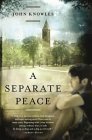
I especially remember this because she did it to me when we read Knowles' A Separate Peace. Is that still standard assigned reading, by the way? In any case, I remember going completely blank while she tapped her foot. Theme? Theme? Theme? echoing in my head. I finally said, in a rather fourteen year old way, why does everything have to have a theme, anyway? Can't it just be a story?

Which earned me the thanks of my fellow classmates but otherwise did not do me any good at all.

To this day, I can't talk about theme. A wall goes up when I read the word. But today I went over to Wikipedia and found this handy little description in a larger topic (theme in literature):

A theme is not the same as the subject of a work. For example, the subject of Green Eggs and Ham is "green eggs and ham are well worth eating, no matter the location". The theme might be "have an open mind".

And also this distinction:

Themes differ from motifs in that themes are ideas conveyed by a text, while motifs are repeated symbols that represent those ideas. Simply having repeated symbolism related to chess, for example, would be termed a motif. On the other hand, a chess motif could easily symbolize a literary theme; for example: "The struggle between good and evil," or "The necessity to sacrifice to achieve goals."

Which kind of supports my original dislike of the idea of theme. Themes are reductive by nature, no? Here's the theme for Othello: open communication can save a life. Or, envy is destructive. So what is the theme of A Separate Peace? Oh yeah. Envy is destructive.

So I haven't worked through my aversion to the discussion of theme. I guess I can carry on anyway. What I can discuss is this x-number of plots business.

The first of Booker's seven plots is Overcoming the Monster. He draws a connection between Dr. No and Gilgamesh because in both cases you've got a hero on his own who has to travel a long way to slay a monster (of sorts). Now I'm trying to make a list of ten books that fit this description without looking at Booker's discussion.

May 20, 2006

verb tense: does anybody take note?

I'm wondering how much the average reader notices about the mechanics behind the story. In particular I'm wondering about verb tense.

In the spoken language, a shift from telling a story in past tense to the present tense is a big narrative flag. For example:

You know how I went over to see my grandma yesterday? So I walk in and she looks up and sees me standing there and she says, Joyce, she says, come over here and help me with my buttons, I can't reach and I'm late for work. And I'm thinking, grandma's around the bend, she's talking to me like I'm my mother. Like I don't got enough problems. So I grab the phone and call the house and I say to ma, get over here, double quick.

This short bit of dialog starts off in past tense and quickly shifts to present, which signals the narrator's degree of involvement in the story she's telling. Present tense brings in a dramatic edge.

Now, everybody does this. You do it too, when you're telling a story in which you've got some kind of investment. There's a vibrancy to using the present tense this way. And the effect is there whether people actually notice the tense shift or not. It functions below the level of consciousness, for the most part.

In writing I shift into present tense for the most important scenes, the ones with the biggest emotional punch. I don't think about doing it, it just clicks in.

When I'm reading I take note of that kind of thing. Tenses shift, POVs turn on a dime, exposition, whatever tricks the writer pulls out of the bag, I usually take note. And I'll think to myself, nice transition or that was a little awkward. This kind of note taking is second nature and barely slows me down unless it's something egregiously awful or stunningly effective. I would like, sometimes, to not take note, but it's almost impossible. My father-in-law was a structural engineer at British Aerospace for fifty years, and he can't just sit in an airplane. Everything has meaning to him, every sound, every movement. It's all noise to me, but not to him.

So I'm wondering if you all (the ones who don't write for a living) take note of what goes on in terms of story mechanics as you read, or if all that just stays below the level of consciousness.

Anybody?

May 18, 2006

Tied to the Tracks pub date

For some reason, Putnam has moved the pub date for Tied to the Tracks up to June 8 -- a week earlier than planned. I don't know why, and I suppose it's not all that important. But I wanted to share the news.

first pass (ugh) proofreading finished (yaaay)

I'm putting this huge monstrosity of a manuscript (Queen of Swords) out of the door for FedEx to deal with.

Done done done. Now I have to get back to real work.

Something unusual happened yesterday. Somebody recognized my name when I was paying for something at a store. This happens maybe two or three times a year, and it always gives me a shock.

Now really, back to work.

May 17, 2006

a bit of perspective from the Washington Post

This is from the review of Elinor Lipman's new novel:

From The Washington Post's Book World/washingtonpost.com

Elinor Lipman is a far more serious novelist than she pretends to be or is allowed to be by reviewers. (I learned a long time ago that to be taken seriously you need to cut back on the funny lines. I once all but won the Booker Prize for a novel from which, on Kingsley Amis's advice, I had removed anything remotely mirthful. Alas, it was still "all but," so I reverted to my old ways.) Lipman, declining to learn this worldly wisdom, goes on making jokes and therefore tends to get described with adjectives that are good for sales but bad for literary reputations: "oddball," "hilarious," "over-the-top," "quirky," "beguiling" or, worst of all, "summer reading." The prose slips down too easily and pleasantly to allow her to rise into the literary top division, where the adjectives become "piercing," "important," "profound," "significant," "lyrical," "innovative" and so on. Dull, in fact.

But up there at the top is where this enchanting, infinitely witty yet serious, exceptionally intelligent, wholly original and Austen-like stylist belongs. Delicately, she travels the line where reality and fiction meet. Reality being more oddball, quirky and chaotic than fiction can ever be, Lipman inures us to the truth about the way we live by making it up as she goes along, cracking jokes and pretending it's all fiction.

I find a lot of sad truths about the literary establishment here. Or not?

good news for tough guys and the women who love them

Jack Reacher is back, and I am very happy. Why do I like this character so much? In real life I doubt I'd have any patience with him.

At any rate, this new Lee Child is getting rave reviews, and I'm really looking forward to reading it. I'll post my thoughts probably within a week.

May 16, 2006

Pajama Jones, odd coincidences, Grey's

About a year ago I wrote a scene for Pajama Jones I want to talk about. Here's the scene (I'm dropping you into the middle of it; he's Dodge, she's Julia).

"You're good at reading people."

A smile hovered at the corner of his mouth and then was gone. His face was dark with beard stubble but his eyes were clear and his gaze alert. He studied her for a moment as if her life story were written on her forehead.

"All I know about you is what other people have told me," he said. "And what I've seen with my own eyes. I discount about eighty percent of the first, and thirty percent of the second."

Julia wished now that she had sent him on his way. She said, "Let me guess, you heard the mercy killing story."

He didn't look surprised or embarrassed or even particularly interested. Any of those things would have been irritating, but this lack of reaction was oddly off putting in its own way.

"People like a tragedy," Dodge said. "And they like you. If so many people who think so much of you are worried about you, maybe there's a reason."

Goose flesh rose on Julia's nape and arms and with that a feeling of acute disorientation and embarrassment, as if she had caught sight of someone spying on her through the bathroom window. That this image was off and inadequate only added to her discomfort. She swallowed hard until she was sure of her voice and then she said. "Look, I know they mean well. But that particular story is just plain fantasy." she stopped to gather her thoughts. "Tell me, do strangers always open up to you?"

"It's been known to happen," said Dodge. "Listen, I'll tell you something about me, and maybe you'll feel easier." He stuck out his hand and Julia took it automatically, a big hand, calloused for reasons she couldn't imagine.

"Hi, my name is Dodge, and I'm a claustrophobic."

Julia put her free hand to her mouth and hiccuped a laugh. "I'm sorry, it's not funny, but--"

"Sure it's funny," Dodge said. "When I got to the point I could laugh about it, I knew I was really getting better. Sometime I'll run through my stock of claustrophobia jokes."

"But you had to get out of your apartment--"

"I'm a recovering claustrophobic," he said. "I had a relapse."

Julia said, "You could let go of my hand now."

"Oh. Sure."

To fill the odd silence Julia asked a question she would not have allowed herself even a half hour ago. "Does the claustrophobia have anything to do with --" she paused.

"My nomadic ways? Sure. Of course if you had asked me that a few years ago, I would have denied it."

There were questions she might have asked, but discomfort won out over curiosity. And Gloria, big dopey dog that she was, somehow sensed that Julia needed a distraction and came over to drop a stick on the ground in front of them, her whole hind section wagging hopefully. Dodge threw it and Gloria disappeared into the shadows.

Dodge said, "So how did your husband die?"

His tone calm and matter of fact. Julia took stock, and found that she could answer.

"We thought he had the flu. Fever, aches, tired all the time, but he just kept popping aspirin and refused to go to the doctor. Then he collapsed on the street outside his office. By the time I got to the hospital he was already out of emergency and in cardiac intensive care. Bacterial endocarditis was the diagnosis, and then heart failure. He died waiting for a heart transplant."

By coincidence, Grey's Anatomy has had a somewhat similar storyline going. Now, I really like Grey's Anatomy particularly because the writers are so committed to complex characters. People who make mistakes. Sometimes they revel in their mistakes and push on to greater acts of self destruction; sometimes they get a little wiser. They deal with the stuff that comes their way, or they run from it.

Any good story -- in a book or on a screen -- will provide this kind of complex characterization. I put my characters through hoops to see how they'll react. That's the way it works.

Now, Grey's Anatomy's second season ended yesterday, and in that ending was a resolution to this particular storyline. A very well done resolution, but now I wish I hadn't seen it. Because I've been trying to write a flashback resolution scene for Julia, and I thought I had it pretty much blocked out, but all I can think about is how they did it on Grey's. Let me assure you: nothing at all like Julia's experience. So why does it keep following me around?

Oh yeah. Good storytelling.

May 15, 2006

Tuck, the Wonder Puppy


Today my dog saved a life.

First you should realize that Tuck is a little guy. Eighteen pounds of muscle and bounce and good cheer.

On Mondays Tuck and Bunny go spend the day with Sherrie, who takes them for two or three long runs, sometimes as much as ten miles. It's the doggy version of strength training. So today Sherrie was driving down a country road with Tuck next to her. She was going to feed her pig (Sherrie is an animal lover sine qua non; she has a huge pet pig called Annabelle) when Tuck starts barking. Really, really barking. Loud, insistent. He keeps looking out the window and looking at Sherrie. She slows down, but can't see anything going on. Tuck is clearly upset, but in the end she goes ahead, feeds the pig, and heads home again.

As they approach the same spot on the road, Tuck begins to howl. She stops again, and this time she sees that there is smoke coming from an isolated house. She jumps out of the car just as somebody else pulls up.

The person who pulled up was a neighbor. Sherrie says, is there anybody home? Are there animals in the house?

The neighbor runs in and comes out with a dog. By the time the fire department gets there, the house is engulfed. The unfortunate owners lost everything, but they've still got their dog.

Because of Tuck, the Wonder Puppy.

wow, that was quick

Carolyn jumped right in, right the first time. The answer is: Pepin.

I'll have to make the next one harder.

Carolyn, email me with your shipping info, okay? [email protected]

win something. right here, right now

A copy of Tied to the Tracks goes to the first person who answers this question correct:

Name the hog farmer who gets into a fight with a butcher at the Montreal open air market while Nathaniel and Robbie look on.

Submit your answers by means of a comment (click "your 2 cents" below). Note: the formatting on the comment page is a little off, but don't let that stop you.

May 14, 2006

more books to give away

I'm going to give away three copies of Tied to the Tracks over the next ten days or so, starting tomorrow.

This will not be complicated. I'll post a fairly easy question that has to do with the Wilderness novels. Example: What was the name of the big red dog Elizabeth found in the endless forests?

Just an example, okay? So no need to answer. If this were a real question, the first person to answer correctly in a comment gets the book. I'll be posting the question tomorrow, sometime after 6pm, Pacific Standard Time.

Questions?

May 12, 2006

3/4 finished... knock me out now

Whew. This first pass proofing is hard going, but I am making progress. And, I found some gaffes that needed fixing. Funny how something like that will wake me right up. Better than caffeine.

Also, the weather is lovely and the garden is looking nice, and I'm determined to get this damn thing done by Sunday evening because I will watch Grey's Anatomy with a clear conscience. I haven't mentioned Grey's in a while, but just so everybody knows: completely addicted. Hooked. It's up there with Farscape at the top of my tv list.

The sad news: two more episodes and then the long break until next season... but in the meantime, Deadwood's third season is starting June 10. That's a lovely distraction, I have to say.

A final note: I have about three dozen copies of Tied to the Tracks staring at me. Not the ARCs, the real thing. As soon as I can think of a quick and painless way to give a couple away, I'll let you know. Most likely a quick quiz. The first person to answer the question gets the book. Now I just have to think up the questions.

May 11, 2006

yiiiipppppeee: the Booklist Review

The Booklist review of Tied to the Tracks is in, and as my agent put it: couldn't be better. I'm relieved and thrilled. The Kirkus review is also in. My agent on this one: For Kirkus, damn good. With the usual snark.

She read both of them to me on the phone, but I don't have copies or I would post them now.

Edited to add:

here's the Booklist review:

Tied to the Tracks.
Lippi, Rosina (author).
June 2006. 304p. Putnam, hardcover, $23.95 (0-399-15349-7).
REVIEW. First published May 1, 2006 (Booklist).

Writing under the name Sara Donati, Lippi has authored the acclaimed Wilderness historical fiction series. With her newest novel, however, she turns her buoyant creative talents to the romantic comedy genre with an effervescent tale of a trio of offbeat Yankee filmmakers plunked down deep in the heart of Dixie to produce a controversial documentary about Miss Zula Bragg, literary doyenne of Georgia’s Ogilvie College. While on campus, partners Angie Mangiamele, Rivera Rosenblum, and Tony Russo must work under the auspices of the English department, chaired by Ogilvie’s fair-haired favorite son, John Grant, whose upcoming wedding to the town’s equally fair-haired favorite daughter, Caroline Rose, may be derailed once news of John and Angie’s previous love affair gets out. As the former lovers tap-dance around their still obvious mutual attraction, their friends choose up sides to ensure the wedding either does, or does not, take place. Lippi handles the prenuptial disruption and a dazzling array of hot-button social issues (racism and homosexuality among them) with cool aplomb.

— Carol Haggas

booktours

I think I've written about this before, but as there are some questions popping up, I'll repeat myself:

No booktours for moi.

Why? Let me count the reasons. First and foremost, I'm not a big enough name. It's hugely expensive to send an author on a booktour, and publishers only do it for the heavy hitters. Those who regularly hit the best seller lists, for example, and the literary icons.

Now, most authors will tell you that booktours are hell and hey, they'd rather stay home. I'm one of those authors. When I have done booktours, I am in a high state of agita, I don't sleep well, I get no writing done, and I'm homesick. And on top of all that, readings aren't all that well attended. At least, mine aren't. The smallest audience I've had is three people, and the largest (not counting the PEN/Hemingway award) was maybe seventy-five.

What I have just written is absolutely true, but it's not the whole truth.

I don't want to go on booktour, but it would be fun to be asked. I can't pretend it wouldn't be nice to have the publisher call and say, hey, can you spare two months? We've got twenty cities lined up and oh then, Europe...

Of course that would be really flattering. But I wouldn't go. Not with a teenager and a house full of pets. Not reason enough? Well, for me it is. As a twenty year old I could travel nonstop, sleep on train station benches, wander for days. Now I don't like traveling. I think I may be developing a touch of agoraphobia, but whenever I'm away from home I have trouble relaxing and enjoying myself.

I like my place in the world. I'd rather be right here.

May 10, 2006

oh, the pressure

I've got an urge to hide in the back of my closet with a big bar of chocolate. And why, you're wondering. Or maybe not, but I'll tell you anyway.

It's not the deadline for getting the first pass proofs of QoS back to the publisher; it's not the deadline for finishing Pajama Jones. Or at least, these things produce the normal day to day pressure that I can (usually) cope with.

The source of my wanting to hide in the closet has to do with the fact that Tied to the Tracks is about to come out. This is always the worst time. Waiting for reviews is never fun. And today the publicist emailed me with news about what she was up to (all good stuff, yes) to ask that I keep her in the loop about whatever publicity/marketing stuff I was doing for Tied to the Tracks.

Now, see. Beyond posting here once in a while, I'm not really doing anything to promote Tied to the Tracks because well, I'm busy with the next book. And then today Fuse#8 posts about a small press book that has hit number one on Amazon before it even came out because of the efforts undertaken by its blogging author. Now I feel like a slacker.

And on top of that, over at the Smart Bitches there's a discussion about ARCs being sold (on ebay and elsewhere), about unscrupulous reviewers making a buck off ARCs, and how authors feel about that. A rather sharp discussion has broken out in the comments. Some readers are disgusted with us authors. Authors have no right to be angry about the ARC issue; we are all whiny babies, some of those commenters tell us, and we should get over ourselves.

A thought comes to me. A crazy but perhaps ingenious idea. A cyber fistfight, a hair-pulling screaming cursing girl rumble between me and an angry Smart Bitch commenter. Now, that's what I call publicity. It'll get picked up on the news services, and people will click there way here to watch the bloodshed. What's this all about? they'll ask, and somebody will tell them: this new book, see. Tied to the Tracks, it's called. And there's something called an arc. I heard a guy say it's some kinda sequel to that Raiders movie, Harrison Ford's gonna play the lead. You wanna buy a copy, you'd best get moving, bub. I hear they're all sold out at Amazon and Barnes and Noble too. Look at the way those two are going at it. I ain't seen a spectacle like this in years, I tell ya. Years. Must be some book.

pardon the mess

Trying to sort out the technical difficulties; a few of the templates have gone wonky in the process. Please bear with us.

deadline crunchiness

The first pass proofs for Queen of Swords is due back to the publisher tomorrow. And, I'm not done. Really not done.

So excuse me while I get myself moving. I'll be back. Oh and: the first copy of Tied to the Tracks arrived on my doorstep yesterday.

May 8, 2006

off topic, but I can't help myself

From the Wall Street Journal (not my favorite publication, please note): Al Gore Might Yet Join 2008 Contenders.

Now, this would be right and good. I hate the idea of Hilary running, because I can't vote for her in good conscience, and in general I don't think she's electible. Gore is the only person I can imagine actually reversing some of the cataclysmic damage done by Bush & Co.

And of course, he won the 2000 election, and so he deserves a minimum of four years in the oval office. Now I'm turning off comments, because this post isn't meant to start discussions or arguments.

May 7, 2006

Tied to the Tracks: Australia/NZ


Jacqui came up with this: The Australian cover for Tied to the Tracks. It is nothing like the American cover, as you can see. In addition to the fact that it's coming out under the Sara Donati name downundah, the whole feel is different. You might not see a connection to the story straight off.

For what it's worth, I see a connection and more than that: I love the image. I was hoping they'd fix the wobbly type, but the image? I am delighted.

a question for you

Here's the thing. I'm getting a lot of comment spam lately. It's depressing, because for a good four or five months, I had none at all. Those slee sneeky spammers have obviously found a way around the safeguards currently in place.

/aside/ This is the kind of thing I obsess about when I'm procrasting about writing. I tell you this is the spirit of full disclosure. /aside/
So I have been thinking about solutions.

The most drastic choice would be to dump Movable Type for software that has got the spam thing more under control. It would be tremendously time consuming to export everything here, learn the new software, set that up, and import things. Not to mention the long list of glitches that would almost certainly ensue.

The easiest thing would be to find a plugin for MT 3.2 that puts one of those funny little boxes on the comment page that you have to interpret so your comment will be posted. Except, no such plugin exists (or at least, I haven't been able to find one that I can have even a hope of installing).

So an experiment. I set up a month long trial at Type Pad (which is really Movable Type for dummies -- everything set up already, pretty easy to make changes to design and import everything from here). I imported everything. You want to see it? Here.

Good things: all the infelicities that have snuck into the guts of this weblog over three years are gone. Everything clean and tidy. They have one of those boxes on the comment page, which should take care of 95% of comment spam. I never have to worry about software upgrades again.

Bad things: Lots of my bells and whistles would have to go. Maybe some of them are retrievable if I want to invest the time in figuring out how to make "posted last year on this date" work over at Type Pad. Which right now, I don't. The categories list is not nested, which bugs me. There's no search function. It's quite pricey. And worst of all, I'll have to fiddle with domain mapping or change the url of the weblog, which always brings along a huge number of problems. Now, on that last point, I am probably going to have to change the url anyway, so that's nosobad.

I'm sure I lost most of you three paragraphs ago, but if you're still here and you have an opinion, would you share it?

Yours in procrastination
the management

repeating myself: on mentoring

Given the fact that I've had four emails in a month touching on this topic, I'm going to pull this q/a from the FAQ page.

Q: I have been working on a novel for quite a while now and I would so much appreciate input. Could you possibly find time...?

I get mail now and then from readers who are working very hard on their own stories. These are people who are struggling with the very issues and questions and doubts I faced some years ago, and that I still face, in a different way, today. I understand very well what they are experiencing but the help I can offer is limited.

It is a great responsibility to read the work of aspiring authors, and it is also a delicate, involved, and time consuming one. When I have a piece of work in front of me, I hold a person's hopes and dreams in my hands. The wrong word or approach could crush those aspirations.

This is true no matter what the relationship. I exchange work with my best friend, and we both step carefully even though we give each other honest criticism. Over tea I can say to her "This just doesn't work for me," or "The transition here falls short" and she will not be crushed, because she knows that I respect her and her work. She can say to me "You just can't use that name, it evokes too many associations to X" or "You've used this image before" or "huh?" and I'll just nod, because she's right and I know she is.

But an author who is just starting out may need commentary on many levels. From how to open a story to where to end a paragraph, from word choice to dialogue, from story to character. When I teach introduction to creative writing I don't let my students write a whole story to start with, simply because they will give me ten pages that require so much commentary it would take me longer to comment than it did for them to write it.

I once had a graduate student in creative writing who was very talented. She was writing her master's thesis -- a collection of short stories -- under my direction. She had a whole file of stories she said were "junk", but I asked to see them anyway. She believed that they were junk because a previous teacher had handed them back to her with the words "not worth the effort" written on them. But in that pile of rejected stories (about seven of them) I found four that had wonderful promise. Strong characters in interesting conflicts, but the rest of the story was in poor shape and needed extensive work. Over a summer I worked with her on those four stories. Each went through ten or even fifteen revisions, and she worked them into something wonderful. But it took tremendous effort.

The moral of that story is that the wrong reader can do a great deal of damage; the right reader is just the beginning of a long writing process.

I am sure that some or even many of the people who ask me to read their work are talented. They may need direction and help, and need it very sincerely. If I am not the person to provide it, what other choices do they have?

My strongest suggestion is to make connections to other writers around you. Community colleges often have classes in creative writing. Even if a new writer feels they are beyond the "introduction" stage, this can be a great way to make contact to others with the same interests and concerns. I found my first writing group (an excellent one) through a creative writing class. The other real advantage of taking such a course is this: it teaches you to accept constructive criticism gracefully, something that is often very hard for beginning writers, but absolutely necessary.

If for whatever reason it isn't possible to take a course, then there are very good writing communities on-line. I highly recommend the authors' forum at CompuServe, which includes sections where people submit and critique each other's work, according to genre. CompuServe was very helpful to me when I was in the early stages of writing Into the Wilderness. Finally, I am always happy to suggest two books which were (and still are) helpful to me. The first one because it looks at the nuts-and bolts of putting together fiction with great insight, wonderful examples, and most of all, common sense; the second one because it is hopeful and wise and funny.


Jane Burroway. Writing Fiction: A Guide to Narrative Craft. 5th edition July 1999. Addison-Wesley Pub Co. ISBN: 0321026896

Anne Lamott. Bird by Bird. October 1995. Anchor Books/Doubleday. ISBN: 0385480016


Writing is a demanding business, but a rewarding one. It's hard for everybody; take comfort in that. And then get down to work.

The Camerons, Robert Crichton


This is one of those novels that I had forgot about, unearthed in the quest to catalog all our books on LibraryThing.

I read it in 1974 or '75, shortly after it came out. When my old copy showed up in a box the other day, I had an instant jolt of recognition: ah, a good story. So I sat down to read it again, but very carefully. My copy is brittle and the binding is loose, but you most probably can find a hard cover copy at your library. I just ordered a used hardcover, as the book is long out of print.

So, historical fiction set in a mining village in Scotland. Maggie, born into a family that has been digging coal for generations, wants more. The first step, she believes, is to find the right husband, and that means going elsewhere. On her sixteenth birthday she sets off for a resort town where she finds and beguiles an empoverished highlander who lives on kelpie soup and seaweed, but he's tall and blond and strong, and he can work. His name is Gillon Cameron.

She exacts a promise from him, that he'll come back home with her and take up coal mining until they've saved enough money to move on. Twenty years later, their five boys are now working in the mines along side Gillon.

Gillon is the most intriguing character here. He makes a life for himself, reads books about coal, comes to understand the geology, stumbles across a tiny and unvisited library and begins to read more widely. He gains the respect of the town and the miners, and he acts quickly and courageously to save the life of a young man caught underneath a slab of coal.

Little by little he comes to a place where he understands he has to challenge to mine owners, which puts him in direct opposition to Maggie, who is so focused on saving money that she can't bear the thought of any disruption. This is the heart of the story, and the resolution is not the one you might expect.

This is a first class historical novel, closely observed, excellent detail, but most of all, a story that works in all its parts.

May 6, 2006

Atomic Romance - Bobbie Ann Mason

I didn't know about this novel until I caught sight of it on the new releases shelf at the public library. I like Mason's short stories, and I liked the flap copy, so I took it home and now I've read it.

Probably I've read fifty books since the last time I posted a review. A book has to stand out in my mind for me to write about it here. If you've been here for a while, you'll know that I don't write a negative review unless there's some larger point about craft to be made. And of course if I run into something fantastic, I will post about it here.

Atomic Romance is a good novel. A really good novel, in many ways. Engaging and beautifully written and observed. But it's also missing something important.

This is the story of Reed Futrell, a guy in his forties, divorced, with two grown children. He's got a mother who made a lifetime out of independent quirkiness; he's got an on-again-off-again girlfriend with whom he shares a consuming interest in quantum mechanics and the Hubble telescope; he has worked for twenty years as an engineer making repairs at a uranium enrichment plant.

As is always the case, this story moves along on the power of conflict. Big conflicts, both present and past, small and large. Reed's mother is sick and approaching the end of her life; he's in love with Julia but they are always at odds about his job; and there's the nuclear power plant that killed his father in a chemical accident, and is now constantly in the news because old sins are rising to the surface. Beyond the expected contaminated soil and slag heaps, it seems as though the company Reed chose to trust may not have deserved his loyalty. Through the papers the workers learn about beryllium and plutonium exposure. In a small Kentucky town dependent on the plant at the center of its economy, this news is more than unsettling.

Here's the thing. Reed is a very engaging character. He's likeable and interesting. As the novel opens, he's lethargic. Alternately fascinated by science, and unwilling to really think about what's wrong at the plant, and what repercussions he might personally be facing. Julia is outraged and worried, and he skates along trying to pretend everything is all right.

Mason obviously knows a huge amount about these power plants and how they work. I like novels that look closely at the relationship between a mind and the tasks it takes on, and this novel does that in a very closely observed way:

"Powerful electric motors sent the gas spinning and shooting through hundreds of axial-flow compressors and into converters, where barriers with tiny holes filtered out the heavier isotopes. . . . This was the system, his friend and his enemy."

The problem is that in spite of the richness of characterization and the conflicts which are set up so carefully, the novel meanders. A lot of it simply takes place in Reed's head, and key scenes between characters are summarized or left out. I like Reed and his thoughts, but I needed more movement. Even when the parallel crises come to a head (what's going on at the plant, and his relationship with Julia) there's little energy here. There's so little energy that the resolution sputters unconvincingly, and in fact it felt as if Mason were looking for a neat way to tie up loose ends. Which is unusual for her, and a disappointment as far as this novel is concerned.

And oddly, I'd still recommend this. I'd be curious to know what other people thought about it.

May 5, 2006

today my daughter is seventeen

The year the Girlchild was born, the Berlin wall came down, students rushed tanks in Tiananmen Square, and the U.S. invaded Panama. The world was in high gear.

In 1994 (when this photo was taken), she was five and full of proverbial beans. It was hard to keep her out of trees. It was next to impossible to keep up with her questions. She composed impromtu operas which were staged at a run through the house, in which she played all parts in underpants and a floating silk cape, curls flying around her as she leaped up on the couch to launch into an aria.

So now she's seventeen. Once in a while we still see flashes of that wild and crazy five year old, but of course we are not always privy to the details. Sometimes snatches of conversation come to me. Two chickens, one with a neckband marked "1" and the other marked "3" set free in the school halls. Is this a fantasy, a plan, a fond memory? If I bide my time she will probably tell me. In a talkative mood she flings herself across our bed to rant about the death penalty, the woeful lack of junk food in the school vending machines, the latest social lunch time drama, Iraq.

Sometimes we are terrified, but we are always mindful of our good fortune. There's still a whole lot of shaking going on.

May 5, 2005
May 5, 2004

May 4, 2006

odd phrase

There's a phrase that goes something like, let the horse have his head. It means (I think) that you let the horse decide where to go and lay off on the hee and yaw and giddyup and all that hey-I'm-the-human superiority stuff from up there on your driver's seat.

I hope that's what it means. Otherwise the image that comes to mind is rather bloody, in a Godfatherish, Ichabod Crane kinda way.

So at any rate. This character of mine has been very cranky and wanting to go climb into somebody's bed. Mostly she was stopping herself by rationalizing the itch away as something not only inappropriate, but dangerous. Well, yesterday she got her way. It took two thousand words of letting her have her head, but things are moving.

Another example of how the subconscious rules the writing mind.

May 3, 2006

Garrison's button

Obviously, somebody or something pushed it. Garrison Keillor's latest essay at Salon is titled: Writers, stop whining.

Not that I disagree with his general premise. We are a whiny lot. For my part, I try not to, but sometimes it squeaks out of me anyway.

A good bit from a very grouchy essay:

The biggest whiners are the writers who get prizes and fellowships for writing stuff that's painful to read, and so they accumulate long résumés and few readers and wind up teaching in universities where they inflict their gloomy pretensions on the young. Writers who write for a living don't complain about the difficulty of it. It does nothing for the reader to know you went through 14 drafts of a book, so why mention it?

The truth, young people, is that writing is no more difficult than building a house, and the only good reason to complain is to discourage younger and more talented writers from climbing on the gravy train and pushing you off.

Why does this make me feel guilty? Have I shoved somebody off a train lately? Maybe this is that well known cop-in-the-rearview-mirror syndrome. No matter how well you've been driving, a flush of panic. You are sure you've done something awful and just put it out of your head, but the cop will now wave the evidence in your face. Until she passes you and zips off into the sunset to scare the bejesus out of somebody else.

Garrison Keillor is in my rearview mirror just at this moment, and my palms are sweaty.

May 2, 2006

overheard

Sal Towse (who won the pile o' books) has a weblog, and on her weblog I found a link to In Passing, which is a collection of things overheard in public. I've mentioned before how useful it is to keep track of conversations you hear for story ideas. in Passing has archives going back about five years, and many of them are simply priceless.

Spend some time browsing over there the next time you need a story idea.

oh look, it's an annual thing

In the right hand column are links to posts made on this day last year and the year before. If you take a look you'll see that I'm usually feeling pretty low and pessimistic about my future as a writer about this time.

Why that should be? No clue.

spring

I love this time of year. Really, I do. Things growing and so much light. I love it, but it's not good for me.

/aside/ At age three the Girlchild was looking sad. I asked her what was wrong, and she said (and I quote): I'm thinking, and it's not good for me.

This is a great example of early childhood acquisition. She was experimenting with ellipses, or, more simply put: she was trying to figure out which prepositional phrases she could drop. In this case she miscalculated. She meant to say: I'm thinking about bubblegum, and it's not good for me. /aside/

Right now, as much as I love spring, it's not good for me because my mind won't settle down to work. However. Today progress will be made, if I have to close myself into a closet.