<?xml version="1.0" encoding="utf-8"?>
<feed version="0.3" xmlns="http://purl.org/atom/ns#" xmlns:dc="http://purl.org/dc/elements/1.1/" xml:lang="en">
<title>storytelling</title>
<link rel="alternate" type="text/html" href="http://www.tiedtothetracks.com/storytelling/" />
<modified>2006-05-05T13:59:10Z</modified>
<tagline>There are three secrets to writing a novel. Unfortunately, nobody knows what they are. W. Somerset Maugham</tagline>
<id>tag:www.tiedtothetracks.com,2006:/storytelling/1</id>
<generator url="http://www.movabletype.org/" version="3.2">Movable Type</generator>
<copyright>Copyright (c) 2006, Rosina</copyright>
<entry>
<title>today my daughter is seventeen</title>
<link rel="alternate" type="text/html" href="http://www.tiedtothetracks.com/storytelling/archives/001088.htm" />
<modified>2006-05-05T13:59:10Z</modified>
<issued>2006-05-05T13:58:24Z</issued>
<id>tag:www.tiedtothetracks.com,2006:/storytelling/1.1088</id>
<created>2006-05-05T13:58:24Z</created>
<summary type="text/plain">Seventeen years ago I gave birth for the first and only time.  We didn&apos;t know, when we saw her, that she would be our one and only.  Five years later, after multiple losses and extended treatment for secondary infertility, what I remember most about the day I decided to stop trying was this: I wish I had paid more attention.</summary>
<author>
<name>Rosina</name>

<email>rosinalippi@pobox.com</email>
</author>
<dc:subject>family stories</dc:subject>
<content type="text/html" mode="escaped" xml:lang="en" xml:base="http://www.tiedtothetracks.com/storytelling/">
<![CDATA[<p><a href="http://www.tiedtothetracks.com/storytelling/images/beth-tree1994.jpg" onclick="window.open('http://www.tiedtothetracks.com/storytelling/images/beth-tree1994.jpg','popup','width=592,height=356,scrollbars=no,resizable=yes,toolbar=no,directories=no,location=no,menubar=no,status=yes,left=0,top=0');return false"><img src="http://www.tiedtothetracks.com/storytelling/images/beth-tree1994-tm.jpg" height="144" width="240" border="0" align="left" hspace="10" vspace="10" alt="Beth-Tree1994" /></a>The year the Girlchild was born, the Berlin wall came down, students rushed tanks in Tiananmen Square, and the U.S. invaded Panama. The world was in high gear. </p>

<p>In 1994 (when this photo was taken), she was five  and full of proverbial beans. It was hard to keep her out of trees. It was next to impossible to keep up with her questions. She composed impromtu operas which were staged at a run through the house, in which she played all parts in underpants and a floating silk cape, curls flying around her as she leaped up on the couch to launch into an aria. </p>

<p>So now she's seventeen. Once in a while we still see flashes of that wild and crazy five year old, but of course we are not always privy to the details. Sometimes snatches of conversation come to me. Two chickens, one with a neckband marked "1" and the other marked "3" set free in the school halls. Is this a fantasy, a plan, a fond memory? If I bide my time she will probably tell me. In a talkative mood she flings herself across our bed to rant about the death penalty, the woeful lack of junk food in the school vending machines, the latest social lunch time drama, Iraq. </p>

<p> Sometimes we are terrified, but we are always mindful of our good fortune. There's still a whole lot of shaking going on.</p>

<p><a href="http://www.tiedtothetracks.com/storytelling/archives/2005_05_05.htm">May 5, 2005</a><br />
<a href="http://www.tiedtothetracks.com/storytelling/archives/2004_05_05.htm">May 5, 2004</a> </p>]]>

</content>
</entry>
<entry>
<title>odd phrase</title>
<link rel="alternate" type="text/html" href="http://www.tiedtothetracks.com/storytelling/archives/001087.htm" />
<modified>2006-05-04T18:03:46Z</modified>
<issued>2006-05-04T18:01:27Z</issued>
<id>tag:www.tiedtothetracks.com,2006:/storytelling/1.1087</id>
<created>2006-05-04T18:01:27Z</created>
<summary type="text/plain">There&apos;s a phrase that goes something like, let the horse have his head.  It means (I think) that you let the horse decide where to go and lay off on the hee and yaw and giddyup and all that hey-I&apos;m-the-human superiority stuff from up there on your driver&apos;s seat.  I hope that&apos;s what it means.</summary>
<author>
<name>Rosina</name>

<email>rosinalippi@pobox.com</email>
</author>
<dc:subject>this writer&apos;s  mind</dc:subject>
<content type="text/html" mode="escaped" xml:lang="en" xml:base="http://www.tiedtothetracks.com/storytelling/">
<![CDATA[<p>There's a phrase that goes something like, <em>let the horse have his head</em>. It means (I think) that you let the horse decide where to go and lay off on the <em>hee</em> and <em>yaw</em>  and <em>giddyup</em> and all that hey-I'm-the-human superiority stuff from up there on your driver's seat. </p>

<p>I hope that's what it means. Otherwise the image that comes to mind is rather bloody, in a Godfatherish, Ichabod Crane kinda way.</p>

<p>So at any rate. This character of mine has been very cranky and wanting to go climb into somebody's bed. Mostly she was stopping herself by rationalizing the itch away as something not only inappropriate, but dangerous. Well, yesterday she got her way. It took two thousand words of letting her have her head, but things are moving.</p>

<p>Another example of how the subconscious rules the writing mind. </p>]]>

</content>
</entry>
<entry>
<title>Garrison&apos;s button</title>
<link rel="alternate" type="text/html" href="http://www.tiedtothetracks.com/storytelling/archives/001086.htm" />
<modified>2006-05-03T14:20:15Z</modified>
<issued>2006-05-03T14:18:34Z</issued>
<id>tag:www.tiedtothetracks.com,2006:/storytelling/1.1086</id>
<created>2006-05-03T14:18:34Z</created>
<summary type="text/plain">Garrison Keillor&apos;s latest essay at Salon has got the title: Writers, stop whining.Not that I disagree with his general premise....  A good bit from a very grouchy essay:The biggest whiners are the writers who get prizes and fellowships for writing stuff that&apos;s painful to read, and so they accumulate long résumés and few readers and wind up teaching in universities where they inflict their gloomy pretensions on the young.  Writers who write for a living don&apos;t complain about the difficulty of it.  It does nothing for the reader to know you went through 14 drafts of a book, so why mention it?The truth, young people, is that writing is no more difficult than building a house, and the only good reason to complain is to discourage younger and more talented writers from climbing on the gravy train and pushing you off.</summary>
<author>
<name>Rosina</name>

<email>rosinalippi@pobox.com</email>
</author>
<dc:subject>this writer&apos;s  mind</dc:subject>
<content type="text/html" mode="escaped" xml:lang="en" xml:base="http://www.tiedtothetracks.com/storytelling/">
<![CDATA[<p>Obviously, somebody or something pushed it. Garrison Keillor's latest essay at Salon is titled: <a href="http://www.salon.com/opinion/feature/2006/05/03/keillor/index.html?source=salon.rss">Writers, stop whining</a>.</p>

<p>Not that I disagree with his general premise. We are a whiny lot. For my part, I try not to, but sometimes it squeaks out of me anyway. </p>

<p>A good bit from a very grouchy essay:</p>

<blockquote>The biggest whiners are the writers who get prizes and fellowships for writing stuff that's painful to read, and so they accumulate long résumés and few readers and wind up teaching in universities where they inflict their gloomy pretensions on the young. Writers who write for a living don't complain about the difficulty of it. It does nothing for the reader to know you went through 14 drafts of a book, so why mention it?<p>

<p>The truth, young people, is that writing is no more difficult than building a house, and the only good reason to complain is to discourage younger and more talented writers from climbing on the gravy train and pushing you off. </blockquote></p>

<p>Why does this make me feel guilty? Have I shoved somebody off a train lately? Maybe this is that well known cop-in-the-rearview-mirror syndrome. No matter how well you've been driving, a flush of panic. You are sure you've done something awful and just put it out of your head, but the cop will now wave the evidence in your face. Until she passes you and zips off into the sunset to scare the bejesus out of somebody else. </p>

<p>Garrison Keillor is in my rearview mirror just at this moment, and my palms are sweaty.</p>]]>

</content>
</entry>
<entry>
<title>overheard</title>
<link rel="alternate" type="text/html" href="http://www.tiedtothetracks.com/storytelling/archives/001085.htm" />
<modified>2006-05-03T01:35:35Z</modified>
<issued>2006-05-03T01:34:33Z</issued>
<id>tag:www.tiedtothetracks.com,2006:/storytelling/1.1085</id>
<created>2006-05-03T01:34:33Z</created>
<summary type="text/plain">Sal Towse has a weblog, and on her weblog I found a link to In Passing, which is a collection of things overheard in public.  I&apos;ve mentioned before how useful it is to keep track of conversations you hear for story ideas.  in Passing has archives going back about five years, and many of them are simply priceless.  Spend some time browsing over there the next time you need a story idea.</summary>
<author>
<name>Rosina</name>

<email>rosinalippi@pobox.com</email>
</author>
<dc:subject>prose matters</dc:subject>
<content type="text/html" mode="escaped" xml:lang="en" xml:base="http://www.tiedtothetracks.com/storytelling/">
<![CDATA[<p>Sal Towse (who won the pile o' books) has a <a href="http://www.towse.com/blogger/blog.htm">weblog</a>, and on her weblog I found a link to <a href="http://www.inpassing.org/">In Passing</a>, which is a collection of things overheard in public. I've mentioned before how useful it is to keep track of conversations you hear for story ideas. in Passing has archives going back about five years, and many of them are simply priceless. </p>

<p>Spend some time browsing over there the next time you need a story idea.</p>]]>

</content>
</entry>
<entry>
<title>oh look, it&apos;s an annual thing</title>
<link rel="alternate" type="text/html" href="http://www.tiedtothetracks.com/storytelling/archives/001084.htm" />
<modified>2006-05-02T19:44:02Z</modified>
<issued>2006-05-02T19:44:00Z</issued>
<id>tag:www.tiedtothetracks.com,2006:/storytelling/1.1084</id>
<created>2006-05-02T19:44:00Z</created>
<summary type="text/plain">In the right hand column are links to posts made on this day last year and the year before.  If you take a look you&apos;ll see that I&apos;m usually feeling pretty low and pessimistic about my future as a writer about this time.Why that should be?  No clue.</summary>
<author>
<name>Rosina</name>

<email>rosinalippi@pobox.com</email>
</author>
<dc:subject>this writer&apos;s  mind</dc:subject>
<content type="text/html" mode="escaped" xml:lang="en" xml:base="http://www.tiedtothetracks.com/storytelling/">
<![CDATA[<p>In the right hand column are links to posts made on this day last year and the year before. If you take a look you'll see that I'm usually feeling pretty low and pessimistic about my future as a writer about this time.</p>

<p>Why that should be? No clue. </p>]]>

</content>
</entry>
<entry>
<title>spring</title>
<link rel="alternate" type="text/html" href="http://www.tiedtothetracks.com/storytelling/archives/001083.htm" />
<modified>2006-05-02T15:18:47Z</modified>
<issued>2006-05-02T15:17:36Z</issued>
<id>tag:www.tiedtothetracks.com,2006:/storytelling/1.1083</id>
<created>2006-05-02T15:17:36Z</created>
<summary type="text/plain">Things growing and so much light.  I love it, but it&apos;s not good for me.  /aside/ At age three the Girlchild was looking down.  I asked her what was wrong, and she said (and I quote): I&apos;m thinking, and it&apos;s not good for me.This is a great example of early childhood acquisition.</summary>
<author>
<name>Rosina</name>

<email>rosinalippi@pobox.com</email>
</author>
<dc:subject>this writer&apos;s  mind</dc:subject>
<content type="text/html" mode="escaped" xml:lang="en" xml:base="http://www.tiedtothetracks.com/storytelling/">
<![CDATA[<p>I love this time of year. Really, I do. Things growing and so much light. I love it, but it's not good for me. </p>

<p>/aside/ At age three the Girlchild was looking sad. I asked her what was wrong, and she said (and I quote): <em>I'm thinking, and it's not good for me.</em></p>

<p>This is a great example of early childhood acquisition. She was experimenting with ellipses, or, more simply put: she was trying to figure out which prepositional phrases she could drop. In this case she miscalculated. She meant to say: <em>I'm thinking <strong>about bubblegum</strong>, and it's not good for me. </em> /aside/</p>

<p>Right now, as much as I love spring, it's not good for me because my mind won't settle down to work. However. Today progress will be made, if I have to close myself into a closet. </p>]]>

</content>
</entry>
<entry>
<title>fanfic, copyright, plagarism, cha cha cha</title>
<link rel="alternate" type="text/html" href="http://www.tiedtothetracks.com/storytelling/archives/001082.htm" />
<modified>2006-04-27T15:51:08Z</modified>
<issued>2006-04-27T15:41:11Z</issued>
<id>tag:www.tiedtothetracks.com,2006:/storytelling/1.1082</id>
<created>2006-04-27T15:41:11Z</created>
<summary type="text/plain">All the hoopla about Opal Mehta has resulted in some really good discussions about the nature of storytelling.</summary>
<author>
<name>Rosina</name>

<email>rosinalippi@pobox.com</email>
</author>
<dc:subject>fiction matters, in general</dc:subject>
<content type="text/html" mode="escaped" xml:lang="en" xml:base="http://www.tiedtothetracks.com/storytelling/">
<![CDATA[<p>All the hoopla about Opal Mehta has resulted in some really good discussions about the nature of storytelling. Over at <strong>Making Light</strong>, Teresa Nielson Hayden's <a href="http://nielsenhayden.com/makinglight/archives/007464.html#007464">comment (transmuted into a post) on fanfic</a> gets to the heart of the matter:**</p>

<blockquote>[...] In a purely literary sense, fanfic doesn’t exist. There is only fiction. Fanfic is a legal category created by the modern system of trademarks and copyrights. Putting that label on a work of fiction says nothing about its quality, its creativity, or the intent of the writer who created it.
<p>
The Pulitzer Prize for Fiction this year went to March, a novel by Geraldine Brooks, published by Viking. It’s a re-imagining of the life of the father of the four March girls in Louisa May Alcott’s Little Women. Can you see a particle of difference between that and a work of declared fanfiction? I can’t. I can only see two differences: first, Louisa May Alcott is out of copyright; and second, Louisa May Alcott, Geraldine Brooks, and Viking are dreadfully respectable.
<p>
I’m just a tad cynical about authors who rage against fanfic. Their own work may be original to them, but even if their writing is so outre that it’s barely readable, they’ll still be using tropes and techniques and conventions they picked up from other writers. We have a system that counts some borrowings as legitimate, others as illegitimate. They stick with the legit sort, but they’re still writing out of and into the shared web of literature. They’re not so different as all that.
<p>
Fanfic means someone cares about what you wrote.
<p>
Personally, I’m convinced that the legends of the Holy Grail are fanfic about the Eucharist.
<p>
This really is a basic impulse.  </blockquote>

<p><a href="http://www.amazon.com/exec/obidos/redirect?tag=saralaughs-20%26link_code=xm2%26camp=2025%26creative=165953%26path=http://www.amazon.com/gp/redirect.html%253fASIN=0679777539%2526tag=saralaughs-20%2526lcode=xm2%2526cID=2025%2526ccmID=165953%2526location=/o/ASIN/0679777539%25253FSubscriptionId=02ZH6J1W0649DTNS6002"><img src="http://images.amazon.com/images/P/0679777539.01._SCMZZZZZZZ_.jpg" border="1" align="left" hspace="14" vspace="4"/></a>Which brings me back to the discussion in the <a href="http://www.tiedtothetracks.com/storytelling/archives/001076.htm#c5086">comments to my post <strong>Genre - Literature</strong></a>. I made some similar points regarding storytelling as a basic human impulse to de Rien, and now I'm thinking of A.S. Byatt's essays on this subject. I can't put my hands on the particular one that comes to mind, but I believe it's in <em>Imagining Characters</em>, which is an attempt to capture in print a discussion about literature between Byatt and Ignes Sodre, who is a psychoanalyst. </p>

<p>de Rien asked me if I was saying that storytelling as a cultural good was primarily a vehicle for educating children and less relevant for adults. That's a huge and really interesting question. My short answer: no, not just for children. A longer answer (or at least part of one) I'll try to put together today.<br />
---------<p><br />
Thanks to <strong>murgatroyd</strong> for the headsup.</p>]]>

</content>
</entry>
<entry>
<title>wassup</title>
<link rel="alternate" type="text/html" href="http://www.tiedtothetracks.com/storytelling/archives/001081.htm" />
<modified>2006-04-27T07:07:03Z</modified>
<issued>2006-04-27T07:05:33Z</issued>
<id>tag:www.tiedtothetracks.com,2006:/storytelling/1.1081</id>
<created>2006-04-27T07:05:33Z</created>
<summary type="text/plain">I&apos;ve been writing pretty well just recently, but I don&apos;t want to talk about that because I&apos;m a superstitious Italian.  So here&apos;s what&apos;s new otherwise: tomorrow the first galley proof pass of Queen of Swords is supposed to land on my doorstep....  I have until May 11 to get it back to them.  This means the bound galleys (or ARCs, or advance reader copies) are just around the corner.</summary>
<author>
<name>Rosina</name>

<email>rosinalippi@pobox.com</email>
</author>
<dc:subject>pajama jones</dc:subject>
<content type="text/html" mode="escaped" xml:lang="en" xml:base="http://www.tiedtothetracks.com/storytelling/">
<![CDATA[<p>I've been writing pretty well just recently, but I don't want to talk about that because I'm a superstitious Italian. </p>

<p>So here's what's new otherwise: tomorrow the first galley proof pass of Queen of Swords is supposed to land on my doorstep. With a large thump. I have until May 11 to get it back to them. This means the bound galleys (or ARCs, or advance reader copies) are just around the corner. Six weeks, maybe eight.</p>

<p>Today I drove two hours to get my eyes scanned. For a couple years now I've been thinking about laser surgery to correct my (deplorable) eyesight, and I was on the brink of actually doing it... but. My bottom line was this: only if I was eligible for the most advanced technology available, which right now is wavefront. And the only way to know if I was eligile was to get in the car and go all the way down to the surgical center, and then I spent ten minutes staring at lights while computers hummed, and after all that:</p>

<p>Nope. My corneas are too thin and my prescription too strong.  And after I got my nerve up and everything. </p>

<p>Tomorrow I hope to have more great writing news not to tell you about. And by the way, it's FOUR MORE DAYS until the end of the pile o' books drawing. So get your rear in gear if you haven't already.</p>]]>

</content>
</entry>
<entry>
<title>sloppy sloppy sloppy</title>
<link rel="alternate" type="text/html" href="http://www.tiedtothetracks.com/storytelling/archives/001080.htm" />
<modified>2006-04-25T03:29:07Z</modified>
<issued>2006-04-25T03:25:13Z</issued>
<id>tag:www.tiedtothetracks.com,2006:/storytelling/1.1080</id>
<created>2006-04-25T03:25:13Z</created>
<summary type="text/plain">Every once in a while plagarism raises its head outside of the classroom.  This time the accused in a young woman whose a Harvard undergrad, whose first novel (Opal Mehta) apparently borrows pretty directly from Sloppy Firsts, a novel that came out a year or so ago.The sad details, if you care to look, are here.</summary>
<author>
<name>Rosina</name>

<email>rosinalippi@pobox.com</email>
</author>
<dc:subject>publishers &amp; publishing</dc:subject>
<content type="text/html" mode="escaped" xml:lang="en" xml:base="http://www.tiedtothetracks.com/storytelling/">
<![CDATA[<p><a href="http://www.amazon.com/exec/obidos/redirect?tag=saralaughs-20%26link_code=xm2%26camp=2025%26creative=165953%26path=http://www.amazon.com/gp/redirect.html%253fASIN=0316059889%2526tag=saralaughs-20%2526lcode=xm2%2526cID=2025%2526ccmID=165953%2526location=/o/ASIN/0316059889%25253FSubscriptionId=02ZH6J1W0649DTNS6002"><img src="http://images.amazon.com/images/P/0316059889.01._SCMZZZZZZZ_.jpg" border="1" align="left" hspace="14" vspace="14"/></a>Every once in a while plagarism raises its head <em>outside</em> of the classroom. This time the accused is a young woman whose a Harvard undergrad, whose first novel (<em>How Opal Mehta Got Kissed, Got Wild and Got a Life</em>) apparently borrows pretty directly from<em> Sloppy Firsts</em>, a novel that came out a year or so ago.</p>

<p><a href="http://www.amazon.com/exec/obidos/redirect?tag=saralaughs-20%26link_code=xm2%26camp=2025%26creative=165953%26path=http://www.amazon.com/gp/redirect.html%253fASIN=0609807900%2526tag=saralaughs-20%2526lcode=xm2%2526cID=2025%2526ccmID=165953%2526location=/o/ASIN/0609807900%25253FSubscriptionId=02ZH6J1W0649DTNS6002"><img src="http://ec1.images-amazon.com/images/P/0609807900.01._SCMZZZZZZZ_.jpg" border="1" align="right" hspace="14" vspace="14"/></a>The sad details, if you care to look, are <a href="http://www.boston.com/ae/books/articles/2006/04/24/opal_mehta_vs_sloppy_firsts/">here</a>, along with a comparison of the contested passages.</p>

<p>I see the similarities, and because there are quite a few of them, my guess would be that  the courts are likely to decide in McCafferty's favor. Which would mean considerable difficulties for Viswanathan, beyond legal and financial ones. Will she write another novel? Will she get it published? </p>

<p>What bothers me is how it all came to happen. This is obviously a bright kid, but then she was seventeen when she signed her first book contract. Seventeen. Seventeen is Mars. Seventeen is a universe all its own, no matter how smart you might be. And how does a seventeen year old working to get into Harvard even think about selling a novel? Where is the motivation? WHO is the motivation?</p>

<p>What I find really interesting about this is not so much the plagarism, but Viswanathan's backstory.</p>]]>

</content>
</entry>
<entry>
<title>At Amazon</title>
<link rel="alternate" type="text/html" href="http://www.tiedtothetracks.com/storytelling/archives/001079.htm" />
<modified>2006-04-24T00:48:40Z</modified>
<issued>2006-04-24T00:47:53Z</issued>
<id>tag:www.tiedtothetracks.com,2006:/storytelling/1.1079</id>
<created>2006-04-24T00:47:53Z</created>
<summary type="text/plain">The Queen of Swords cover is up.</summary>
<author>
<name>Rosina</name>

<email>rosinalippi@pobox.com</email>
</author>
<dc:subject>cover | dust jacket art | design</dc:subject>
<content type="text/html" mode="escaped" xml:lang="en" xml:base="http://www.tiedtothetracks.com/storytelling/">
<![CDATA[<p><a href="http://www.amazon.com/exec/obidos/redirect?tag=saralaughs-20%26link_code=xm2%26camp=2025%26creative=165953%26path=http://www.amazon.com/gp/redirect.html%253fASIN=055380149X%2526tag=saralaughs-20%2526lcode=xm2%2526cID=2025%2526ccmID=165953%2526location=/o/ASIN/055380149X%25253FSubscriptionId=02ZH6J1W0649DTNS6002"><img src="http://images.amazon.com/images/P/055380149X.01._SCMZZZZZZZ_.jpg" border="1" align="left" hspace="4" vspace="4"/></a>The <strong>Queen of Swords </strong>cover is up. I still love the art work, but on the whole it  looks rather odd, I think, because the bands at the top and bottom will be in gold foil, but here they come across as kinda offensively tan/brown.</p>]]>

</content>
</entry>
<entry>
<title>brains! we need brains! = odd little meme</title>
<link rel="alternate" type="text/html" href="http://www.tiedtothetracks.com/storytelling/archives/001078.htm" />
<modified>2006-04-22T20:14:11Z</modified>
<issued>2006-04-22T20:08:18Z</issued>
<id>tag:www.tiedtothetracks.com,2006:/storytelling/1.1078</id>
<created>2006-04-22T20:08:18Z</created>
<summary type="text/plain">I was reading and I fell asleep and had the strangest dream.  A kid came to the door selling subscriptions.  I said: sorry, we don&apos;t need any more magazines and he said, but what about brains?This is a recurring theme in our household.</summary>
<author>
<name>Rosina</name>

<email>rosinalippi@pobox.com</email>
</author>
<dc:subject>memes &amp; other diversions</dc:subject>
<content type="text/html" mode="escaped" xml:lang="en" xml:base="http://www.tiedtothetracks.com/storytelling/">
<![CDATA[<p>I was reading and I fell asleep and had the strangest dream. A kid came to the door selling subscriptions. I said: <em>sorry, we don't need any more magazines</em> and he said, <em>but what about brains?<br />
</em><br />
Sidenote: In one or another of the dead/zombie movies, an older woman undead is trapped in a basement and they called down to her: <em>what do you want from us? </em>And she whines in a high pitch: <em><strong>brains! we need brains!</strong></em>*</p>

<p>This line is a family standard.</p>

<p>So now back to the dream: the kid hands me a brochure, divided into categories: musicians, artists, writers, scientists, politicians. I can subscribe to any of the brains that are listed. I don't remember many names beyond Madonna and Clinton. The kid tells me I can get all the back issues if I'm really interested. </p>

<p>And then I woke up, but I've been thinking about this dream ever since. Would I want everything Madonna knows about music in my head? This one is easy: nope. Clinton about politics? Hmmmmm. So I've come up with a short list. If I could magically have the specialized knowledge (and understanding, I guess) from three different people's brains, who would I want?</p>

<p>1. Chomsky. The NYT called him arguably one of the greatest minds of our time. What he doesn't know about history and politics and linguistics is more than I already know about that stuff. So Chomsky, my first choice.</p>

<p>2. Picasso. None of his personality quirks, but what he understood and saw about art? Absolutely.</p>

<p>3. [name to be researched] The very best female professor of psychiatry this country has to offer.</p>

<p>Jump on in if you are so inclined.</p>

<p>*anybody know which movie?</p>]]>

</content>
</entry>
<entry>
<title>how the money works in publishing: the real skinny</title>
<link rel="alternate" type="text/html" href="http://www.tiedtothetracks.com/storytelling/archives/001077.htm" />
<modified>2006-04-22T15:58:18Z</modified>
<issued>2006-04-22T15:51:49Z</issued>
<id>tag:www.tiedtothetracks.com,2006:/storytelling/1.1077</id>
<created>2006-04-22T15:51:49Z</created>
<summary type="text/plain">Anna Louise at LiveJournal hasprovides hard facts.  is a very sober, very detailed, and for many probably very sobering account of how advances are calculated and where all the money goes.</summary>
<author>
<name>Rosina</name>

<email>rosinalippi@pobox.com</email>
</author>
<dc:subject>publishers &amp; publishing</dc:subject>
<content type="text/html" mode="escaped" xml:lang="en" xml:base="http://www.tiedtothetracks.com/storytelling/">
<![CDATA[<p>Anna Louise at LiveJournal <a href="http://alg.livejournal.com/84032.html?thread=1578560&amp;style=mine#t1578560">provides hard facts.</a>  The tag on this post is "demystifying publishing" and indeed, it is a very very detailed  and for many probably very sobering account of how advances are calculated and where all the money goes.</p>

<p>My take on all this: I don wanna. I won't even read my royalty statements. I call up my agent and ask for a three sentence summary/bottom line, and then I let all that go. In my case, too much exposure to Numbers results in a shut down in the writing process.</p>]]>

</content>
</entry>
<entry>
<title>plot + character | genre - literature</title>
<link rel="alternate" type="text/html" href="http://www.tiedtothetracks.com/storytelling/archives/001076.htm" />
<modified>2006-04-21T05:19:20Z</modified>
<issued>2006-04-21T05:18:43Z</issued>
<id>tag:www.tiedtothetracks.com,2006:/storytelling/1.1076</id>
<created>2006-04-21T05:18:43Z</created>
<summary type="text/plain">I&apos;ve made the point before (and will make it again) that the distinction between &apos;literature&apos; or literary fiction and genre fiction is artificial and has more to do with social and class issues than anything else.My take on this whole thing in a nutshell: characterization is crucial, but so is story.  That is, plot is not a four letter word.</summary>
<author>
<name>Rosina</name>

<email>rosinalippi@pobox.com</email>
</author>
<dc:subject>genre issues</dc:subject>
<content type="text/html" mode="escaped" xml:lang="en" xml:base="http://www.tiedtothetracks.com/storytelling/">
<![CDATA[<p>I've made the point before (and will make it again) that the distinction between  literary fiction and genre fiction is artificial and has more to do with social and class issues than anything else. <em>Literary fiction is just another genre,</em> with its own set of expectations and history and intended audience. Some people would argue that the literary genre is inherently more worthwhile or better than the other genres, but I see those arguments as circular and self-serving.</p>

<p>My take on this whole thing in a nutshell: characterization is crucial, but so is story. That is, plot is not a four letter word. A really good novel will have great characterization, a compelling, well put together plot/story, and in bonus cases, beautiful prose. These three things are not mutually exclusive. </p>

<p>I am raising this topic because I just finished reading James Lee Burke's newest novel, <a href="http://www.amazon.com/exec/obidos/redirect?tag=saralaughs-20%26link_code=xm2%26camp=2025%26creative=165953%26path=http://www.amazon.com/gp/redirect.html%253fASIN=0743277198%2526tag=saralaughs-20%2526lcode=xm2%2526cID=2025%2526ccmID=165953%2526location=/o/ASIN/0743277198%25253FSubscriptionId=02ZH6J1W0649DTNS6002"><img src="http://ec1.images-amazon.com/images/P/0743277198.01._SCMZZZZZZZ_.jpg" border="1" align="left" hspace="4" vspace="4"/></a><em>Crusader's Cross</em>. I'm not going to do an indepth review, but I will say this: the man has all three crucial points covered: plot, characterization, prose.</p>

<p>There are some writers out there who are unapologetically not-literary-genre-focused and who are both commercially and critically successful. Burke is one of them. Elmore Leonard is another. Both of them write crime fiction, and both are very good at what they do. They deserve general praise and love and lots of readers. But I'm busy wondering how that happens. Why are some authors who write outside the literary genre spared the sneering of the crit-literati? Is it that some genres are lifted into the realm of literature over time? Think of the first big immigration waves from Ireland and Italy, and the discrimination those people had to deal with. Within a couple generations they were running city hall and giving fancy balls. With enough time they lifted themselves into the higher society and took their turns sneering at the new immigrants.</p>

<p>Is the crime genre like that? Has it been around so long that it's been subsumed into literati land? Any ideas?<br />
</p>]]>

</content>
</entry>
<entry>
<title>absolutes</title>
<link rel="alternate" type="text/html" href="http://www.tiedtothetracks.com/storytelling/archives/001075.htm" />
<modified>2006-04-21T04:41:09Z</modified>
<issued>2006-04-21T04:17:40Z</issued>
<id>tag:www.tiedtothetracks.com,2006:/storytelling/1.1075</id>
<created>2006-04-21T04:17:40Z</created>
<summary type="text/plain">The hero can (and probably must) have serious flaws and weaknesses, but some fundamental part of the character, even if deeply buried, needs to recognize right from wrong....  More important, I think the main point for any writer to remember is this: the fuel that drives any story is conflict, which has to exist both external to the main characters (to move the plot along), and within them (to move the characterization along)....  Elizabeth&apos;s strong moral convictions are a source of conflict for her because she is torn between a rational world view and the religious beliefs that permeated every aspect of the culture in which she was raised....  Then there&apos;s somebody like McMurphy in One Flew Over the Cuckoo&apos;s Nest, who is quite scary in a number of ways, whose interpretation of personal property is pretty lax, but who is driven by instincts that are (at least in part) admirable: he likes people, and prefers to see them happy; he dislikes authority, and prefers to challenge it.</summary>
<author>
<name>Rosina</name>

<email>rosinalippi@pobox.com</email>
</author>
<dc:subject>characterization</dc:subject>
<content type="text/html" mode="escaped" xml:lang="en" xml:base="http://www.tiedtothetracks.com/storytelling/">
<![CDATA[This is a rerun of a post from two years ago. I'm thinking it might be a good way to launch a discussion on characterization. 

-----------------------------------<p>

I've had two suggestions about characteristics that are non-negotiable in heroes (of course that term is fraught with difficulties, but for the sake of expediency I'll continue to use it for the moment).  From Karen:

<blockquote>How about a rock-solid moral core? The hero can (and probably must) have serious flaws and weaknesses, but some fundamental part of the character, even if deeply buried, needs to recognize right from wrong.

But then there's Patricia Highsmith's Ripley -- does he count as a hero?</blockquote>

and from Stephanie:

<blockquote>I think a sense of humor is pretty essential. Not that the protagonist has to be wisecracking through his dialogue, but he should at least recognize things that are absurd. 
</blockquote>

I think these are good characteristics to start with as basics (again and always, for me personally, when I'm reading or writing). <p>A character can have a fairly serious demeanor most of the time and still be capable of playfulness (crucial, in my view). Personally I'm also drawn to a dry sense of humor, which probably follows from the fact that my husband is a Brit. When our daughter was about ten, we rented Monty <cite>Python's Holy Grail</cite>. She asked him if she could watch it, to which he said: "<strong>Can</strong> you watch it? You <strong>must</strong> watch it. It's your cultural heritage."  <p>
The issue of a moral core is a little more complicated. I think I know what Karen means by "rock-solid moral core" -- I know what it means for me, at least. For other people it may mean (it almost certainly does mean) something else. More important, I think the main point for any writer to remember is  this: <p style="font-family:courier;font-size:120%;color:CC0066">
the fuel that drives any story is conflict, which has to exist both external to the main characters (to move the plot along), and within them (to move the characterization along).</span> <p>Let me see if I can say that any more clearly. You can have a main character/protagonist/hero who is rock-solid morally, but you have to poke him a little, or there's no drama. In my own story, Nathaniel has not one set of morals to live by, but two that are very different -- one European in its nature, the other Native American. Elizabeth's strong moral convictions are a source of conflict for her because she is torn between a rational world view and the religious beliefs that permeated every aspect of the culture in which she was raised. <p>
As far as Ripley is concerned, he's an interesting character specifically because he is amoral, but in a thoughtful and quite dramatic way. For me personally he can't be a true hero, but no doubt other people see him as such. Then there's somebody like McMurphy in <cite>One Flew Over the Cuckoo's Nest</cite>, who is quite scary in a number of ways, whose interpretation of personal property is pretty lax, but who is driven by instincts that are (at least in part) admirable: he likes people, and prefers to see them happy; he dislikes authority, and prefers to challenge it. <p>
I'm still thinking about other characteristics for my list of absolutes. I may take a break to write a little about the difference between story and plot, which somebody asked me about just recently. </p>]]>

</content>
</entry>
<entry>
<title>masterworks up for grabs</title>
<link rel="alternate" type="text/html" href="http://www.tiedtothetracks.com/storytelling/archives/001074.htm" />
<modified>2006-04-20T05:04:39Z</modified>
<issued>2006-04-20T05:01:54Z</issued>
<id>tag:www.tiedtothetracks.com,2006:/storytelling/1.1074</id>
<created>2006-04-20T05:01:54Z</created>
<summary type="text/plain">Ann and I live in the same town, and once in a while (not often enough) we run into each other at book events.  Her historicals are set in Ireland and the U.S. and do a compelling job of bringing the 19th century immigration experience to life.</summary>
<author>
<name>Rosina</name>

<email>rosinalippi@pobox.com</email>
</author>
<dc:subject>cover | dust jacket art | design</dc:subject>
<content type="text/html" mode="escaped" xml:lang="en" xml:base="http://www.tiedtothetracks.com/storytelling/">
<![CDATA[<p><a href="http://www.amazon.com/exec/obidos/redirect?tag=saralaughs-20%26link_code=xm2%26camp=2025%26creative=165953%26path=http://www.amazon.com/gp/redirect.html%253fASIN=B000BNPFY2%2526tag=saralaughs-20%2526lcode=xm2%2526cID=2025%2526ccmID=165953%2526location=/o/ASIN/B000BNPFY2%25253FSubscriptionId=02ZH6J1W0649DTNS6002"><img src="http://images.amazon.com/images/P/B000BNPFY2.01._SCMZZZZZZZ_.jpg" border="1" align="left" hspace="14" vspace="14"/></a>Ann Moore and I live in the same town, and once in a while (not often enough) we run into each other at book events. Her trilogy of historicals set in Ireland and the U.S. do a compelling job of bringing the 19th century immigration experience to life. The first one in the series is <em>Gracelin O'Malley</em>, then <em>Leaving Ireland</em>, and the third and final <em>'Til Morning Light</em>.<br />
<a href="http://www.amazon.com/exec/obidos/redirect?tag=saralaughs-20%26link_code=xm2%26camp=2025%26creative=165953%26path=http://www.amazon.com/gp/redirect.html%253fASIN=0385721307%2526tag=saralaughs-20%2526lcode=xm2%2526cID=2025%2526ccmID=165953%2526location=/o/ASIN/0385721307%25253FSubscriptionId=02ZH6J1W0649DTNS6002"><img src="http://ec1.images-amazon.com/images/P/0385721307.01._SCMZZZZZZZ_.jpg" border="1" align="right" hspace="14" vspace="14"/></a> <br />
We had a good discussion about cover art at one point and so she just sent me a link to a<a href="http://www.libraryjobpostings.org/reusable-covers.htm"> page about the use (and reuse) of older portraits on covers for historical fiction</a>. You'll see, if you wander over there, that the year Ann's <em>Leaving Ireland </em>came out, the same woman's face was used on two other historical novels. </p>

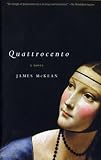
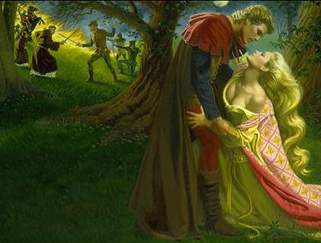
<p>The thing is, these older portraits are gorgeous, and I'm guessing they cost the publisher little or nothing to use. Certainly I prefer Leonardo's <em>Lady with an Ermine</em> (as seen here on <em>Quattrocento</em>by James McKean) to the more lurid cover art for historicals (this example, from <em>Under the Wild Moon</em> by Diana Carey, I snurched from <a href="http://www.smartbitchestrashybooks.com/index.php/C12/">Smart Bitches</a>). \/<br />
<img src="http://www.tiedtothetracks.com/storytelling/images/UndertheWildMoonbyDianaCarey.jpg" height="243" width="321" border="0" align="left" hspace="10" vspace="10" alt="Underthewildmoonbydianacarey" /><br />
 <br />
I'm always keeping my eyes open for portraits that would make good cover art. Not that any publisher would necessarily do anything about a suggestion like that -- most of them have very specific ideas about what belongs on a cover, and seldom do publisher and author agree. But I keep track anyway.</p>]]>

</content>
</entry>

</feed>