" /> storytelling: January 2006 Archives

take me to the front page of the tttt weblog | back to the current weblog

« December 2005 | Main | February 2006 »

January 31, 2006

more on mothers and daughters

This is related, in a very roundabout way, to yesterday's post and the thoughtful comments y'all have left regarding parenting sixteen year olds.

I had an interesting email from somebody who just finished Fire Along the Sky and really loved it, but had one major disappointment:

I must say I am disappointed in the direction of Elizabeth's character. I see so little of the fire in her that we had in Into the Wilderness. I felt as smothered as her children. She is controlled so much by her fears, and I believe it to be a very poor reflection of her character. I think that's why I cling to Hannah's character so much. She has experienced great loss, has witnessed horrific tragedies - but she's not so incapacitated by them. -- M.B.

My first reaction to this is bafflement. I did expect to get reactions like to this to Lake in the Clouds, where Elizabeth does come very close to falling over the edge when she's confronted with another epidemic and threat to her children. But in Fire Along the Sky?

My second reaction was to wonder if this has to do with age. At twenty-five I might have had the same thoughts. I would guess that women my age might be more understanding toward Elizabeth, who has lost a number of children in difficult circumstances. It would seem odd to me if a woman experienced all that and had no vulnerabilities as a result. But of course, I understand her because she's a part of me. It's a given that there will be a range of reactions to characters as they develop.

There's also an underlying theme here. Motherhood, and mother-daughter relationships are something that I explore a lot, in a never-ending quest to figure some things out for myself. I say never-ending because I can't imagine the questions ever being settled in my mind. This comes in part because of the tremendous gulf between my own upbringing -- much more like Norma's, in yesterday's comments -- than my own daughter's. The question I'm always asking myself is what kind of person I would have turned out to be if I had been raised as we try to raise our Girl. One way to explore this question, something I plan to do someday, is to write a novel about a woman (set in the future, fifty or so years) who finds herself in the position of raising a clone of herself. An identical twin, in genetic terms. Watching yourself grow up, trying to avoid the mistakes that were made and making others in the process, that topic really draws me in.

Listen to me ramble. At any rate, I'm interested in the different ways people react to Elizabeth as she meets (or fails to meet) various challenges.

January 30, 2006

tough times

We've had a difficult day. Sixteen is a hard age for kids. It's no picnic for the parents, either.

January 29, 2006

spam spam spamalot, and other things

1. I have closed the comments on all the posts in the s3xs3enes posts, which seems to have helped a lot with the bandwidth/spam problem. For now I'll leave it at that.

2. There's this theory of mine: if those people who sit around and figure out ways to get around spam filters put their combined intellect together, maybe they could buy a cup of coffee.

3. Jenny Crusie has a huge long post on her weblog about how great Spamalot was, which she just saw, on Broadway. When we were in Manhattan this summer we couldn't get anywhere near Spamalot tickets. Well, we could have but at about $400 a pop. Not that I'm jealous or envious or anything small and green like that. Nosirree, not me.

On other fronts, a character is telling me now that she doesn't want dogs. She was supposed to have dogs, but she's most insistent that she has no dogs of her own, but fosters rescued dogs until they're ready to be adopted to permanent families.

But wait, I said to her and she said: no.

These characters, they think they own the joint.

January 28, 2006

what was the date again?

I remember. 28 January. So the fact that one of my roses -- specifically the Graham Thomas, a beautiful large yellow rose that blooms all summer long -- has a blossom on it is a little odd.

Yes, we live in the mild Pacific Northwest. And yes, it's been a wet winter. It's also true that we live within ten minutes walk of the water -- Puget Sound -- in a protected sort of corner between low hills and the shore. Now add in this fact: fifty miles away to the east, the Mount Baker ski area was closed last week because of too much snow. Right now, this minute, the Mathematician is skiing in six feet of powder, and I'm sitting in my study looking at a newly opened rose.

To somebody who grew up in Chicago, this is all very odd.

January 27, 2006

good things

1. It's Friday, which means not the end of my workweek, but something even more wonderful: Battlestar Galactica. Which let me say, is outstanding this season.

2. Beth loves my new header.

3. I found a bunch of missing books: Norton's Critical Edition of The Mayor of Casterbridge, Tess of the D'Urbervilles (I do love Hardy. I love him most sincerely.), some biographies I had been worried about. My stash of ten copies of Homestead in Chinese (which really, what am I ever going to do with them? I had twelve and gave two away to people who actually speak Chinese, and now here the rest sit.)

4. I'm reading a book that apparently the whole world has read already, but I somehow overlooked: and it's good. Really good. Year of Wonders (OWC), by Geraldine Brooks. The only thing I don't like is the review from Publishers Weekly which is very positive, but also manages to dismiss the rest of the historical novelists in the universe with a flick of the superior fingers:

Discriminating readers who view the term historical novel with disdain will find that this debut by praised journalist Brooks (Foreign Correspondence) is to conventional work in the genre as a diamond is to a rhinestone. With an intensely observant eye, a rigorous regard for period detail, and assured, elegant prose, Brooks...

I am indignant not for my own sake (or not much for my own sake) but for A.S. Byatt, Dorothy Dunnett, Barry Unsworth, and all the other novelists who bring such talent and passion to the daunting task of writing stories set in the past. So: a raspberry to PW.

5. This week I have written eight thousand words. Really. Iin five days. Don't talk to me about this, okay, but that would jinx it and if I can keep up this pace, wow. That would be great. The good people of Greenbriar South Carolina are talking my ear off, Julia and Dodge are talking to each other and letting me in their heads, and words sprudel up like cheap champagne.

6. Stephen King's new book. Cell: A Novel (OWC) should be in my hands just about the time I finish Year of Wonders. Eclectic is one of my numerous middle names.

jones

Some time ago there was a short discussion here about contemporary use of the word jones as a verb or noun to refer to an addiction, to drugs or anything else. As in: he's got a basketball jones or I'm jonesing for chocolate.

The Oxford English Dictionary has included this definnition in its most recent edition:

jones, v. intr. To feel an intense craving or desire for something. -- OED

Here's a request. If you happen to run into other references to jones used in this way, could you pass them along to me? What I was really hoping for was to find a quote from Spike Lee in which he defines the term in his own words, but that was a long (and thus far, unprofitable) shot. Hope springs eternal, though, so do yell if you happen to come across something, anything, related.

thanks so much, you've been a great audience.

pajamas

So, no comment? You love it, you hate it, you didn't notice. This is like getting my hair done and waiting three days for the Girl and the Mathematician to realize that it's a completely different color.

Sheesh.

January 25, 2006

Library Thing: the good. the bad. the compulsion.

Okay, to be clear: obsessivecompulsive is my middle name. Now that we have that established, let's get on to LibraryThing.

LT has compelled me to seek out books from the oddest places. The couch cushions (the Girl's copy of Bridget Jones' Diary), the trunk of the car (also hers: Naked), boxes in various closets (so there's my copy of The Grand Sophy! so that's where the critical edition of Anne Frank went!), under beds, on top of bookcases, behind credenzas, in seldom used suitcases, briefcases, overnight bags: all fruitful. We are a bookish family, and the evidence is everywhere.

And I haven't even forced the Girl to go through her closet yet.

The good: I won't have to replace books that aren't really lost. The bad: I will have to replace books I can't find and can't do without.

So tell me: who has got my early hardcover edition of Lonesome Dove? A reading copy, but still. We read it out loud as a family when Elisabeth was about seven and we all cried when you-know-who died. If you don't know who, go read the novel. It really is a masterpiece, and now I want to reread it but of course, I can't. Well okay, I can, because I just bought a new copy.

Thus it has gone: books found, books missing, books bought. Where is my Norton Critical Edition of Emma? Zinn's History? I, Claudius? The list of the missing is about twenty books long at this point. LibraryThing is turning out to be a little more expensive than I thought.

But let me tell you how nice it is to have all the books organized. Or, almost organized. The upstairs bookshelves look like Marian the Librarian has been having her way with them. All fiction, and books on writing and linguistics, and referencee. Downstairs? Okay, a ways to go yet, but it's coming along. Non-fiction, research, sport, math. Yes, I've banished all the Mathematicians books to the lower level bookshelves. His office (which is twice the size of mine, I must point out) is also down there. I stand by my command decision on this point.

And it's just plain fun to have the damn things in a searchable, browsable format online. It's also useful. Now I have a sheild to protect me when the Girl claims we don't have a copy of Stephen King's IT. In fact we have three copies. She looked a little sheepish when I showed them to her, and I admit it: I looked smug. Now we only have to resolve the family dispute on what to do with extra copies. The Mathematician and the Girl would save toenail clippings if I let them. The Mathematician has stopped me from getting rid of a five-inch wide polyester tie with a tomato soup stain on it that he last wore in highschool. Why? Somebody gave me that tie. Who? I don't know. Somebody.

Well now somebody is going to throw it away.

The Mathematician and the Girl are terrible squirrlers away of odd bits and pieces, but I will prevail in the end. Two copies of IT is quite enough.

January 24, 2006

great resource (quick test)

Open WorldCat is a revolutionary approach to using the internet to look up books. From their website (which you should definitely go have a look at):


The Open WorldCat program makes records of library-owned materials in OCLC's WorldCat database available to Web users on popular Internet search, bibliographic and bookselling sites. "Deep" links to content in library collections—books, serials, digital images and many other formats—appear alongside links to traditional Web content.


The result: OCLC member libraries are more visible on the Web, and their collections are more accessible from the sites where many people start their search for information.


So here's a little experiment that will demonstrate (I hope) how Open WorldCat works. You've got the cover image here of To Kill a Mockingbird. If you want to buy a copy from Amazon, you click on the cover. If you don't care to buy a copy from Amazon and instead would like to see if it's in your local library, you can go to Open WorldCat. Note: I use the Amazon link because that allows me to use their image -- which they host, so it doesn't use up my bandwidth. And you know what kind of trouble that can get you into.

So if you see OWC next to the title of a book, clicking on it will take you to the Open WorldCat details page, and from there (as the mathematician would say) Bob's your uncle. For example, have a look at To Kill a Mockingbird OWC.

I'll try to include the OWC link now whenever I mention a book.

And because I want to test this some more, a couple titles:
Homestead OWC

Into the Wilderness OWC

and the little book that was one of my daughter's favorites when she was about four: Pierre OWC

edited to add: radiant Robyn Bender asks a logical question: how do you look something up on OWC on your own? This OWC page provides that service.

work work work

As superstitious as I am sometimes, as I am right now, I find it hard to say much about how well the writing is going. Let's just say I'm very pleased: lots of words on the screen, and they seem to make a story when they are read one after the other. The characters are talking to me and showing me things. When this happens it feels like there's an angelfood cake in the oven. As a kid my Aunt Lillian would make us talk in whispers and tiptoe for fear of making the cake fall. Someday I will have to bake an angelfood cake and yell and jump up and down and see what happens.

Otherwise:

1. reading quite a lot. I will post reviews of a few books in the next couple days.

2. finished a textile piece (or at least, finished enough that I have to hang it and look at it for a couple weeks to see if it is, in fact, really finished) and started a new one.

3. the book cataloging adventure continues. I now have over 2,000 in the database -- or in both databases. One on my computer and the other at Library Thing. If you're curious about the books I consult you can have a look at my tags page and click on the topic that concerns you. You'll see that I read at least 38 books having to do directly or indirectly with the War of 1812 while I was writing Queen of Swords. I was quite astounded myself at that number, I have to admit. Now all those books are lined up together and I look at them and wonder why I still feel as though I don't know very much about the danged war.

So that's it for the moment. More soon.

January 23, 2006

that was strange, eh?

If you tried to come by over the last twenty-four hours you probably ran into a wall that told you I had exceeded my bandwidth. Which was very odd, as up until recently I had never got past fifty percent.

A job for the mathematician if I ever saw one. We had been planning on moving various domains around, and so he went ahead and did that, digging down to find out what was up with tttt. Which he did, and so here we are again.

It seems as though anybody who ever googled the term "s3x sc3nes" (see, I'm already taking precautions) has been dipping (cough) into my bandwidth. So now my choices: to take the posts on writing sscenes out of the blog and put them someplace else as a simple html doc, or to go through and change every instance of that term to something less immediately google-able.

But not right now. Right now I'm working. Just wanted to say, we're back, we're apparently on solid technological ground (a round of applause for the mathematician, and for Pavel at LivingDot.com) and there's a bunch of stuff I want to post about, starting tomorrow.

testing

let's see if the mathematician's magic is working

January 21, 2006

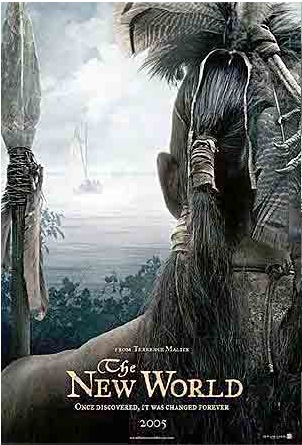
The New World, written and directed by Terrence Malick


newworld
Terrence Malick is one of those directors people either love or hate. His movies -- this new one especially -- are more about poetry than they are about narrative. Long stretches of intense, glorious photography without a single word spoken, and still the story is there.

But it's not for everybody. The mathematician, who is not so much about the visual as I am, would have fallen asleep. I kept wanting to stop the flow of images so I could study them. Because they are so beautifully framed, and because Malick does such an incredible job of capturing a time and place. The Native American world is rendered with great attention to detail, but it's the long-shots that really tell their story.

The story of Pocahantas and John Smith has been told many times, most usually trivialized and recast for modern sensibilities. I think there's some of that here too in the way the young woman's emotions are portrayed, but in general it seems to me that Malick probably has done the best job so far of approximating what it must have been like for the Englishmen who put foot on what was to be called Virginia in the year 1602. Who John Smith might have been, and how the land and people would have looked to him. Maybe.

I'm wondering how the Native American peoples are reacting to this movie.

Oh yes, the actors: they are very good, but with the exception of the young woman (apparently Q'Orianka Kilcher was just fourteen when the film was being shot) who played Pocahontas, they are almost beside the point. She's the central character, the one the camera cares about most.

When it comes out on dvd I will rent it and spend a lot of time pausing to look at details, to study shots that right now I can recall with perfect clarity. Whether you should go see it depends on your interest in the subject and your patience with a story told mostly in visual terms.

January 20, 2006

Queen of Swords cover copy

This is my revision of what the marketing people came up with. There will probably be some more changes.

QUEEN OF SWORDS


It is the late summer of 1814 and Hannah Bonner and her half-brother, Luke, have spent more than a year searching the islands of the Caribbean for Luke's wife and the man who abducted her. But Jennet's rescue, so long in coming, is not the resolution they hoped for. In the spring Jennet gave birth to Luke's son, and in the summer she found herself compelled to surrender the infant to a stranger in hope of keeping him safe.

To claim the child, Hannah, Luke, and Jennet must journey first to Pensacola. There they learn a great deal about the family who has the baby: the Poiterins are a very rich, very powerful Creole family, and without scruples. The matriarch of the family has left Pensacola for New Orleans, and taken the child she now claims as her great grandson with her.

New Orleans is a city on the brink of war, where prejudice thrives and where Hannah, half Mohawk, must tread softly. Careful plans are made as the Bonners set out to find and reclaim young Nathaniel Bonner. Plans that go terribly awry, isolating them from each other in a dangerous city at the worst of times.

Sure that all is lost and sick unto death, Hannah finds herself in the care of a family and a friend from her past, Dr. Paul de Guise Savard dit Saint-d'Uzet. It is Dr. Savard and his wife who save Hannah's life, but Dr. Savard's half brother who offers her real hope. Jean-Benoit Savard, the great grandson of French settlers, slaves, Choctaw and Seminole Indians, is the one man who knows the city well enough to engineer the miracle that will reunite the Bonners and send them home to Lake in the Clouds. With Ben Savard's guidance, allies are drawn from every segment of New Orleans's population, and from Andrew Jackson's army, now pouring pouring into the city in preparation for what will be the last major battle of the War of 1812.

January 19, 2006

architecture

I like architectural drawings. Always have. Every once in a while I wonder about taking a drafting course and then of course the reality of my daily routine makes short work of such fantasies.

There's a wonderful Canadian website on the architectural heritage of British Columbia, with lots of visuals and historical information. For example there's extensive information about the South Park School, including a perspective sketch (seen here), and a whole series of measured drawings on elevations, sections, floor plans, and design details.

For Pajama Jones I have permission (I have given myself permission) to get all involved in discussions of historical landmarks in the south, particularly older mills and manufacturing facilities that are historical, but have fallen into repair and need to be taken care of. Most likely I'll be using a textile factory for PJ, but I have been thinking a lot about the possibility of an older tobacco processing plant or, more fun, a very old distillery. There's one in Tennessee that dates back to the 1700s which has been neglected and falling apart for the last fifty years or so. Now if I could only find architectural drawings of it.

things that make me laugh

Not because it's funny, but because I'm so pleased. Homestead is being translated into Hebrew. Hebrew. Ha! I can't wait to see it.

I have all the Homestead translations lined up in a row, some of which are: Dutch, German, Spanish, Catalan, Chinese, and here comes Hebrew.

No Italian. I'm told that Italian publishers don't much like acquiring American authors who happen to have Italian names. Seems odd, but there you go.

PS: I know Chinese is written with ideographs (a symbol equals a word), but I still wonder if one variety of Chinese is favored when it comes to the written language in ways that are obvious to native speakers. Can anybody tell me?

public service announcement: not me, I didn't do it.

If you go look at the Amazon page for Tied to the Tracks and scroll down to the subjects list, you'll see the first on the list is African-American Women Authors.

While it is true that one of my major characters is an African-American and a woman and an author, I am not. African-American, I mean. My strong sense is that people will see African-American Woman Authors and assume that is a reference to the author of the novel in question: me. Again, still: not African-American. Plain ole boring vanilla, here.

Do I need to worry about this? Monica, you reading? Because I am worried. I don't want to be accused of posing or overreaching or being (all together now) too big for my britches.

Amazon doesn't even have a place to submit corrections about the subject list, which may (I fear) come from the publisher directly, so I've already emailed my editor to ask about this and see that it's fixed. Surely my editor knows I'm not African-American. I mean, my new editor, as Leona is gone now.

Babbling, here. I'll go away now, having established (1) I didn't do it; (2) I'm trying to fix it anyway.

January 18, 2006

A Big Storm Knocked it Over

I've been re-reading Laurie Colwin over the last week. I first ran into her work when my agent suggested Happy All the Time, which I liked but didn't love, especially. But I was intrigued enough to go read some more.

Yesterday evening I finished A Big Storm Knocked it Over. I was surprised to find that I liked it more this reading, although I'm not sure why. The thing about Laurie Colwin's work is this: she writes great characters in interesting settings, she puts them in relationships that intrigue me, but generally she's not much for plot. Usually I have no patience for stories that are short on story, but in Colwin's case, somehow things work for me. She's been compared to Austen, which is a bit of a stretch -- Jane loved a good story arc, after all; I'd also compare her to Anne Tyler and in a smaller way, to Elinor Lipman.

A Big Storm Knocked it Over is a story about Jane Louise Parker, a woman in her late thirties who marries for the first time just before the novel opens. She's a book designer for a small publisher; she's got a variety of coworkers who horrify, fascinate, attract and repel her by turns. There's a best friend who is a baker and cake decorator, a troubled relationship with her mother and her step-father and sister. And Teddy, her new husband, who loves her and who -- like many of us -- suffers from depression now and then. Jane Louise is a bundle of nerves: that's the story.

Where's the plot, you're asking. Answer: there really isn't one. This is a novel about the first year of the marriage, where Jane Louise struggles for footing. What does it mean to be married, to love somebody, to trust them to keep loving you? If she ever manages to get pregnant, can they possibly raise happy kids, having had so little happiness in their own childhoods? Or maybe it was the crucible of childhood (and not a very hot crucible, in her case) that made them the people they are, capable of love in the first place? Is it okay that she loves her friend Edie and Edie's partner Mokie better than she loves any of her blood relatives?

There's a lot of back and forth about the small town in the country where her husband grew up, a place she loves and fears, and the contemplation about what it would mean for her, a Jewish girl from the city, to claim such a place for her own.

Now, reading over what I just wrote I know that had I not read this novel already, I would not be terribly interested in picking it up. But I did, and I read it (twice now) and here's my conclusion: I like the main character enough to overlook the lack of a plot. I like her so much that I could imagine sitting with her on the porch and getting her whole life story -- basically what the novel provides -- and wanting more. Asking her questions about things Colwin didn't disclose in the novel, the same way I talk to my women friends over coffee.

So is this a recommendation that you go out and read Laurie Colwin? You'll have to decide for yourself. I will tell you something more about her, which I suspect may send some of you out to look for her books.

I would like to start by linking to an essay by John Edge called Remembering Laurie Colwin, but while John's website is up, the link to the essay isn't working. So here's the basic information: Colwin was a serious food person, a cook and food writer. Her cookbooks are still much in evidence and her articles in Gourmet still quoted. She had a million close friends, and I'm sorry to say I wasn't one of them because she seems to have been the kind of person I get along with well, generous and ready to laugh and family and people oriented, thoughtful and creative. But she died a good long while ago in 1992 at age 48, of a heart attack. She had a young daughter at the time and a husband. A Big Storm Knocked it Over -- her last novel -- was published posthumously.

If I knew nothing else about her, I'd read this novel simply because I feel an affinity to this woman's life and situation, and it feels like the right thing to do. I don't believe in an afterlife in the traditional sense that I was taught about in Catholic school, but I do think that if we are lucky, the good things we have done live on for a little while at least. Somewhere out there Laurie has a daughter, and I hope she's happy and healthy and rejoices in the memory of her loving mother. Laurie also left behind five novels, including this one, which she never saw in print.

Now you're wondering why this second book cover. John Edge was a good friend of Laurie's (and in spite of the fact that I can't get to his essay about Laurie), so here's a shot of his most recent cookbook, which I adore. Not the cookbook -- which I haven't read yet -- but the cover art. Now I'm going to go back to re-reading Laurie's Shine On, Bright and Dangerous Object.

Oh and, I wrote about 900 words today.

EDITED TO ADD: Karen commented with information about Laurie's husband and daughter, which led me to Rosa Jurjevics' website and this essay about her mom.

January 17, 2006

the oddest kind of inspiration

Maybe odd isn't the right word. Inconvenient? Yes, that works.

When I can't sleep and all efforts at self hypnosis fail, I often find myself bombarded with bits and pieces of the thing I'm working on. Ideas about characters, input from the characters themselves, structural questions, visual ones. I put together maps in my head and then play with them. All of this happens when I'd rather be sleeping. It's like being forced to watch a movie, or worse, to take part in one.

Every once in a while something good comes out of such sessions. This morning at about four, for example, I got an image of index cards filled with notes written in an elegant hand, with a fountain pen. Each card had a brief description of one person, and all the people being described worked in the shops located in Lambert Square in my fictional Greenbriar, South Carolina. Lambert Square is a renovated textile mill/factory that has been transformed into shops and public spaces, you see. That's where the bulk of Pajama Jones takes place.

The person who has written these index cards is a rather odd guy who has sold his Lambert Square business (antique and collectible pens and high end paper) to John Adams Dodge. All the negotiations and legal work was carried out by courier service, and Mr. Cowper will have left on a long trip before Dodge ever gets to Greenbriar. So in the last packet of papers Dodge finds a these index cards, provided by Mr. Cowper as a study guide and introduction to Lambert Square.

This provides me with some structure, and it makes Mr. Cowper happy. As Dodge hasn't even seen the cards yet, I'm not sure how he'll react, but I think he'll be amused.

good news re Queen of Swords

Today I heard through my agent that my publisher has read Queen of Swords and she is ecstatic about it. You know what a relief this is?

Two years of working on a novel, close to 300,000 words, dozens of characters and many complex interwoven plot lines and by the time you're done, you have no sense of the thing at all. Is it good? Is it bad? At this stage I always think of an old George Carlin sketch about cleaning out the refrigerator and finding unidentifiable stuff... is it meat? is it cake? It's meat-cake!

The publisher said (this is heresay, of course) that QS was the best thing she's ready in a very long time. Okay. Now I can go look at it without anxiety spasms. Whether y'all agree with her is another (and bigger) hurdle -- but for the moment, I feel like I've given birth to a baby who has turned out to be healthy in spite of many troubles and complications along the way.

January 15, 2006

what I have learned (thus far) from LibraryThing and BookPedia

1. It's really worthwhile to go through books carefully once in a while. Thus far I have found, stuck in various books, a five dollar bill, a ticket stub from a train ride from Ann Arbor to Chicago when the girlchild was three months old, a photo of my father, a letter from another writer I thought I had lost, and lots of memories.

2. Of the 1,480 books I've catalogued so far (about half way done, I think), five or six I've had since high school. It's actually kind of strange to think that these books (a 1972 edition of Tale of Two Cities, and a collection called "Story Poems" among them) have been following me around for thirty years. Multiple moves back and forth bouncing between Chicago, Europe, Boston, New Jersey, Michigan, Washington State. Why these particular books? I have no idea. I can't explain it. However, I suspect I've kept my sophomore English copy of Tale of Two Cities because I liked the cover. Sometime I'll scan it.

3. Once in a while, for whatever reason, I ignored my own rule and bought a cheap edition of one book or another. I won't do that anymore, because handling that awful paper, yellowed, brittle, slightly smelly, reminds me about this rule in the first place: no sloppy, ugly, cheaply printed editions. A waste of trees, resources, and money.

4. My memory is full of holes. Why do I have a half dozen bookclub books? I can't imagine ever wanting them or ordering them.

5. Systematically going through books to put them into a database is a time consuming but rewarding enterprise. I have found lots of books I haven't read in a long time but loved, and would like to read again. Adam Bede, for example.

If you'd like to browse through my library holdings (which increase every time I find another book tucked away in a couch, or a pile next to a chair, or two dozen or so on a high shelf) you can do that by going to my LibraryThing profile page and clicking on catalog. Or you can click on tags and restrict your browsing to the books on writing, novels, my medical research holdings, or whatever else interests you.

If you've got a LibraryThing account, do post your username so we can all go gawk.

January 14, 2006

good advice

Alison Kent has an excellent post about the business of writing, priorities, and focus. She quotes Lee Goldberg on this and others. I agree with 99.99 percent of what they all say, with this proviso:

There will always be flukes. People who buy a lottery ticket for the first time and win 17.3 million; the guy who writes a really awful novel with a compelling plot and makes 17.3 million because he's there with his awful book, right time right place. On the other hand, the woman who lives in the apartment downstairs (or the guy who lives upstairs) can follow all the best advice and write a great book and never make it.

There's nothing remotely fair about this, but it is true.

A lot of this business is timing and opportunity. Persistence and dedication and craft are the things that will take you the farthest. My best advice:

You've got to have a good story to tell. Work on craft. Read widely. Work on craft. Work on craft. Take constructive criticism and work with it. And good luck.

good things

I am a very fortunate person. Everyone is healthy, I have a great kid and a loving husband and many wonderful friends. I have rewarding work, and puppy boys. I have a really good computer (bah, say I to MacBook and its intel chip, fie) and many books and a garden. And I have wonderful friends, really wonderful good friends.

Life is good.

My study is a mess, but life is good.

Oh and, we've had record rainfall for the last twenty-some days, but right now the sun is shining. Really good to see the sun on my fiftieth birthday.

January 13, 2006

email confirmations, and my father's ghost

I think I can say with some certainty that I think of my father several times every day. My mother I think of way less often, which may have something to do with the fact that she died when I was fourteen. In spite of the fact that those fourteen years were colorful (to say the least), it has been a very long time.

My father had a big personality. Everybody in the neighborhood knew him. When he retired he swore he'd never cook again, but of course he spent all his time in the kitchen. Then one day he went into the corner tavern -- Schneider's -- which had a full but unused kitchen, and announced he felt like making lunch. Pete Schneider was a friend of my father's and he liked his cooking and so for the next couple years, when my father felt like cooking he'd go to market, get what he needed, and they'd put a sign up in front of the tavern. Lunch today. From noon until it's gone.

On those days the place got really crowded. There's a bank down the block and people came in droves to eat. At the most there would be two choices, but they came on faith -- because my father was a legend, and not just for his cooking. He could get belligerent in a heartbeat, and he hated special requests. I remember him taking a plate away from more than one customer and saying, You don't like it? Go eat somewheres else. No charge. Get out.

On the other hand, he had a huge and infectious laugh and he loved jokes, he was kind to people down on their luck -- he fed bums (the term 'street people' hadn't come into usage yet) who came to the kitchen door with a liberal hand, he spoiled little kids rotten, and he was very able to laugh at himself. This is one of my favorite photos of him. The quality is bad and I don't have the original, but I still love it. This is a few years before he died, a typical interaction with his sister Kate.

I give you this background information because today something happened that made me think of him. You know how when you sign up for a website of one kind or another, and they send you a confirmation email? That's a safety feature to make sure that there isn't somebody out there with a weird sense of humor -- or a grudge -- whose signing you up for things. I got one of those emails today for something I had not requested. Somebody used my email? Who knows, and it doesn't matter. But it is interesting that this type of behavior predates the internet, and that's what this story is about.

My father eventually moved into one of two apartments above Schneider's, so you could always find him there either upstairs or in the kitchen or talking to somebody at the bar. I was an undergraduate at the University of Illinois and I came home at least twice, often three or four times a week. Because he demanded tribute, and because he fed me. And also because as he got older he didn't want to be bothered with bills and bank statements and so I took on those duties.

So one day I come into the apartment and there's a pile of mail on the table. In that pile, beyond the regular stuff and bills, are three magazines. As I remember now, they were TV Guide, Modern Maturity, and TIME. At first I was stumped, then I wondered if some neighborhood kid had come in selling subscriptions and caught my father in a weak moment (of which there were not many). So I asked him, and I got a scowl.

He hadn't subscribed to those magazines, or to any of the others either.

Others?

The pile was in a corner. Newsweek, Harpers, RV-World. I checked the subscription label, which read Arturro Lippi. That's a misspelling, which at first didn't tip me off. My father could never find his reading glasses and often wrote things down in a hurry. That day I had other things to do so I let the question of the subscriptions go. When I came back three or four days later, the pile of magazines had grown to maybe twelve or fifteen different subscriptions, including Cosmo and Seventeen.

Dad, I said. Somebody is playing a joke on you.

Somebody from the tavern, I was guessing. Somebody he pissed off, which did happen with some regularity. He couldn't be bothered with the whole thing; magazines were not the way to get his goat. Except by that time the bills had started arriving. I didn't know at first because he tore them up. When I did find out I would open the bill, write "cancel subscription" and send it off. But no matter what I did, the number of magazines kept growing. There were piles of them all over the house. Modern Architecture, Hair Styles for Today, Guns & Ammo, you name it, it came through the door. And then the collection phone calls started.

My father always treated the phone like a wild animal that needed a strong hand. He raised his voice and it always seemed to me his accent got stronger on the phone. I caught one or two of these conversations, which always escalated fast.

You come down here and try to get that money off me yourself! he'd shout into the phone. Come on down here, buddy, I'll shove your magazines up your --

click.

At this point the Time/Life books started arriving. Those series of books in hardcover? The Opera. The Wild West. The Revolution in twelve volumes.

I called the postmaster and asked if this constituted mail fraud, if there was something that could happen from that end. Nobody called me back.

The next time I was home the doorbell rang. That in itself was odd, because nobody ever used the front door. My father was downstairs in the kitchen so i went to the door and there was a young guy in full marine uniform. He wanted to talk to Arturro Lippi, who had indicated by postcard an interest in a career in the marines.

Of course the army, navy and airforce all showed up. So did the Jesuits. I have to admit, that was a particularly funny one. My father, the Jesuit. The Jehovah's Witnesses were less fun.

This time when I called the postmaster's office I was more insistent.

In the meanwhile my father had decided he might as well take advantage. Huge armloads of magazines got deposited in the tavern for people to read. For a while there you could find little old men nursing their beers over copies of People (which had just started up) or The New Yorker. The business from the bank increased too, because my father encouraged people to take the magazines with them. More where those came from!

In the end a postal inspector came to take a report. He had a huge grin on his face the whole time, for which he kept apologizing. This is a serious offense, he'd say, and then you could see him fighting with the urge to laugh. Soon after that the whole thing started to wind down and within a week or two, stopped.

It was kind of sad, actually. As far as I know they never found out who filled out those hundreds of subscription and interest cards in my father's name, but I do know that whatever the intention was -- I assume, to irritate and inconvenience him -- it fell flat. My father paid not one penny, and ended up keeping the magazines that actually interested him. The ones with lots of pictures, and centerfolds.

January 12, 2006

more Pajama Jones prep work

I really like the questions and thoughts y'all had when I posted basic information about Julia. Of course I'm not going to answer your questions -- this is a delicate process, and I've got my characters to protect -- but they were useful to me in a variety of ways. So thanks.

Now here's the same deal for her counterpart.

Name: John Adams Dodge
Home: His father is a JAG lawyer and constitutional scholar, his mother a nurse. Moved from base to base when he was growing up.
Hair & eyes: He looks a lot like his maternal grandfather Papadapolous, who still lives in Greece -- very dark hair and eyes, olive complexion.
Height: 6'2"
Favorite foods: doesn't have any; will eat about anything, and likes to try new things. Rarely finds anything he likes enough to remember what it's called.
Won't eat: Doesn't much care for things that have been pickled, but will make exceptions.
Favorite things to drink: water, beer, wine. He likes Blue Meanies as well.
Favorite Music: talk radio, for its entertainment value
Likes to wear: stuff that doesn't stand out. Jeans, chinos, etc. Owns a couple very nice, very expensive business suits he doesn't often wear.
What his living space is like: He's lived in so many places in the last ten years that he doesn't think of any particular place as home. His universe center is at his sister's house in Brooklyn, or with his parents; father currently stationed in Berlin.
Methods of transport: Whatever gets him where he's going. He likes to drive, has a ten year old Mercedes he bought at an auction and keeps good care of.
Politics: His reading material of choice. Mostly keeps his opinions to himself but as his father's son, he doesn't like the current administration.
Magazine subscriptions: None. Reads the Wall Street Journal, Business Week, New Scientist, Economist when he can pick them up.
Favorite Book: He reads a lot of history and biography. Hasn't re-read anything in a long time.
Favorite TV Show: Baseball.
Favorite Movie of the last few years: The Quick and the Dead
Expression: Slow down.
Movie star crush: As in, I"ll go see anything with . . .: sees pretty much everything that comes out
Pets: Grew up with a mixed breed terrier called Boo, and still misses him.
Creative outlet: John draws.
Favorite Muppet: Maria.
Favorite ice cream: pistachio
Favorite desert: baklava
The thing he'd never do: skip Christmas with his sister and her family
The thing he's always wanted to do: start a library of his own
Childhood toy that's still in his room: he has a box of stuff at his sister's house, including his first baseball mitt, a gift from his grandfather Dodge.

---------
what she does for a living: Julia was the head buyer at Marshall Field in Chicago (bed and table linens and housewares) for seven years. When she came back to Greenbriar she opened a shop called The Well Made Bed. She specializes in high end and antique linens. More than half her sales happen through her website. She has clients all over the world and she's very successful. She's president of the Lambert Square Business Cooperative.

what he does for a living: John finds small businesses that interest him and that are in trouble financially. He buys the business, works to reorganize it until it's profitable, and sells it. The process takes between six and eighteen months, and then he moves on. Many of his projects have been small town bookstores, but he has also bought/fixed/sold businesses as diverse as a dress shop, a corner drugstore, and a drive-in movie theater.

------------

There you have the primary characters, in as much detail as I can provide at the moment.

January 11, 2006

Valley of Bones -- Michael Gruber

I reviewed Gruber's Tropic Night a few days ago and I've just finished his follow up novel, Valley of Bones. This one also has Iago (Jimmy) Paz as a detective working a murder, and the setting again is a very vibrant, very vivid Miami. Noisy, colorful, crowded, dreadfully poor and rundown on the one hand and polished like a gemstone on the other.

These are crime novels. A guy gets thrown off a hotel balcony, a woman is found in his room, her fingerprints on the object used to clonk the guy over the head. Her name is Emmylou Dideroff and she is caught up in an intense conversation with St. Catherine of Siena when Jimmy starts asking her questions. Religious mania? Looks like it. Of course that's not all there is to the story.

The third central character is Lorna Wise, who is a therapist/social worker assigned as one of a team who evaluates the accused's mental capacities.

Okay, so you've got three main characters, and complex back stories on each of them. Emmylou declares she'll tell them everything, but she wants to do it by writing it all down in notebooks. What we get then, in chunks, is her first person autobiography. It's disturbing and entertaining reading, covering a horrific childhood and finally her association with the Nursing Sisters of the Blood of Christ. Not what you might be thinking in terms of nuns. These are not your typical nuns.

So here's the good: There are great characters here and I loved watching them interact. In fact I read until really late because I was intrigued. The attraction between Jimmy and Lorna is nicely done, often funny and sad at turns. Their conversations, the cultural clash and how they work it out, all of this worked. At first Lorna is shocked at the idea that Jimmy never went to college: he's very smart, widely read, often bests her in logical argumentation. He calls himself a student of the University of Girl because he only dates smart women and spends a lot of time talking to each of them about their work. She's an upper middle class white girl from the north with a PhD from Columbia -- Jimmy plays havoc with her preconceptions. In a whole variety of ways.

You can tell I liked this novel. But something kept getting in the way, what was it-- oh yeah, the murder.

I guess I'd say there were some pacing problems here. The first 3/4 of the novel are great, and then Gruber seems to realize he's left the actual plot behind the murder alone for too long and it's time to get down to work. So in about a fourth of the book we get it all packed together, how Emmylou was tied in a roundabout way to the victim, the money question behind it all, the quilty parties. A complex backstory here that involves oil and Africa.

Which really? I needn't need. Or I needed far less of. And still I really liked this book, and I can recommend it in spite of what I see as pacing issues. I think I liked this one more than the first Jimmy Paz story because I was more comfortable with the way the religious theme was worked in and carried out. For which you may call me ethnocentric, and I'd have to plead guilty.

January 10, 2006

sneak peek confusion

I just had an email from Leti:

I finally finished reading Fire Along the Sky and I just wanted to tell you how much I love this series!! I've already read Into The Wilderness, Dawn on a Distant Shore, and Lake in the Clouds twice. I can't wait for Queen of Swords to come out! I read the sneak peak at the end of Fire Along the Sky and I am so confused!!! I know you won't tell me but I'll ask anyway :-)

In the prologue, is Jennet pregnant with Luke's child (if she is, then she is 9 months along - I did the math) or did she already have Luke's child? She talks about seeing her child in the water and then resting her hands on her own great belly. Was seeing her child in the water an illusion? Did I just totally read that wrong?

Leti is confused, and so am I.

Let me say first that I don't myself have a copy of the soft cover edition of FAS. I just emailed yesterday to ask about where my copies got to, but the short and long of the situation is this:

I sent a longish Queen of Swords excerpt into my editor to be included at the end of the FAS paperback. From Leti's question it seems as though they might not have used the entire bit I sent. If that's the case, then what you'll get at the end of the paperback of FAS is the same thing I posted here, and I mislead you when I posted here a few days ago that the excerpt was longer. But unintentionally.

So let me figure this all out (I'll go into town and buy a copy of the darn book) and then get back to you. If it is indeed the case that the whole excerpt wasn't included, I may post it here to make up for that misunderstanding.

This is the passage that has Leti asking questions:

The lagoon spread out before her in the dim light. She held her breath and waited. A ripple, another. The surface of the water moved and broke.

Hello. She whispered the word while the bulbous body in the water rolled and rolled. Then another appeared beside it, smaller: her child. Water sliding off gray-green skin, a rounded hip, the long curved line of back.

She stepped out of her shoes and into the cool grasp of the water, thought of swimming out to them. To play among the selkies, and learn their language so that she might ask them for shelter and sanctuary. For herself and her child.

Her hands rested on the great curve of her own belly. The life inside it flexed and turned, another swimmer in a silent sea.


You'll note that this prologue takes place called The Island of the Manatees, the creatures that Jennet visits in the lagoon -- a mother and newborn. She has never seen a manatee before and thinks of them as selkies. (Click on the thumbnail to see a larger version of this beautiful photograph on Dan Neri's website.)

Beyond those observations, let me say that you're right, Jennet is about nine months pregnant. Hopefully now all is clear.

prep work: Pajama Jones

Over at Argh Ink Jenny Crusie is getting set to write one third of a book... well hell, I can't remember the details except she's doing her prep work for her main character, called Mare. The other two contributors to this book are doing the same for their characters, and then there's a meeting with a lot of alcohol where they compare notes and put together a work/battle plan.

Jenny also does a collage for her characters/stories. This is something I do in a smaller way, usually on the computer screen. Because if I let myself go into the studio and start playing with paint and paper, dog only knows when you'll see me again. Procrastination Central. In fact, I should put a sign on the door that says exactly that.

So I'm working on Pajama Jones, for Putnam. I'm not ready to say too much about this novel at this point, but I can talk about the main character. Following Jenny's example I'll give you some basics about her. I'd be curious about any reactions you might have, and more important: are there any questions you would add to this list?

Finally: changes are always possible, and almost inevitable as the story and the character take off on their own.

Name: Julia Darrow
Home: born and raised in Greenbriar, Georgia. Ten years in Chicago for school and work, then back to Greenbriar.
Hair: brown
Eyes: brown
Height: 5'9"
Favorite foods: eggs Benedict, chicken and gravy, roast beef, good bread with fresh butter, strong cheese, noodles of any kind, any leafy green, thick cut potato chips, chili.
Won't eat: Yoghurt, anything stew or gumbo like, soup.
Favorite things to drink: root beer, milk, juices, red wine
Favorite Music: Bach
Likes to wear: Used to present herself as a J Jill type, but since she's changed careers, she wears pajamas, or long underwear that looks like Pajamas, or some combination of the two, all day long.
What her living space is like: A three room apartment above her business. Perfectly put together bedroom, antique furniture, a quilt made by her great grandmother folded precisely over the chest at the foot of the bed. The eat in kitchen is small, ultilitarian (she rarely cooks); the front room is a testament to comfort, quirky tastes, and technology. She's got a full computer setup, a wide screen television that hangs on the wall, every other kind of geekish toy, a huge and comfortable couch and two chairs, each with a personality of its own, as well as a hugely expensive office chair. Good original art on the walls, all contemporary except for a small oil portrait of a great great grandfather in Civil War uniform.
Methods of transport: These days she walks, or stays home if it's too far to walk.
Politics: Used to be very involved, now won't watch the news.
Magazine subscriptions: dozens. Business related, but also high end crafts, arts, antiques.
Favorite Book: Happy all the Time, Laurie Colwin; Keeper of the House, Rebecca Godwin
Favorite TV Show: She watches everything except sports, news, politics, and sitcoms with laugh tracks. Used to like medical dramas but doesn't watch those anymore either. Tends to turn on HBO and let it run.
Favorite Movie of the last few years: Man on Fire
Expression: don't just sit there
Movie star crush: As in, I"ll go see anything with . . .: Harrison Ford, Denzel Washington.
Pets: a large cage with five pairs of love birds, another larger cage with ten pairs, a small dog called Lucy, breed a mystery, a pound rescue.
Creative outlet: the display window of her shop
Favorite Muppet: Oscar the Grouch
Favorite ice cream: Tin Roof Sundae
Favorite desert: can't pick just one. She's got a sweet tooth.
The thing she'd never do: Miss opening the shop on time, be late for an appointment, stop running.
The thing she's always wanted to do: Make everybody's bed.
Childhood toy that's still in her room: an antique doll with a bisque face that is perfectly dressed, and that she never played with.

Neonatal Queen of Swords

It occurs to me that y'all might find this email I wrote to my editor of interest. I wrote it today. This is my new editor at Bantam, as you'll guess from the opening.

As we are working together for the first time I should tell you how I usually handle this stage.

I don't look at the manuscript for three or four days. Then I look at it and panic. Then I make myself wait another day and look again and this time I find it's mostly okay, with a lot of little infelicities. I have the urge to send you a revised version but I hold off because this is stuff you'll figure out for yourself and can wait until the next stage, and anyway, you won't want to print it out again for this kind of minor thing. And if I give into the urge as soon as I send it off to you I'll find another five little things -- typos, word changes -- and thus will be caught up in the post-novel cycle that will drive you and me both nuts.

So in short: lots of little problems, I know. I'm ready to take all that on, as well as any larger issues you identify, when you get to that point.

If you have ever had a baby, you may remember the twenty four hours after the birth, when you were torn between examining every soft, fragrant fold and at the same time, terrified. When visitors come by you are tense. Will they trot out the usual empty compliments?
oh look, how adorable. how wonderful. how pretty, what a head of hair!

Or will they go to the other, more truthful extreme

gosh newborns are ugly. why is her/his head so lopsided? don't worry, he'll get some hair sooner or later. she looks just like you.

For me that's how it works at this stage, alternating between absolute delight and terror. However. Today I allowed myself to read about five chapters, two from the middle and the last three, and I'm feeling pretty content with the story, with the flow of things and the resolutions. I hope y'all will like it too.

Oh and, it's almost two in the morning. Books get finished eventually, but insomnia seems to be eternal.

January 9, 2006

reader mail & worries about Jennet

This lovely message from a reader reminds me of something:

Sitting, waiting out here in the North Pacific rain, for QofS to fill the time while my military husband finishes his tour, please ask Bantam to hurry, I have to know if Jennet meets up with pirates and returns to Luke.
You know the paperback of Fire Along the Sky is out there, right? Well there's a sneak preview of the new novel at the end, and it pretty much resolves any worries there might be about Jennet's survival.

Not that you need to buy a copy, she said earnestly. You could read it in the bookstore, if need be.

about covers: go read Bookseller Chick

I have never made any secret of my interest in book design or cover art, and now here comes Bookseller Chick with two really great, in depth posts (maybe more to come?) about the way cover art actually acts on (or fails to act on) potential book buyers.

The first post deals with the topic more generally and includes examples of what works and what doesn't seem to attract browsers. She's got the cover for The Illuminator up as an example of what works. I snurched the jpg you see here from her -- apparently this is a resdesign. Let me say, this is the kind of cover I'm drawn to personally and which I find interesting in a variety of ways, so it's good to know my instincts are at least somewhat in tune. Now if the publishers would only catch on.

The second post -- you'll find the link at the bottom of the first -- deals with romance covers. A topic that is often taken up by the Smart Bitches, but which is addressed by BSC from a different angle. A really useful angle. If only the publishers would pay attention.

January 8, 2006

why does this irritate me?

Everytime I run across penned used like this:

This episode was penned by Ray Bradbury

I get all itchy. It just makes me nuts. Why? So it's a stilted, self conscious way to avoid the verb write. I could just laugh it off. Wry amusement. Condesending giggles. A raised brow. But the named thing works on me like nails on a chalkboard.

There are other words that do this to me for no apparent reason. The name Dorcas, for example. Hubby is another one that makes me crazy.

There's nothing I can do about any of this, of course. Except bitch. Which I have now done.

no flu. Munich, almost as depressing

I'm thinking it must have been some kind of short-lived virus because mostly I'm okay. The real flu would have laid me low for at least a week. Have I dodged the bullet? Maybe this time.

Instead of lying in bed in pain, I went to see Munich -- Steven Spielberg's latest -- and agonized instead.

The good stuff: excellent performances, stellar cast, compelling story, a fairly balanced approached to very explosive material.

The bad stuff: Schindler's List, as terrible as the subject was, drew you along because of the personalities of a few of the characters. Schindler himself (what's this nutty guy going to think up next?), the Nazi played by Ralph Fiennes (creepy, creepy, creepy), and a few others. Heavy handed? Sure. That's Spielberg, he can't resist putting a red coat on a little girl in the crowds of doomed and innocent, so we can see her later when they dig up the mass grave. But the movie never bored me, though at times I winced not just in sympathy for the lives lost and the brutality of the Nazis, but also because of that last speech of Schindler's, sobbing that he could have saved more, he could have saved more. Enough.

I do have a point, and here it is: Munich is not heavy handed in the same way. The story is much simpler, of course. The 1972 Olympics (in Munich, of course), a group of Palestinian-oriented terrorists abduct and kill some dozen Israeli atheletes. Golda Meir, then Prime Minister of Israel, decides that the only possible response is to send out her people to kill all the terrorists who were involved, but who got away. This movie is mostly about one group of five men who are sent to Europe with a list of seven names. It's about home and national identity and the nature of violence. It's about right and wrong, and the way one young man views all these things.

Apparently a lot of people are mad at Spielberg about this movie. The Israelis think he wasn't sympathetic enough to the purpose of the exercise. I think he did a pretty good job of making clear that there was no right response, and that the one they tried was less right than many others might have been.

But this is a long, dark, sorrowful movie. Emphasis on 'long' -- my mind insisted on wandering away at the oddest moments, just for a break.

Well done? Yes. Lots to think about? Absolutely. See it again? No.

January 7, 2006

gimme gimme giveaway: WINNER

I pulled Sal's name out of the hat. Her LibraryThing username is Towse, if you'd like to have a look at her library.

Thanks to everyone who signed up.

Next giveaway: a Queen of Swords ARC.

how I can't really relax, and wish I could

I have been in a general putter, sleeping, reading, television, book cataloging. Yesterday the mathematician husband and I went to lunch in a little town about a half hour south of us which I like because of two particular shops where they sell high end arts and crafts. And I mean: high end. Gorgeous one of a kind furniture, art, clothing. Everytime I go to this place I know what it would really mean to be rich. I can't imagine walking into that shop and saying:

I'll take this whole set, please. Oh and the gorgeous adirondack type chair of birds eye maple, with hand tooled and painted leather cushions and the carving and painting on the arms? No, the one there in the corner, four thousand bucks-- but now that you point out the other one, I'll have them both.

The mathematician was hoping that I'd find something I love for oh, a hundred bucks and point it out so he could sneak back there and buy it for my birthday, which is coming up way too fast. Because you know I'm turning FIFTY. How's that for a jolt? It makes no sense to me, how such a thing is possible.

I've got flu symptoms. My hope is that this is all fallout from finishing Queen of Swords and it will go away soon, but definite flu symptoms. Headache, gut ache, swollen glands, and bone pain. It's the bone pain that gives it away. I never really had the flu until I was about 35. I believed I had had the flu, but once the real thing digs in, you realize what the fuss is all about. I remember, from that particular illness, two things: the feeling of ground glass in my bones, and telling the mathematician that I was dying. I said this in a quiet voice in all seriousness, that's how bad it felt.

So you'll understand when I say I hope I'm wrong here. Probably I'll know one way or the other by tomorrow morning.

The good thing, of course, is the repeated jolt of remembering the book is done. I wake up in a oh dog I should be writing panic and then collapse, remembering: done. I think about going to the dvd rental place, am consumed with prophylactic guilt, and then remember: done.

I never have learned how to relax. It's partially my upbringing. Adult children of alcoholics (my mother) often have this thing where they stay away from alcohol (me) but can't keep off the adrenaline (also, in a big way, me). Some of us are indeed addicted to chaos. I don't think I'm that bad, but I do gravitate toward it. The movie Changing Lanes did the best job I've ever seen of getting to the alcohol-adrenaline connection. This was, in my opinion, a really underrated movie -- if nobody else got any nominations out of it, Chap Taylor, who has credit for the story and the screenplay, should have. Certainly Ben Affleck was at the top of his (rather limited) arc. And then there's Samuel L. Jackson. Maybe I'll watch it again.

Tropic of Night - Michael Gruber

I read so many really wonderful reviews of this book, I finally found a copy. And the first couple chapters made it clear that this guy can write. On every level. Strong, very visible characters, disturbing, unusual conflicts, and a story that goes zero to sixty like a really, really expensive car.

And it's interesting. The story is about a woman hiding out in southern Florida. She was once a cultural anthropologist, working with a tribe in Africa for a long period of time on matters of belief systems and magic. There's a long riff on that word -- magic -- which probably delivers more core information about cultural anthro and what it sets out to do than anything I've ever read in a textbook, and does it in an engaging way.

So you've got her on the one hand, Jane calling herself Dolores, and a series of violent murders on the other, ritualized and clearly having something to do with a religion something like, but much older than, Santeria.

On the other hand you've got two detectives, one a first generation Cuban immigrant called Iago Paz (points for the name, of course), who puts himself on the black side of the black-white continuum in the Cuban community. The other is an older, wiser, Bible thumping old time Florida cracker with a real talent for homicide work.

Somewhere along the way, though, I got lost. This novel requires a willingness to delve deep into the workings of western African mysticism, and sometimes I found myself unable to go there. This is my lack, I think, and not the novel's, but it's also sad that we parted ways. Because I liked it.

I've just started Gruber's next novel, which also features Iago (Jimmy) Paz, murder, and a religious/mystical connection. It's my hope I'll be able to hold on for the whole ride.

January 5, 2006

clarification: my workspace(s)

I really didn't make myself clear when I put up photos of my study. That is not the only place I work. In fact, it's probably the place where I work the least.


In case you missed it, here's a bit about my work habits, the demands put on me by Diller (my muse) and the green chair story.

And here is the little library with the big green chair, which has been painted here and there with big red cherries because, well, the cats put this chair through a lot and I thought it needed cheering up. And piles of books because sometimes books like to be in piles, they request to be put in piles, and that's the story I'm sticking to.

Also I'm in the middle of cataloging all the books in the household (what you see here is maybe a third of the total) and reorganizing them all, and I've only just begun, which I guess is obvious. But you'll note the upper right hand corner looks pretty darn good, those are my signed first editions/first printing books, which I try to take care of.

One more thing. There's a box sitting on the green chair that is full of stuff for Kate Rose that I haven't sent yet, because I keep thinking the ARCs for Tied to the Tracks will be here any day and I'll put one of those in. So Kate Rose? Sorry for the delay.

two days

That's all the break I can realistically take. And now that the initial adrenaline rush is wearing off and I'm all shaky, I'm thinking I may sleep for the whole 48.

Or sleep, alternating with watching Firefly. Which we finally get to see because I gave in and joined NetFlix. The only bad thing about Firefly (aside from the 'Shindig' episode which really was awful) is how good it is, so I'm watching and always thinking, there's only one season and a movie? Why did they cancel this? What is wrong with the tv industry?

Which brings me to another little bit of news. Or maybe not. I'm feeling superstitious, I'd best hold off.

Mwahahahahaha.

January 4, 2006

It's all Lee Goldberg's fault

It was Lee who started this crazy show-me-yours thing by posting photos, of his workspace and asking the rest of us writers who blog to do the same.

His inspiration is this book of photos by Jill Krementz, about the writing spaces of really famous authors. I own this book too, and it is rather hypnotic.

Bbelow are two shots of my study. If you really want the gory details you can click for the full sized versions. What you can't see in either shot is the wall full of drawings, diagrams, notes for Queen of Swords, or the QS stack of books.


Now, please remember that I'm just finishing a 200,000 word book. If I weren't so busy... the study would look just as bad. The plain truth is, I really desperately need a secretary to keep me organized. Because my mind won't work that way.

just a quick note re: books

So late at night when my brain is fried from writing and I can't sleep, I have been putting books into the Bookpedia database (which lives on my computer) and also exporting them as I go to my LibraryThing library. (And there's a profile, too.)

I'm maybe half way done putting in books. A ton of history and reference still to be added, a lot of children's books, a few bushels of novels, more fiber art, and all of the mathematician's books. Also, one not so great thing: LT doesn't allow you to chose among editions, which I find quite disconcerting. But it's new, and the developer is working like mad on various features.

But LibraryThing is serious fun. Okay, serious geekish fun. Check out the Zeitgeist page and the tags, but only if you're prepared to spend some time.

January 2, 2006

heads up

I was determined to send my editor the entire Queen of Swords ms. today, but alas and alack, I can't fool myself into believing that the last chapter is done.

But I did send her everything else, 198,000 words. Now I have to finish futzing with this chapter and the epilogue, and then I will be done done done.

I hope you've all had a good holiday (pick a holiday, any holiday) and that you haven't forgot about me entirely. I'll start posting again regularly as soon as I possibly can.

And finally, here's a statement I feel I have to make.

I get email on a regular basis from people who tell me with great seriousness that they really hope that Elizabeth and Nathaniel are the main characters in this novel, and how disappointed they will be if that is not the case.

That is not the case.

I understand the attachment to Elizabeth and Nathaniel, I really do. But the story has to be told in a certain way or not told at all, and this piece of it is mostly about Hannah and Jennet and Luke. It takes place in the Caribbean and in New Orleans, and the view you get of Paradise is restricted to an occasional letter. So those of you who are going to be angry about this, maybe you can vent now and then by the time the book comes out, you'll be prepared to enjoy it for what it is. That's my hope, at any rate.

At some point there will be another book in the series, one that will take place in Paradise and will have Nathaniel and Elizabeth as main characters. It will also resolve Daniel's story, and Gabriel's. But at the moment I don't have a contract for that book, and so it will take some thought on how best to proceed. It won't be soon, I'm sorry to say, but it will happen. Though there be mountains and lyons in the way.